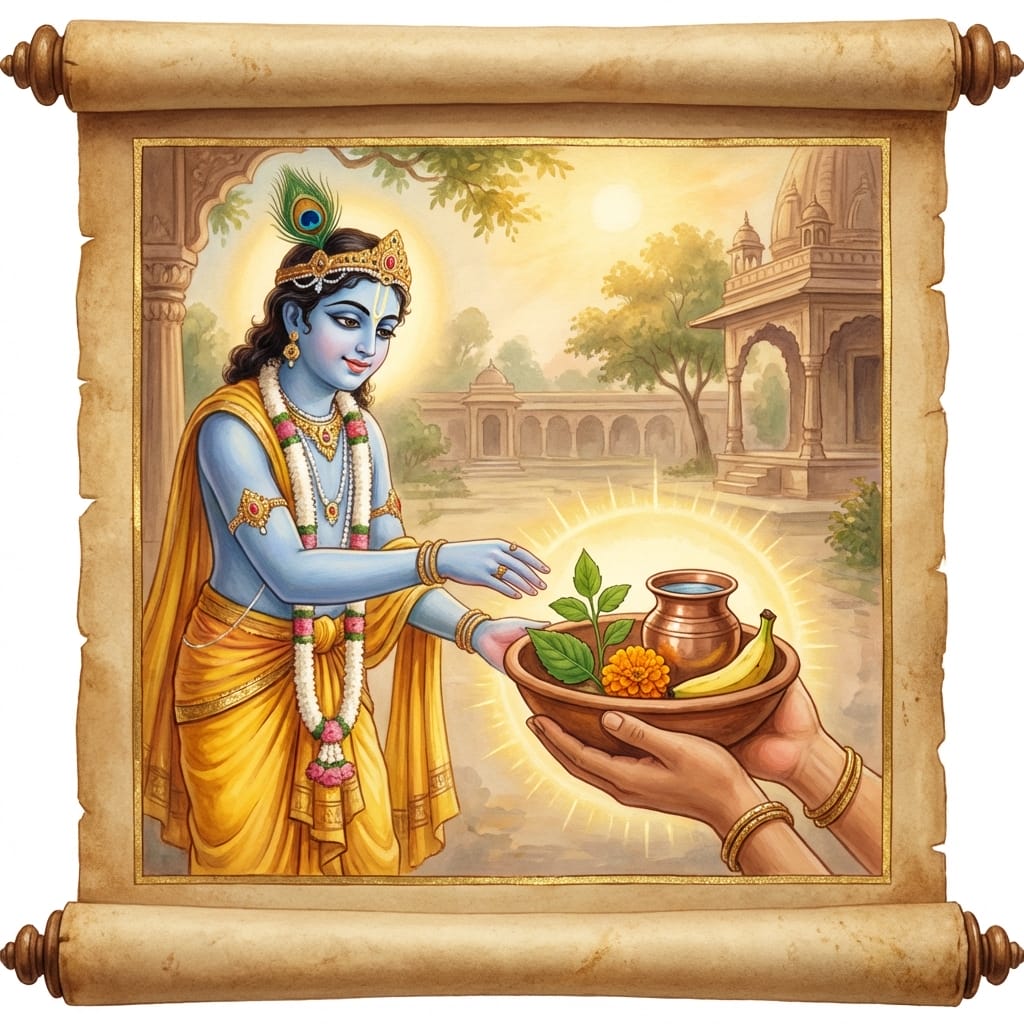
About Bhagavad Gita Chapter 7 - Jnana Vijnana Yoga
Bhagavad Gita Chapter 7 - Jnana Vijnana Yoga के बारे में
Jnana Vijnana Yoga marks a shift from understanding the self to understanding God. Krishna describes His two natures: the lower material nature (earth, water, fire, air, ether, mind, intellect, ego) and the higher spiritual nature (the life force).
He declares, "I am the taste of water, the light of the sun and the moon, the syllable Om in the Vedic mantras." Everything rests upon Him like pearls on a string.
Krishna explains Maya (illusion), which is hard to overcome but can be crossed by those who surrender to Him. He classifies four types of people who worship Him: the distressed, the seeker of wealth, the inquisitive, and the wise (Jnani).
Lessons from Chapter 7
अध्याय 7 से शिक्षा
Everything is Divine
सर्वत्र ईश्वर
Krishna is the essence of everything—strength of the strong, intelligence of the intelligent, life in the living.
Four Kinds of Devotees
चार प्रकार के भक्त
People turn to God for various reasons: suffering, desire for material gain, curiosity, or true wisdom. All are noble, but the wise one is dearest to God.
Life Lessons for You
जीवन की सीख
See God in Details
Practice finding divinity in everyday things. The taste of your water, the light of the sun, the ability to think—acknowledge these as divine gifts. This builds a sense of constant gratitude.
Surrender Your Struggles
Maya (illusion/hardship) is difficult to overcome by self-effort alone. When you feel stuck, try surrendering the problem to a Higher Power. Often, acceptance clears the path for a solution.
Key Shlokas
मुख्य श्लोक
Why It Matters
यह महत्वपूर्ण क्यों है
Introduces the concept of Para and Apara Prakriti (Higher and Lower Nature).
Explains Maya and how to overcome it.
Describes the varieties of faith.
What's Inside
इसमें क्या है
- God as the material and efficient cause of creation
- The illusion of Maya
- Types of surrender
- Worship of demigods vs Supreme Lord