About Atharva Veda
Atharva Veda के बारे में
The Atharvaveda (अथर्ववेद) is the fourth and last Veda. The name is derived from *Atharvan*, an ancient fire priest mentioned in the Rigveda, and *veda* meaning "knowledge." It is also sometimes called Atharvangirasa, combining the names of two ancient priestly families – the Atharvans and the Angirases.
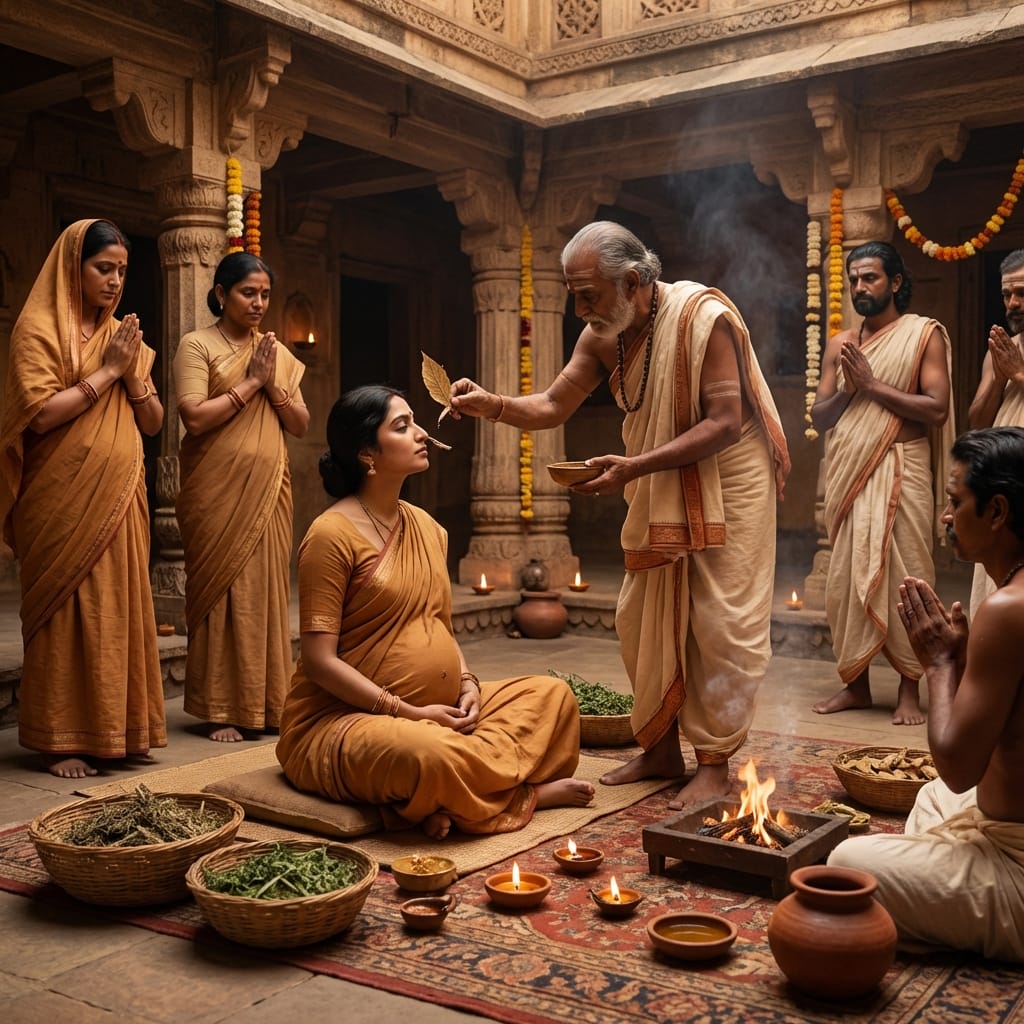
Unlike the other three Vedas which focus primarily on rituals and philosophy, the Atharvaveda is remarkably practical. It deals with the everyday concerns of Vedic life – health and healing, protection from enemies and evil spirits, success in love and business, and general well-being.
The text contains approximately 730 hymns with 6,000 mantras, organized into 20 books (Kandas). It includes:
- Healing charms and medicinal knowledge (early Ayurveda)
- Protective spells against disease, demons, and enemies
- Marriage and funeral hymns
- Philosophical speculations similar to the Upanishads
- Royal rituals and statecraft
The Atharvaveda was initially not accepted as equal to the other three Vedas (Trayi Vidya), but eventually gained recognition as the fourth Veda, expanding the scope of Vedic literature to include the concerns of common people.
Historical & Cultural Context
ऐतिहासिक और सांस्कृतिक संदर्भ
The Atharvaveda was likely compiled between 1200–1000 BCE, though many of its hymns may be as old as the Rigveda. It reflects a different strand of Vedic culture – the folk tradition alongside the priestly tradition.
The text reveals the daily life of ancient Indians – their fears, hopes, remedies for illness, methods of agriculture, and social customs. This makes it invaluable for historians and anthropologists.
The Atharvaveda is closely connected to Ayurveda (the science of life/medicine). Many hymns describe the healing properties of herbs, and the text is considered the foundation of traditional Indian medicine.
The inclusion of magic, charms, and practical rituals shows that Vedic religion was not only about cosmic sacrifices but also addressed personal and domestic needs. This "people's Veda" complemented the more priestly focus of the other Vedas.
Key Teachings & Themes
मुख्य शिक्षाएं और विषय
Ayurveda & Healing
आयुर्वेद और उपचार
The Atharvaveda is the foundation of Ayurveda. It contains hymns about medicinal herbs, healing practices, and the nature of disease and health.
Protection & Security
सुरक्षा और रक्षा
Many hymns are designed to protect against enemies, wild animals, natural disasters, evil spirits, and ill fortune.
Harmony in Daily Life
दैनिक जीवन में सामंजस्य
The text provides mantras and rituals for harmonious family life, successful agriculture, safe travels, and peaceful relationships.
Philosophy of Brahman
ब्रह्म का दर्शन
The later sections contain philosophical hymns on the nature of Brahman, Time (Kala), and cosmic principles similar to the Upanishads.
Statecraft & Governance
राजनीति और शासन
The Atharvaveda includes hymns for coronation, victory in war, and the duties of kings – early seeds of Indian political thought.
Life Transitions
जीवन संक्रमण
Hymns for rites of passage – birth, marriage, death – showing the role of ritual in marking life's important moments.
Why It Matters
यह महत्वपूर्ण क्यों है
Foundation of Ayurveda – the traditional Indian system of medicine that remains influential worldwide.
Provides invaluable insights into the daily life of ancient Vedic society – medicine, agriculture, social customs.
Contains the Prithvi Sukta (Hymn to Earth), one of the earliest expressions of environmental consciousness.
Shows the inclusive nature of Vedic religion – accommodating both priestly rituals and folk practices.
Contains profound philosophical hymns exploring Time, Death, Breath (Prana), and Ultimate Reality.
What's Inside
इसमें क्या है
- 20 Kandas (Books) – organized collections covering diverse topics.
- 730 Hymns – with approximately 6,000 mantras.
- Healing hymns – for fever, wounds, poison, mental illness, and other ailments.
- Protective charms – against enemies, snakes, demons, and misfortune.
- Marriage hymns – including the Surya Sukta, used in Hindu weddings.
- Philosophical texts – including the Mundaka, Mandukya, and Prashna Upanishads.
- Royal rituals – for coronation, kingdom protection, and victory.
Frequently Asked Questions
अक्सर पूछे जाने वाले प्रश्न
Why was the Atharvaveda not initially accepted as a Veda?
The Atharvaveda dealt with magic, charms, and everyday concerns that some considered less "pure" than the cosmic rituals of the other Vedas. Over time, its value was recognized and it was accepted as the fourth Veda.
How is the Atharvaveda connected to Ayurveda?
The Atharvaveda is considered the origin of Ayurveda. It contains extensive knowledge about medicinal herbs, healing practices, and the causes of disease, forming the textual foundation for traditional Indian medicine.
Is the Atharvaveda about black magic?
While some hymns include protective charms and counter-spells, the Atharvaveda is primarily about healing, protection, and well-being. It also contains profound philosophical content. Calling it just "black magic" is a misunderstanding.
What is the Prithvi Sukta?
The Prithvi Sukta (Hymn to Earth) is a beautiful hymn in the Atharvaveda that praises Mother Earth and expresses gratitude for her gifts. It is considered one of the earliest expressions of ecological awareness.