About Sama Veda
Sama Veda के बारे में
The Samaveda (सामवेद) is the Veda of melodies and chants. The word *sama* means "song" or "melody," and the Samaveda is essentially a musical rendering of the Rigvedic hymns. It is often called the "Veda of Songs" or the "Book of Chants."
While the Rigveda provides the words (richas), the Samaveda provides the musical notation for how these words should be sung. Out of its 1,549 verses, all but 75 are taken directly from the Rigveda. The Samaveda's unique contribution is the melodic framework (samans) within which these verses are sung.
The Samaveda is considered the origin of Indian classical music (Sangeet). The seven musical notes (swaras) – Sa, Re, Ga, Ma, Pa, Dha, Ni – are believed to have originated from the Samaveda. The text demonstrates the ancient Indian understanding of how sound, rhythm, and melody can be used for spiritual elevation.
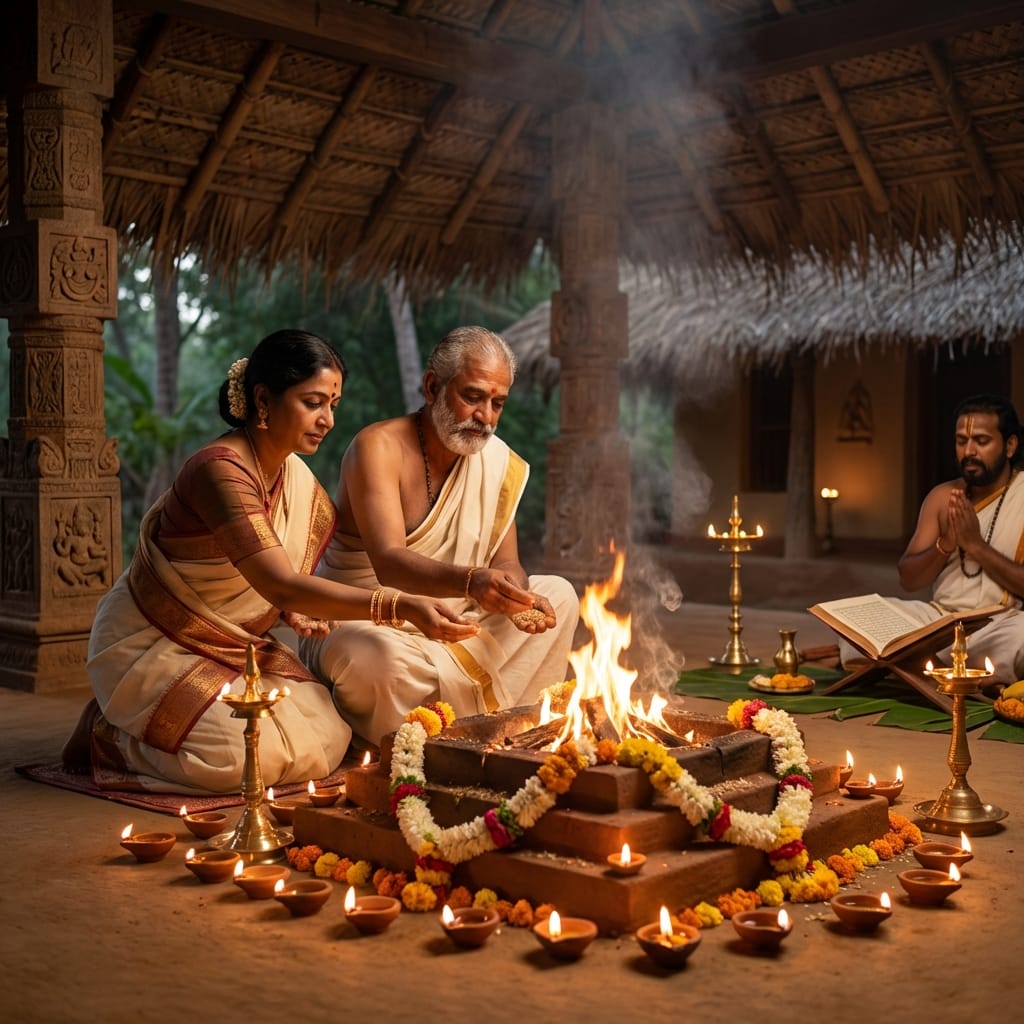
The chanters of the Samaveda, known as Udgatri priests, would perform during the Soma sacrifices. Their melodious singing was believed to please the gods and ensure the success of the rituals.
Historical & Cultural Context
ऐतिहासिक और सांस्कृतिक संदर्भ
The Samaveda was compiled after the Rigveda, likely between 1200–1000 BCE. It represents a significant development in Vedic culture – the recognition that music and melody enhance the spiritual power of mantras.
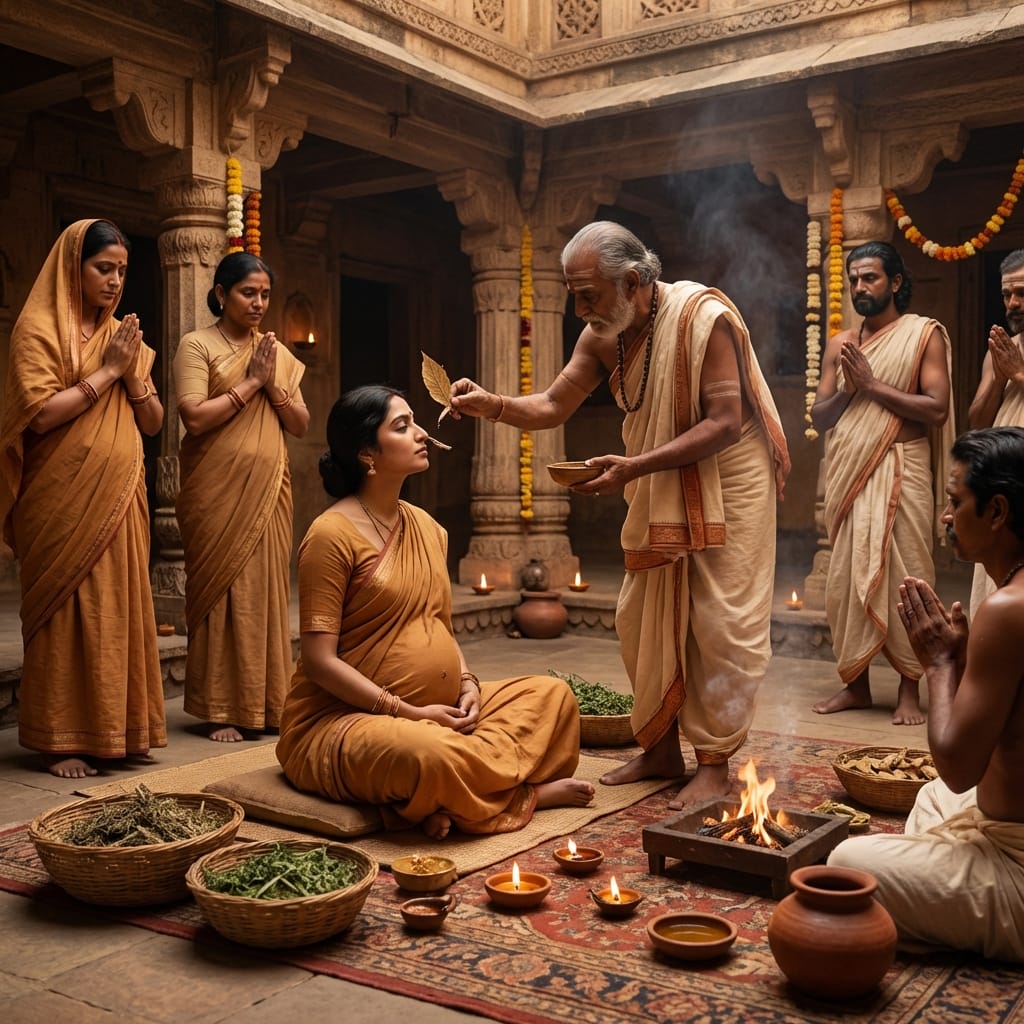
The text was primarily used in connection with the Soma sacrifice, an elaborate ritual involving the pressing and offering of the Soma plant. The melodic chanting was considered essential for the ritual's efficacy.
The development of the Samaveda reflects the sophisticated understanding of acoustics and musical theory in ancient India. The priests developed complex systems for notating pitch, rhythm, and melodic patterns.
The Samaveda tradition eventually gave rise to the Gandharva Veda, the science of music and dance, and influenced the development of Indian classical music systems like Dhrupad, which still preserves some Vedic musical elements.
Key Teachings & Themes
मुख्य शिक्षाएं और विषय
Sound as Sacred
ध्वनि की पवित्रता
The Samaveda teaches that sound itself has spiritual power. When mantras are sung with proper melody, they become more potent tools for spiritual transformation.
Nada Brahman
नाद ब्रह्म
The concept that the Ultimate Reality (Brahman) manifests as cosmic sound (Nada). All creation emerges from and returns to this primal sound.
Spiritual Discipline
आध्यात्मिक अनुशासन
Learning the Samaveda required years of disciplined practice under a guru, developing concentration, memory, and musical ability.
Harmony and Order
सामंजस्य और व्यवस्था
The structured melodies reflect the cosmic order. Chanting in harmony was seen as participating in the universal rhythm.
Emotional Transformation
भावनात्मक परिवर्तन
Different melodies (ragas) evoke different emotional states. Music becomes a tool for emotional purification and spiritual elevation.
Worship through Art
कला के माध्यम से पूजा
The Samaveda establishes music as a legitimate path to the divine, making worship an aesthetic experience.
Why It Matters
यह महत्वपूर्ण क्यों है
Considered the origin of Indian classical music and the art of melodic chanting.
Lord Krishna says in the Bhagavad Gita: "Among the Vedas, I am the Samaveda" (Chapter 10, Verse 22) – highlighting its special status.
Establishes the sacred science of Nada Yoga – the yoga of sound and music.
Demonstrates the ancient Indian understanding of how aesthetics and spirituality are interconnected.
Preserves one of the world's oldest systems of musical notation.
What's Inside
इसमें क्या है
- Archika – the collection of verses (richas) to be sung.
- Uttararchika – verses organized for specific rituals.
- Gana – the actual melodies and their notation.
- 1,549 verses – most derived from the Rigveda but set to music.
- Musical notations – for pitch, rhythm, and melody.
- Instructions for Soma ritual – the primary context for Samaveda chanting.
Frequently Asked Questions
अक्सर पूछे जाने वाले प्रश्न
Why did Krishna say the Samaveda is the best among Vedas?
In the Bhagavad Gita (10.22), Krishna says "Among the Vedas, I am the Samaveda." This is because the Samaveda represents the beauty of divine expression through melody, reflecting the aesthetic aspect of the Divine.
How is the Samaveda related to Indian classical music?
The Samaveda is considered the origin of Indian classical music. The seven musical notes (swaras) and the concept of ragas are believed to have evolved from Saman singing.
Can we hear Samaveda chanting today?
Yes, there are still traditional priests who practice Saman chanting. Recordings are available, and some temples and ashrams maintain this ancient tradition.