About Yajur Veda
Yajur Veda के बारे में
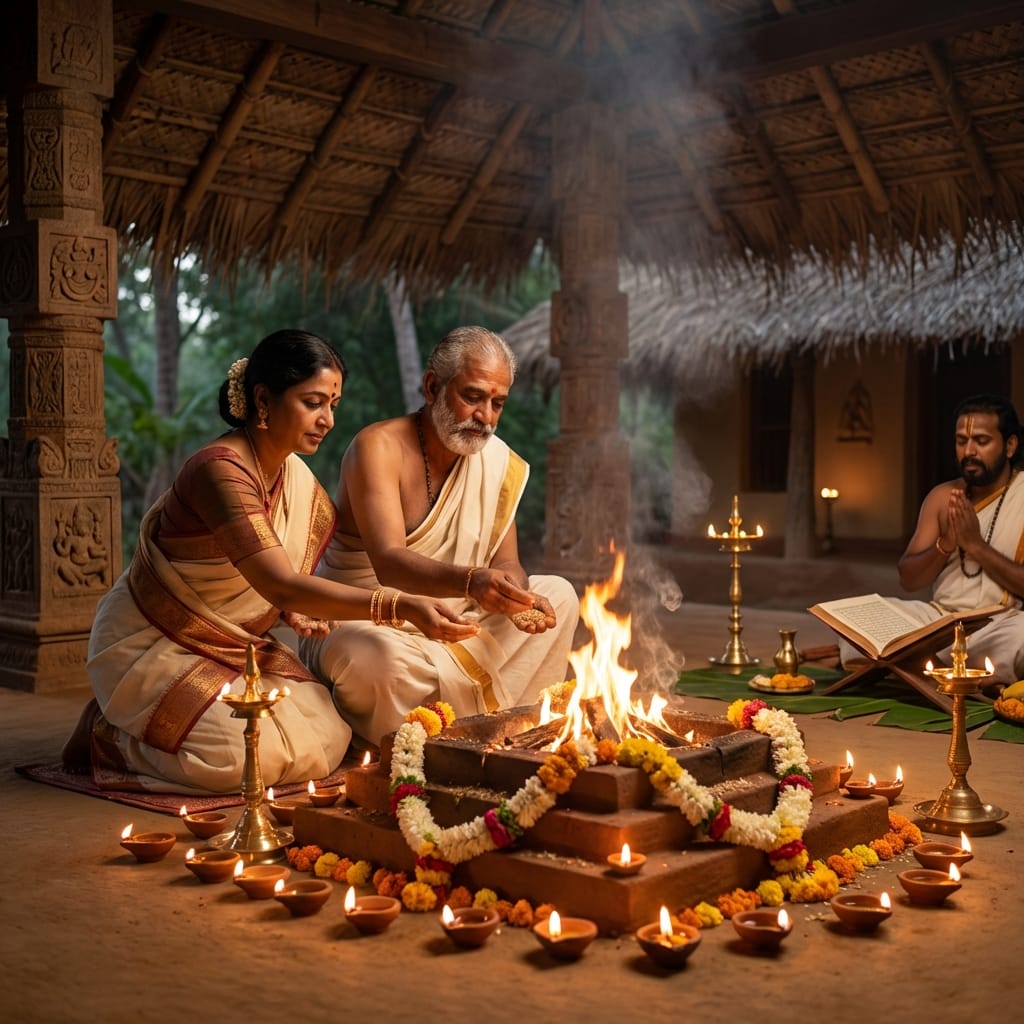
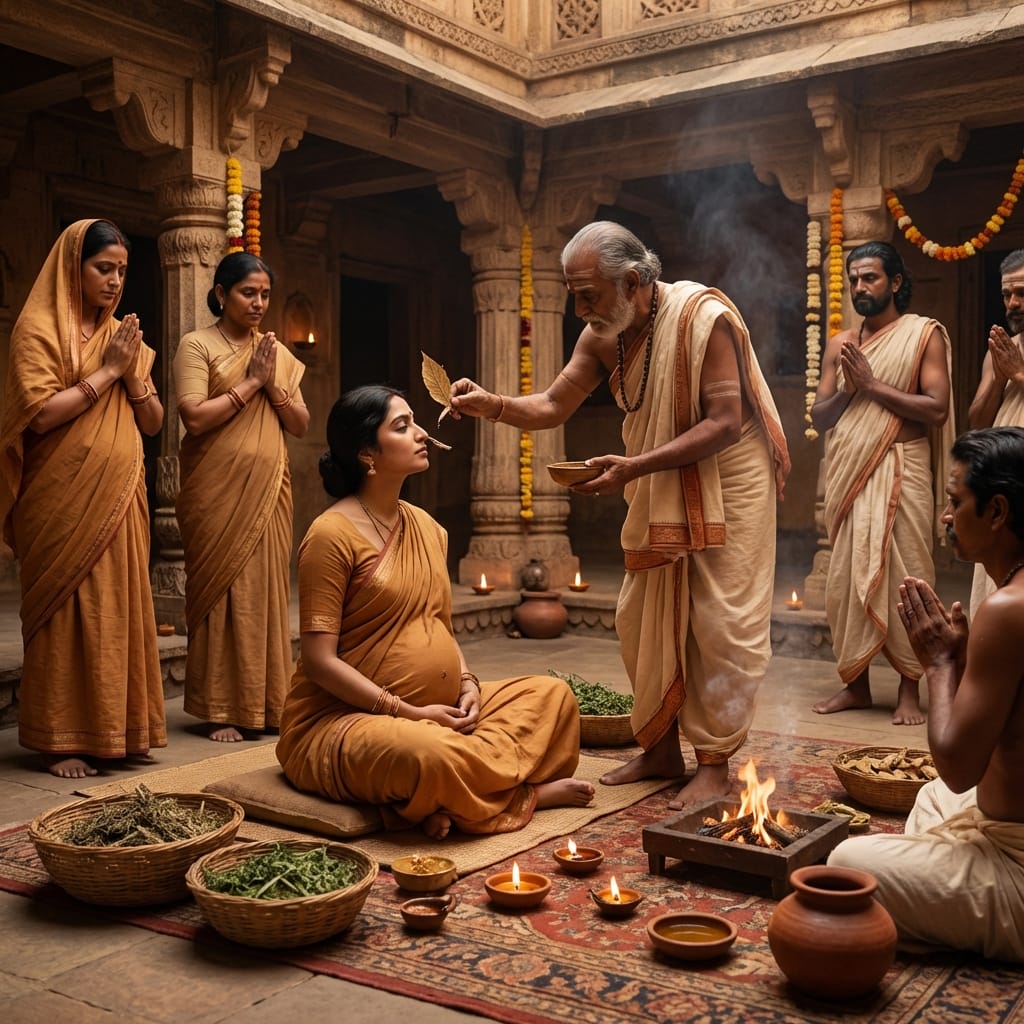
The Yajurveda (यजुर्वेद) is the Veda primarily of prose mantras for worship rituals. The name comes from the Sanskrit word *yajus* meaning "worship," "sacrifice," or "ritual formula," and *veda* meaning "knowledge." It is essentially the liturgical handbook for the Adhvaryu priest who performs the physical elements of sacrifice.
The Yajurveda is a compilation of ritual-offering formulas (yajus) that were recited by the Adhvaryu priest while performing the mechanical aspects of the Yajna (sacrifice). While the Rigveda contains the hymns of praise (mantras), the Yajurveda provides the practical instructions for how these rituals should be performed.
The text exists in two major recensions or schools:
- Krishna (Black) Yajurveda – where the mantras and explanatory prose (Brahmana passages) are mixed together.
- Shukla (White) Yajurveda – where the mantras are arranged separately from the prose explanations.
The Yajurveda is closely connected with the performance of elaborate Vedic rituals like the Ashvamedha (horse sacrifice), Rajasuya (royal consecration), Vajapeya, and Agnihotra (daily fire offering). It forms the backbone of Vedic ritual practice.
Historical & Cultural Context
ऐतिहासिक और सांस्कृतिक संदर्भ
The Yajurveda was composed after the Rigveda, likely between 1200–1000 BCE, during the later Vedic period. This was a time when Vedic rituals had become increasingly elaborate and systematized.
The priestly class (Brahmins) developed sophisticated sacrificial ceremonies that required precise coordination between multiple priests. The Yajurveda provided the Adhvaryu priest with the formulas needed to perform his specific duties.
The text reflects a society deeply invested in maintaining cosmic and social order through ritual. The sacrifices were seen as essential for ensuring the prosperity of kingdoms, the fertility of crops, and the favor of the gods.
The Brihadaranyaka Upanishad and the Isha Upanishad, two of the most important Upanishads, are associated with the Yajurveda, demonstrating its philosophical depth alongside its ritual focus.
Key Teachings & Themes
मुख्य शिक्षाएं और विषय
Yajna – The Sacred Sacrifice
यज्ञ – पवित्र यज्ञ
The Yajurveda provides detailed instructions for performing various sacrifices, seen as the means to maintain cosmic order and communicate with the divine.
Ritual Precision
अनुष्ठान की सटीकता
The text emphasizes the importance of exact pronunciation, timing, and procedure in rituals. Even small errors were believed to have severe consequences.
Symbolism of Actions
क्रियाओं का प्रतीकवाद
Every ritual action has symbolic meaning. The fire represents the divine, the offerings represent the self, and the sacrifice represents the cosmic process of creation.
Integration of Word and Act
वचन और कर्म का एकीकरण
The Yajurveda shows how mantras (sacred words) and ritual actions work together to create spiritual efficacy.
Cosmic Correspondences
ब्रह्मांडीय पत्राचार
The rituals establish connections between the microcosm (individual) and macrocosm (universe), between human actions and cosmic events.
Path to Moksha
मोक्ष का मार्ग
Through the attached Upanishads, the Yajurveda also points toward the higher goal of liberation through self-knowledge.
Why It Matters
यह महत्वपूर्ण क्यों है
Provides the practical framework for Vedic rituals that have been practiced for over 3,000 years.
Contains the Shatarudriya hymn, one of the most sacred prayers to Lord Shiva (Rudra).
Source of two major Upanishads – Brihadaranyaka (largest Upanishad) and Isha Upanishad (essence of Vedantic philosophy).
Demonstrates the Vedic understanding of how ritual action connects humans with the divine.
Preserves ancient knowledge of astronomy, geometry, and architecture used in constructing fire altars.
What's Inside
इसमें क्या है
- Samhita – the core collection of mantras and formulas for rituals.
- Brahmana portions – prose explanations of the rituals and their meanings.
- Aranyakas – "forest texts" for meditation and inner rituals.
- Upanishads – philosophical texts including Brihadaranyaka and Isha.
- Instructions for major sacrifices – Ashvamedha, Rajasuya, Agnihotra, Somayaga.
- Altar construction formulas – precise measurements and arrangements.
Frequently Asked Questions
अक्सर पूछे जाने वाले प्रश्न
What is the difference between Krishna and Shukla Yajurveda?
The Krishna (Black) Yajurveda has mantras and explanatory prose mixed together, while the Shukla (White) Yajurveda has them separated. The Shukla is considered more organized.
Why is the Yajurveda important?
It provides the practical instructions for performing Vedic rituals that have been central to Hindu religious practice for millennia. It also contains profound philosophical texts.
Is the Yajurveda still used today?
Yes, many mantras from the Yajurveda are used in Hindu ceremonies like weddings, funerals, and daily worship. Traditional priests still learn the complete text.