About Annaprashana Sanskar - Hindu First Food Feeding Ceremony Guide
Annaprashana Sanskar - Hindu First Food Feeding Ceremony Guide के बारे में
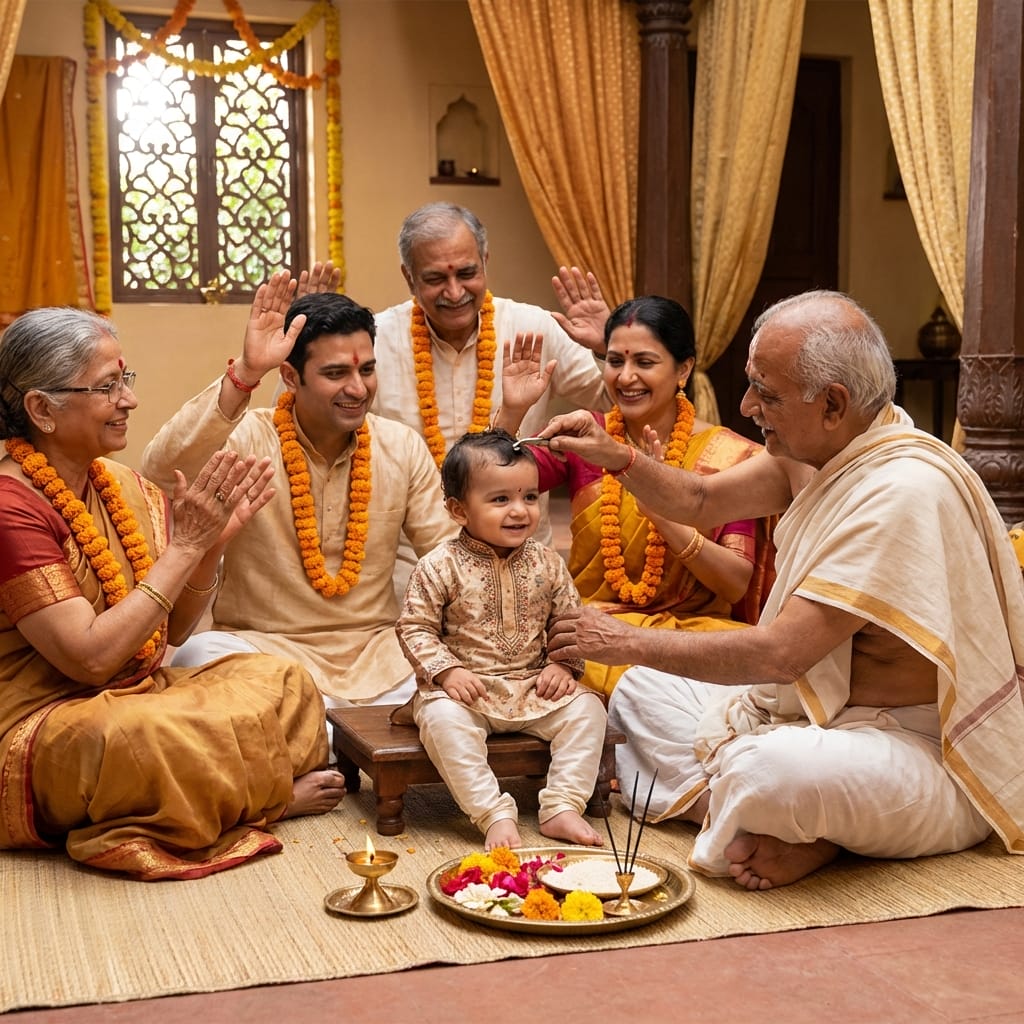
Annaprashana Sanskar (अन्नप्राशन संस्कार), also popularly known as First Feeding Ceremony, Rice Feeding, or Mukhe Bhaat (in Bengal), is the seventh of the 16 Shodasha Sanskars. It marks the baby's transition from an exclusive milk diet (breast milk or formula) to solid foods, a significant milestone in early childhood development.
The word "Annaprashana" comes from "Anna" (food/grain) and "Prashana" (to eat or consume). This sacred ceremony is performed when the baby is around 6 months old (some traditions observe it at 5 or 7 months for girls and boys respectively), aligning perfectly with modern pediatric recommendations for introducing complementary foods.
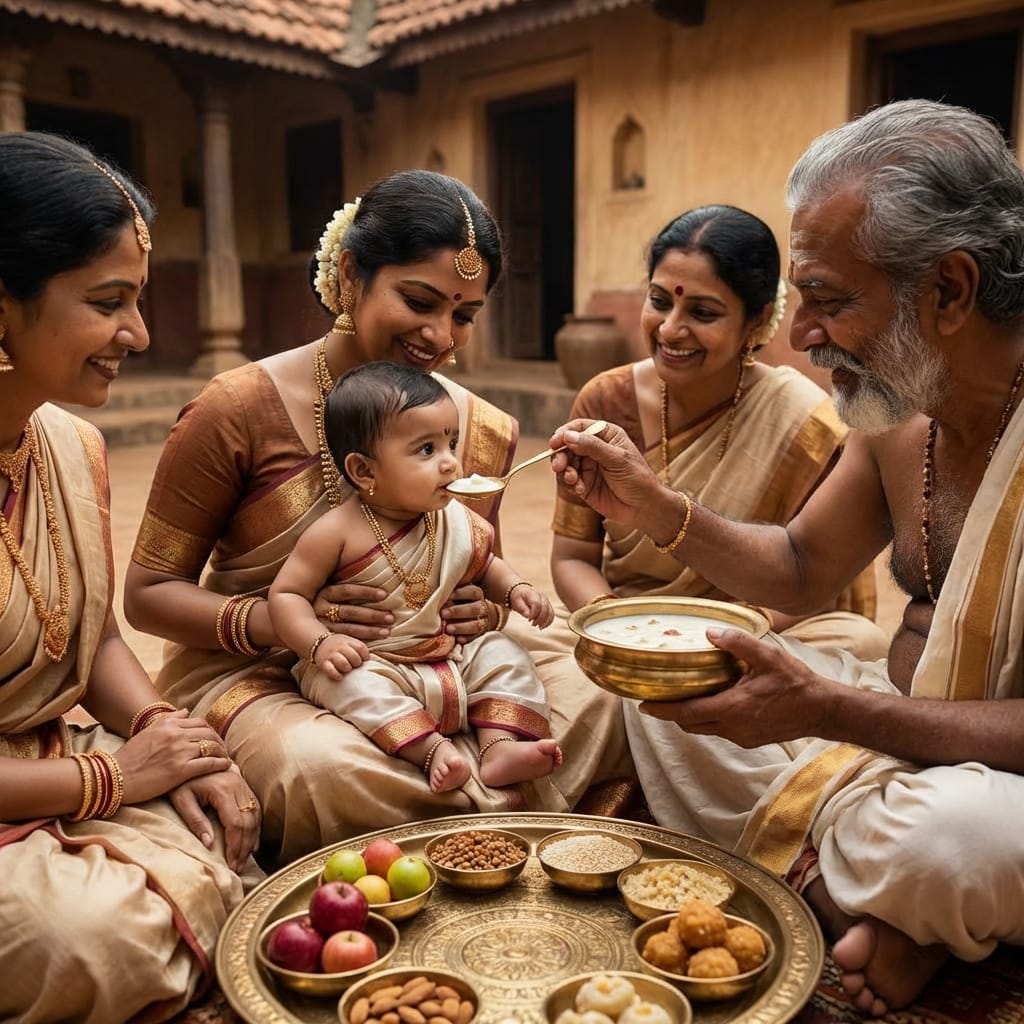
The central ritual involves the father or elder feeding the baby cooked rice mixed with ghee, honey, or kheer (sweet rice pudding) from a silver or gold bowl while reciting Vedic mantras. This first solid food is carefully chosen to be easily digestible, nutritious, and sattvic (pure). The ceremony symbolizes nourishment not just of the body but also of the mind and soul.
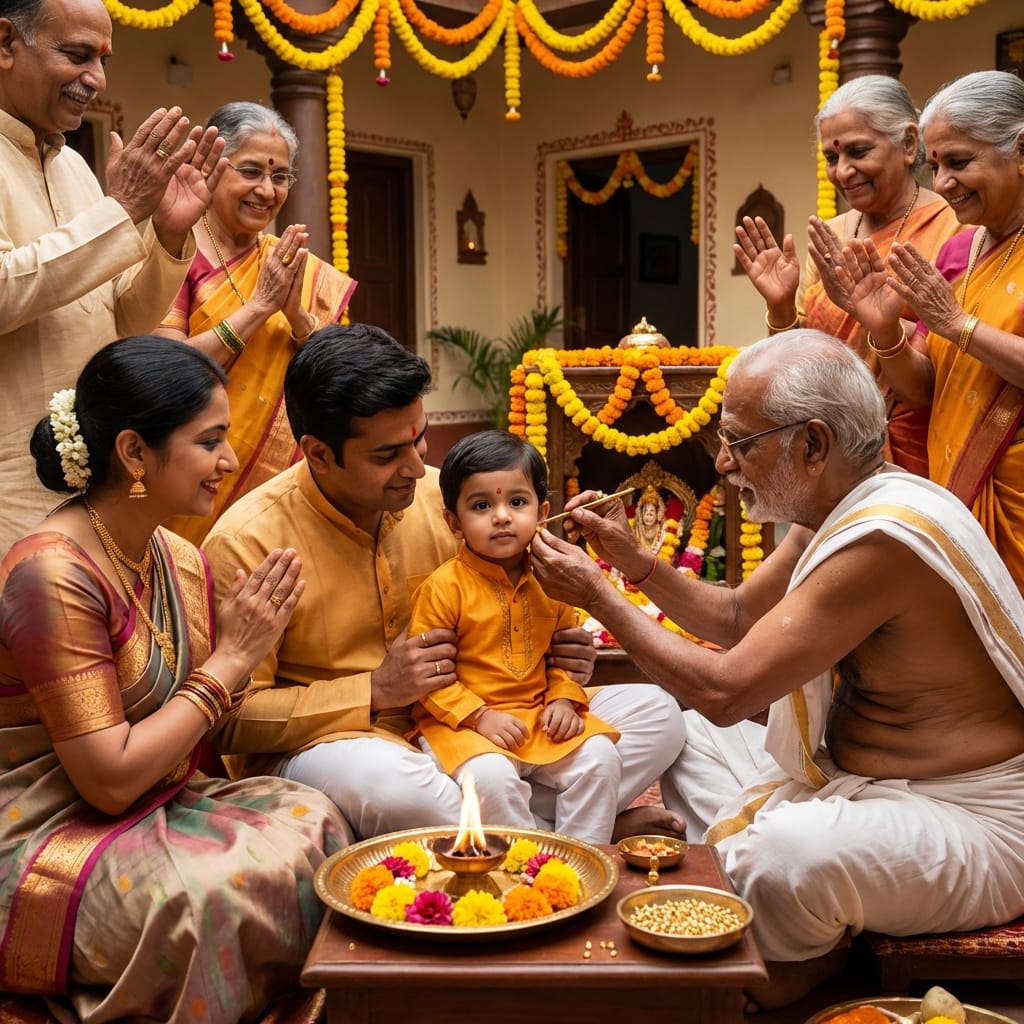
Along with the feeding, families perform prayers to Annapurna Devi (goddess of nourishment) and seek blessings for the child's healthy growth, strong digestion, and lifelong abundance. The ceremony is celebratory, with family gatherings, traditional foods, and blessings from elders. In modern times, parents often combine Annaprashana with introducing baby's first foods as recommended by pediatricians, beautifully blending ancient tradition with scientific nutrition.
Science & Ayurveda Behind Annaprashana
वैज्ञानिक और आयुर्वेदिक आधार
The 6th-month timing for first solids is medically precise:
Digestive Enzymes: Around 6 months, the infant's digestive system produces enough amylase to digest complex carbohydrates (grains/rice). Before this, they lack the enzymes, making solids hard to digest.
Iron Requirements: A baby's fetal iron stores typically last 6 months. After this, breast milk alone isn't sufficient for iron; dietary sources are needed to prevent anemia.
Extrusion Reflex: The "tongue-thrust" reflex (pushing food out) disappears around 4-6 months, physically enabling the baby to swallow solids.
Gut Microbiome: Introducing solids diversifies the gut microbiome, which is crucial for lifelong immunity and metabolic health.
Taste Development: Ayurveda emphasizes all six tastes (Shad Rasa). Introducing diverse flavors early expands the palate and encourages acceptance of healthy foods later.
Developmental Readiness: At 6 months, babies can sit up with support and have good head control—essential safety factors for swallowing solids without choking.
Ayurvedic Nutrition & Digestive Science
आयुर्वेदिक पोषण और पाचन विज्ञान
Annaprashana is described in Grihya Sutras, Charaka Samhita, and Ayurvedic texts that provide detailed guidelines for infant feeding. Ancient sages understood that introducing solid foods too early or too late could harm digestion, so the timing (around 6 months when the digestive system matures) is remarkably aligned with modern pediatric science.
Rice is chosen as the first food because it's easily digestible, hypoallergenic, gentle on the stomach, and provides essential carbohydrates for energy. Ghee (clarified butter) is added for its fat-soluble vitamins (A, D, E, K), brain development support, and digestive aid. Honey (in small amounts) provides natural sweetness and antimicrobial properties, though modern pediatricians recommend avoiding honey before 12 months due to botul ism risk.
The tradition of using silver or gold utensils has a scientific basis—these metals have antimicrobial properties and are believed in Ayurveda to enhance food's prana (life force). Silver bowls were used to purify and keep the first food sacred.
Historically, this ceremony was community-based, with extended family gathering to bless the baby and witness this important transition. Different foods were offered symbolically: rice for prosperity, ghee for health, honey for sweetness in life, and sometimes gold or silver for wealth. The baby's reaction to each item was observed, with folkloric beliefs about future personality traits.
The timing variations (6 months for both, or 5 months for girls and 7 for boys in some traditions) reflect regional customs, but the modern medical consensus is 6 months for all babies when signs of readiness appear.
How Annaprashana is Performed
अन्नप्राशन कैसे किया जाता है
Optimal Timing
उचित समय
Performed at 6 months (some traditions: 5 months for girls, 7 for boys). Choose an auspicious day. Ensure baby shows readiness signs: sits with support, shows interest in food, lost tongue-thrust reflex. Consult pediatrician before starting solids.
Food Preparation
भोजन तैयारी
Prepare fresh cooked rice (or rice kheer/payasam) with ghee. Keep it soft and easily digestible. Use silver or steel bowl (avoid honey if baby under 12 months per modern guidelines). Ensure hygienic cooking and clean utensils.
Annapurna Puja
अन्नपूर्णा पूजा
Worship Goddess Annapurna (deity of nourishment) before feeding. Offer prayers for abundance, good health, and strong digestion. Seek blessings that the child never faces hunger and always has plenty.
First Feeding Ritual
प्रथम भोजन विधि
Father (or mother/elder) feeds baby the first morsels while reciting mantras. Family members may take turns feeding small amounts. Observe baby's reaction with joy. Distribute prasad and sweets to all attendees.
Annaprashana Ceremony Steps
अन्नप्राशन समारोह चरण
Why It Matters
यह महत्वपूर्ण क्यों है
Developmental Milestone – Marks the crucial transition from liquid to solid foods, supporting baby's growth and nutritional needs.
Digestive System Activation – Introduces the digestive system to processing solids, aided by prayers and pure, easily digestible first foods.
Nutritional Foundation – Establishes healthy eating habits and connection to traditional, wholesome foods from the start.
Divine Blessings for Nourishment – Invokes Annapurna's blessings for lifelong abundance and freedom from hunger.
Family Bonding – Creates cherished memories as family gathers to celebrate and participate in feeding the baby.
Alignment with Modern Science – 6-month timing perfectly matches WHO and pediatric recommendations for introducing complementary foods.
What's Inside
इसमें क्या है
- Complete Ritual Process – Step-by-step Annaprashana ceremony guide
- Safe Food Choices – What traditional and modern foods are appropriate
- Annapurna Mantras – Specific prayers for the goddess of nourishment
- Timing Guidelines – When to perform based on baby's readiness
- Medical Considerations – Pediatric guidelines for introducing solids
- Regional Variations – Different practices across India (Mukhe Bhaat, Choroonu, etc.)
- Modern Adaptations – Combining tradition with contemporary baby feeding
Frequently Asked Questions
अक्सर पूछे जाने वाले प्रश्न
At what age should Annaprashana be performed?
Traditionally at 6 months for all babies, though some regional customs vary (5 months for girls, 7 for boys). Modern pediatric guidelines recommend starting complementary foods at 6 months when baby shows readiness signs: sitting with support, interest in food, good head control, and lost tongue-thrust reflex. Consult your pediatrician to confirm your baby is ready before performing Annaprashana.
What food should be given during Annaprashana?
Traditionally: soft cooked rice mixed with ghee, or rice kheer (sweet rice pudding). These are easily digestible and sattvic. Modern alternatives if baby has specific needs: mashed banana, rice cereal, or dal water. AVOID: honey for babies under 12 months (botulism risk), salt, sugar, spices, allergens without prior testing. Keep the first food simple, pure, and easy to digest.
Can we perform Annaprashana if baby was introduced to solids earlier?
Yes! If you started solids earlier on pediatrician's advice (e.g., for medical reasons), you can still perform Annaprashana as a ceremonial blessing even if it's not literally the "first" food. The spiritual significance and family celebration remain valuable. Some families do it symbolically on the traditional day while continuing their feeding schedule.
Is using silver or gold utensils necessary?
While traditional, silver/gold utensils are not mandatory for the Sanskar's spiritual completion. They have Ayurvedic significance (antimicrobial properties) but clean stainless steel or baby-safe bowls work perfectly fine. The purity of intention, prayers, and family blessings matter most. Use what's accessible and hygienic for your baby.
What if baby refuses to eat during the ceremony?
Babies can be unpredictable! If baby refuses, don't force it. Ensure baby is well-rested, not overly hungry or full, and comfortable. Try again after a short break. The ceremony's success isn't measured by how much baby eats, but by the blessings and intentions. Some babies take just a lick or two—that's absolutely fine and still counts!
How does Annaprashana differ from modern baby feeding introduction?
They align beautifully! Modern pediatricians recommend starting solids at 6 months with iron-rich cereals (like rice cereal), which matches Annaprashana's rice tradition. You can perform the ceremony and then continue with your pediatrician's feeding plan. The ritual adds spiritual and cultural significance to what's already a medically recommended practice. Combine both for best of tradition and science!
Scientific References & Citations
- Guiding Principles for Complementary Feeding of the Breastfed Child — World Health Organization (WHO)
- Development of Digestive Enzymes in Infants — Pediatric Research