About Vidyarambha Sanskar - Hindu Education Initiation Ceremony Guide
Vidyarambha Sanskar - Hindu Education Initiation Ceremony Guide के बारे में
Vidyarambha Sanskar (विद्यारम्भ संस्कार), meaning "Beginning of Learning" or Education Initiation Ceremony, is the tenth of the 16 Shodasha Sanskars. It marks the child's formal entry into the world of knowledge and education, traditionally performed at age 5 years when the child shows readiness to learn letters and numbers.
The word "Vidyarambha" comes from "Vidya" (knowledge/education) and "Arambha" (beginning). This ceremony celebrates the sacred moment when a child starts their educational journey, invoking Goddess Saraswati (deity of knowledge and learning) and Lord Ganesha (remover of obstacles) for blessings.
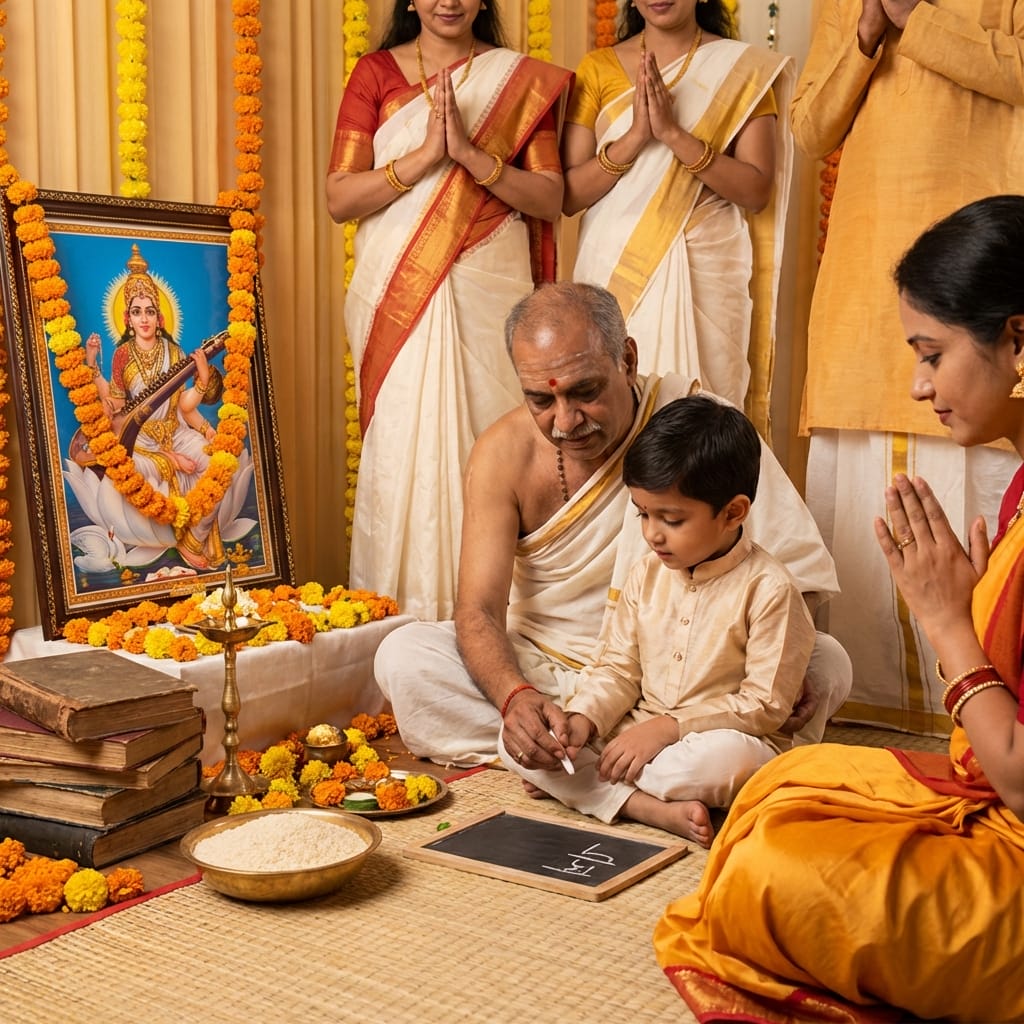
The central ritual involves the guru or parent writing the first letters (often "Om" or alphabets) on the child's tongue using honey and gold or on a slate/rice spread. The child then traces these letters, symbolizing their first steps into literacy and learning. This is accompanied by prayers for intelligence, wisdom, and success in education.
In modern times, Vidyarambha aligns beautifully with starting preschool or kindergarten. Families perform the ceremony before the child's first day of school, creating a sacred foundation for their academic life. The ritual emphasizes that education is not merely for career success but for spiritual growth, character building, and service to society.
Science & Ayurveda Behind Vidyarambha
वैज्ञानिक और आयुर्वेदिक आधार
The 5-year timing aligns perfectly with developmental neuroscience:
Critical Period for Learning (Ages 4-7): Neuroscience identifies ages 4-7 as a critical period for language acquisition, symbolic thinking, and academic readiness. The brain's prefrontal cortex develops rapidly, enabling attention, memory formation, and learning. Vidyarambha's 5-year timing captures this optimal window.
Brain Plasticity: Young children have extraordinary neuroplasticity—the brain's ability to form new connections. Early education during this period establishes neural pathways that facilitate lifelong learning.
Saraswati Worship & Learning Psychology: Associating learning with the divine (Goddess Saraswati) creates positive emotional associations with education. Modern psychology shows that positive affect enhances memory consolidation and motivation.
Ritual & Memory Formation: Ceremonial learning experiences create stronger, longer-lasting memories than routine activities. The special nature of Vidyarambha makes the introduction to learning memorable and emotionally significant.
Motor Skills for Writing: By age 5, children develop fine motor control necessary for holding writing implements and forming letters. The traditional use of finger-writing in rice/sand accommodates developing motor skills.
Social Learning Readiness: At 4-5 years, children develop social cognition needed for classroom learning—understanding rules, cooperating with peers, following instructions.
Ayurvedic Brain Development: Ayurveda's emphasis on ghee, almonds, and brahmi for children aligns with research showing healthy fats (DHA) and certain herbs support cognitive function.
Ancient Gurukul Tradition & Modern Relevance
गुरुकुल परंपरा और आधुनिक प्रासंगिकता
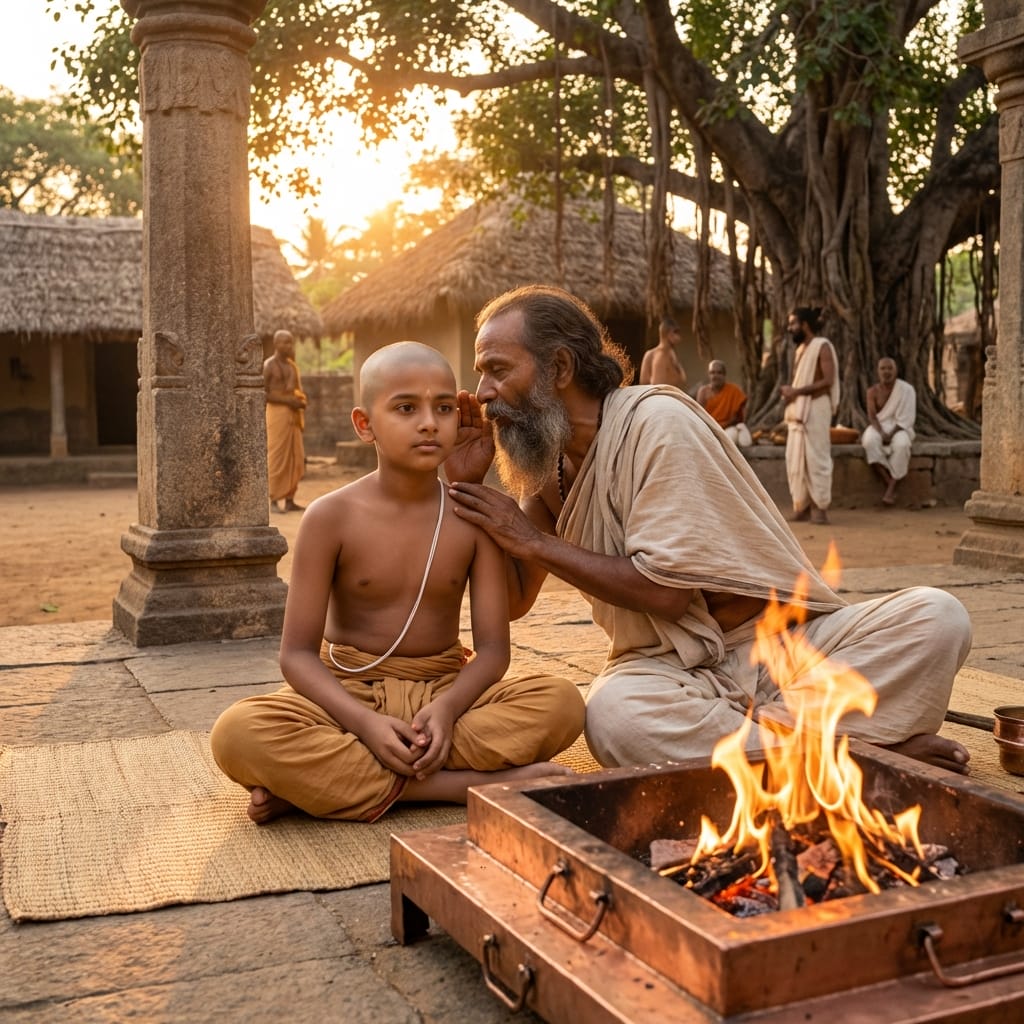
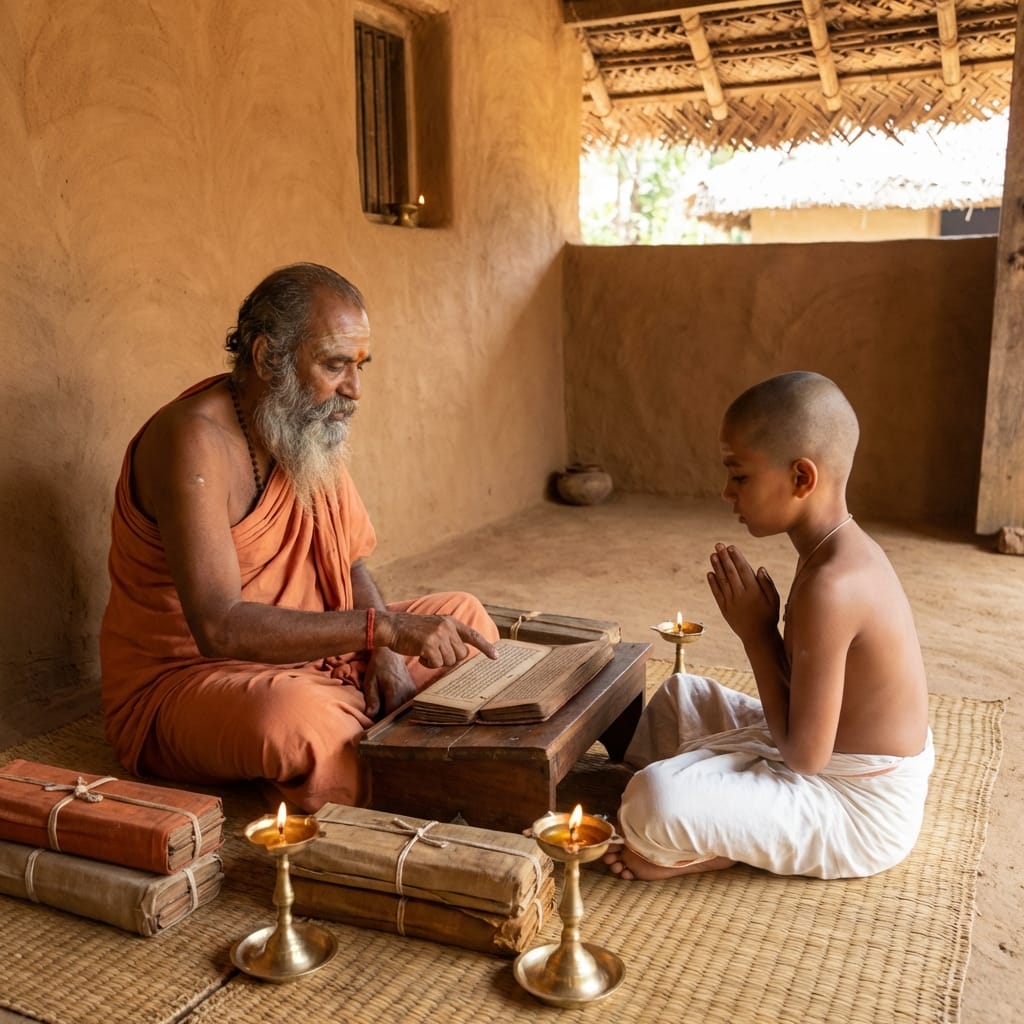
Vidyarambha has roots in the ancient Gurukul system where children between ages 5-8 would begin formal education under a guru's guidance. The ceremony marked their transition from childhood play to disciplined learning.
Age 5 significance: Modern child psychology confirms that ages 4-6 are optimal for beginning structured learning. The brain is highly receptive to language, patterns, and symbolic understanding—exactly when Vedic tradition recommends Vidyarambha.
The ritual of writing on the tongue with honey symbolizes that learning should be sweet, enjoyable, and nourishing. The use of gold represents the preciousness of knowledge and its transformative power.
Historically, Goddess Saraswati worship during Vidyarambha emphasized that knowledge is divine. Students were taught to approach learning with reverence, humility, and devotion—not just for material gain but for enlightenment and service.
The ceremony also introduced the concept of "Guru-Shishya (teacher-student) relationship"—a sacred bond of respect, trust, and mutual growth that would define the child's educational journey.
Modern parents appreciate Vidyarambha as it creates a positive psychological association with learning, reduces school anxiety, and instills the value of education from the start.
How Vidyarambha is Performed
विद्यारम्भ कैसे किया जाता है
Ideal Age & Timing
उचित आयु
Performed at age 5 (or when child shows readiness for learning). Often done on Vasant Panchami (Saraswati Puja day) or any auspicious day. Some perform before preschool/kindergarten starts.
Saraswati & Ganesh Puja
सरस्वती और गणेश पूजा
Worship Goddess Saraswati for knowledge and wisdom. Invoke Lord Ganesha for obstacle-free learning. Offer flowers, fruits, books, and writing implements to the deities. Chant educational mantras.
First Letter Writing
प्रथम अक्षर लेखन
Guru/parent writes "Om" or alphabets on child's tongue with honey and gold, or on rice spread/slate. Child then traces the letters. This symbolizes the sweet beginning of literacy and learning.
Guru Dakshina & Blessings
गुरु दक्षिणा
Offer respect to the guru (teacher/elder) with traditional gifts or dakshina. Elders bless the child for success in education. Distribute sweets and prasad. Some families also donate books to schools or libraries.
Vidyarambha Ritual Steps
विद्यारम्भ विधि चरण
Why It Matters
यह महत्वपूर्ण क्यों है
Sacred Start to Learning – Creates a positive, reverential attitude toward education from the beginning.
Divine Blessings – Invoking Saraswati and Ganesha provides spiritual support for the child's educational journey.
Psychological Readiness – The ceremony helps transition the child mentally from play to structured learning with excitement.
Cultural Connection – Links the child to India's rich tradition of valuing knowledge and respecting teachers.
Reduces School Anxiety – Makes starting school a joyous, sacred event rather than a fearful transition.
Guru-Shishya Bond – Establishes the sacred relationship between teacher and student built on mutual respect.
What's Inside
इसमें क्या है
- Complete Ceremony Guide – Step-by-step Vidyarambha process
- Saraswati Mantras – Specific prayers for knowledge and wisdom
- Vasant Panchami Connection – Why this day is ideal for Vidyarambha
- Modern School Integration – Combining tradition with contemporary education
- Symbolic Elements – Meaning of honey, gold, and first letters
- Regional Variations – Different practices across India
- Guru Dakshina Tradition – Honoring teachers and elders
Frequently Asked Questions
अक्सर पूछे जाने वाले प्रश्न
At what age should Vidyarambha be performed?
Traditionally at age 5, when the child shows readiness for formal learning. Modern families often perform it before starting preschool (age 3-4) or kindergarten (age 5-6). The key is the child's developmental readiness—can they recognize shapes, show interest in letters/numbers, and sit for short lessons? Some families perform a simple ceremony at home before the first day of school regardless of age.
Is Vasant Panchami the only day to perform Vidyarambha?
Vasant Panchami (dedicated to Goddess Saraswati) is considered most auspicious, but Vidyarambha can be performed on any auspicious day, especially: Vijayadashami (Dussehra—victory of knowledge), Akshaya Tritiya, Guru Purnima, or any day with a good muhurat. Many families choose a date close to school admission time for practical convenience.
Can Vidyarambha be performed at home or must it be at a temple?
Both are valid! Home ceremonies with family performing the puja are common and perfectly acceptable. Some families visit Saraswati temples for added sanctity. The key elements—Saraswati worship, first letter writing, blessings—can be done anywhere with devotion. Choose what feels right and is logistically convenient for your family.
What should we do with the books and stationery offered during puja?
After the puja, the child uses these blessed items for their actual studies—the books, notebooks, and pens become their learning tools. This creates a sacred connection between the ritual and daily education. Some families donate extra books to schools or libraries as an act of knowledge-sharing, which is considered very auspicious.
How is Vidyarambha different from school admission?
Vidyarambha is the spiritual/religious ceremony blessing the child's educational journey, while school admission is the administrative process of enrolling. They complement each other beautifully—perform Vidyarambha before or on the first day of school to combine both. The ceremony creates a sacred foundation for what will be years of academic learning.
What if my child is already in school—can we still do Vidyarambha?
Absolutely! While traditionally performed before formal education begins, performing Vidyarambha at any age adds value by: creating a sacred relationship with learning, instilling respect for knowledge, invoking divine blessings for current studies. Better late than never—the ceremony's benefits transcend timing. Perform it before the next academic year or on an auspicious occasion.
Scientific References & Citations
- Critical Periods in Brain Development — Centers for Disease Control and Prevention (CDC)
- Fine Motor Skills & Writing — Child Development Institute