About Chudakarana Sanskar - Mundan First Haircut Ceremony Complete Guide
Chudakarana Sanskar - Mundan First Haircut Ceremony Complete Guide के बारे में
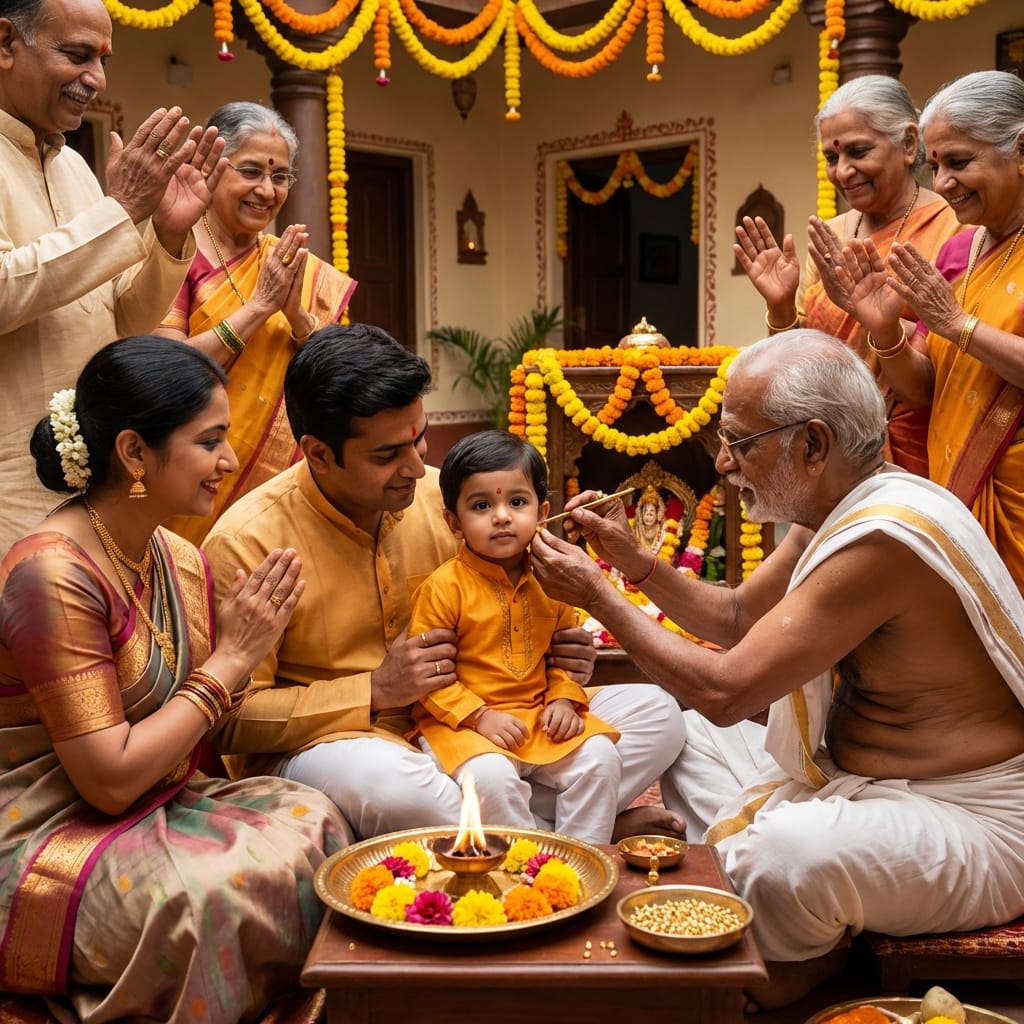
Chudakarana Sanskar (चूड़ाकरण संस्कार), popularly known as Mundan or First Haircut Ceremony, is the eighth of the 16 Shodasha Sanskars. It marks the ceremonial removal of the baby's birth hair, considered a significant purification ritual in Hindu tradition.
The word "Chudakarana" comes from "Cuda" (lock of hair kept on crown) and "Karana" (to make or perform). Traditionally performed when the child is 1 year old (some families do it at 3 or 7 years), this ceremony involves shaving the baby's hair completely (or leaving a small tuft called Shikha/Choti at the crown for traditional families).
The ritual is believed to remove negative energies from the womb, purify the child, promote healthy hair regrowth, and stimulate brain development. Many families visit sacred places like Tirupati Balaji Temple, Palani Temple, or family temples to perform Mundan, offering the hair to the deity as a symbol of humility and gratitude.
Along with spiritual significance, modern science recognizes potential hygienic benefits of removing birth hair. The ceremony is joyous, with family gatherings, feast, and the child being showered with gifts and blessings after the haircut.
Science & Ayurveda Behind Chudakarana
वैज्ञानिक और आयुर्वेदिक आधार
The rituals of head shaving have tangible benefits:
Hygiene & Scalp Health: Removing birth hair allows for the treatment of cradle cap and inspection of the fontanelle. The application of sandalwood/turmeric post-shave acts as a natural antiseptic.
Stimulation of Marma Points: The scalp contains vital energy points (Adhipati Marma). Gentle massage and shaving are believed to stimulate blood flow to the brain, potentially aiding calmness and cognitive development.
Vitamin D Absorption: Exposing the scalp to direct sunlight (often done at temples) enhances Vitamin D synthesis, which is crucial for the growing skeletal system of a toddler.
Temperature Regulation: Shaving the head helps keep the child cool, especially in hot climates, preventing heat rashes and discomfort.
Psychological Release: For the parents, the act of offering hair often symbolizes releasing the attachment to the "baby" phase and accepting the child's growth into toddlerhood.
Purification Ritual & Ayurvedic Benefits
शुद्धिकरण विधि और आयुर्वेदिक लाभ
Chudakarana is mentioned in Grihya Sutras and Ayurvedic texts as essential for health and spiritual purification. Ancient sages believed that birth hair carries impressions from the womb and previous births (Karmic imprints), so removing it allows fresh, pure growth representing the child's new life.
Ayurvedic reasoning: Birth hair is considered weak, thin, and potentially harboring bacteria. Shaving allows stronger, healthier hair to grow. The scalp receives stimulation, improving blood circulation, which is believed to enhance brain development and cognitive function.
The custom of visiting sacred temples for Mundan has deep roots. Families would travel to famous shrines like Tirupati, offering the child's hair as a humble sacrifice and seeking divine blessings for health and prosperity. This practice continues widely today.
The Shikha (topknot) traditionally kept at the crown represents the point where sushumna nadi (central energy channel) emerges. It's believed to protect this vital energy center and maintain spiritual connection, though many modern families opt for complete shaving.
Historically done by trained barbers with sacred mantras, modern parents often choose professional stylists but maintain the spiritual elements through prayers and temple visits.
How Chudakarana is Performed
चूड़ाकरण / मुंडन कैसे किया जाता है
Ideal Timing & Preparation
उचित समय
Performed at 1 year (common), 3 years, or odd-aged years. Choose auspicious day (Muhurat). Many visit temples like Tirupati. Arrange for experienced barber/stylist. Prepare the venue with puja items.
Preliminary Puja
प्रारंभिक पूजा
Perform Ganesh Puja for obstacle-free ceremony. Worship family deity and ancestors. Recite protective mantras. Create positive, joyful atmosphere to keep child comfortable.
Hair Removal Ritual
केश निष्कासन विधि
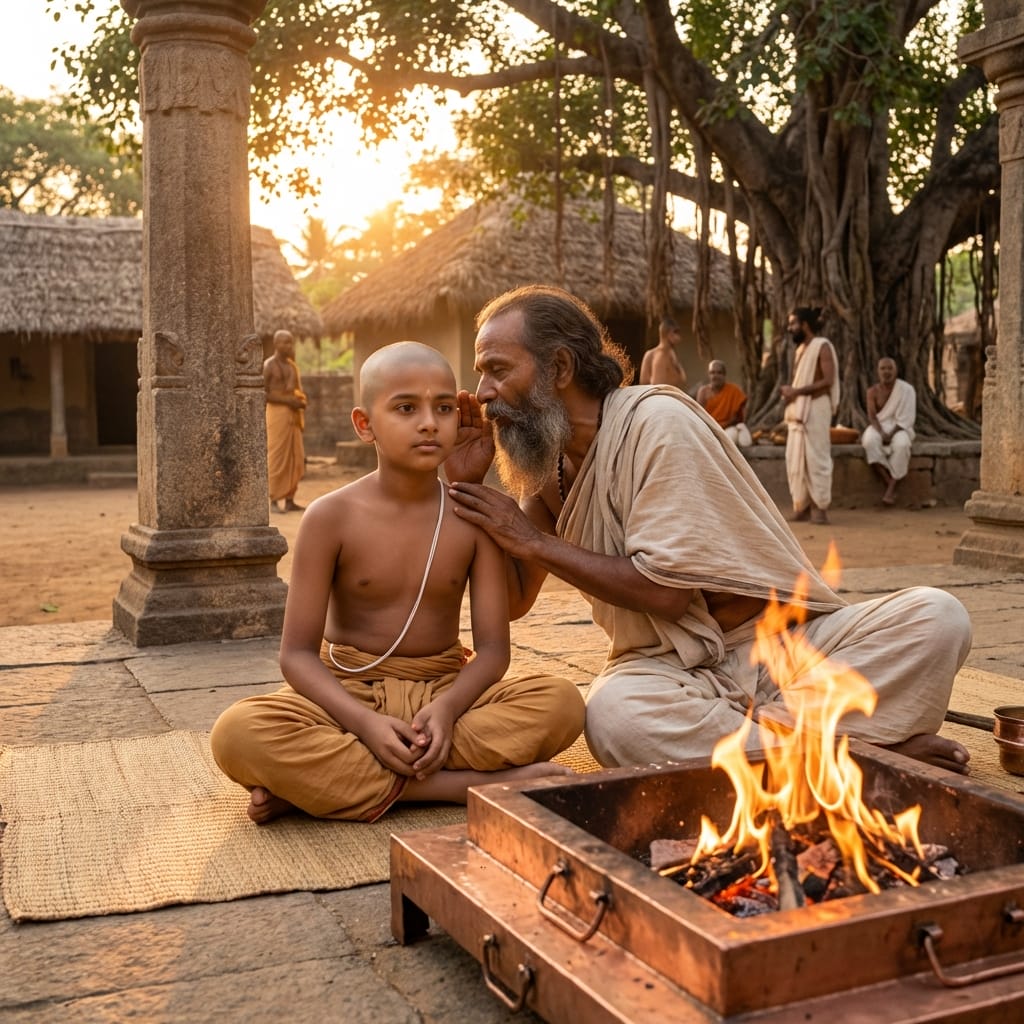
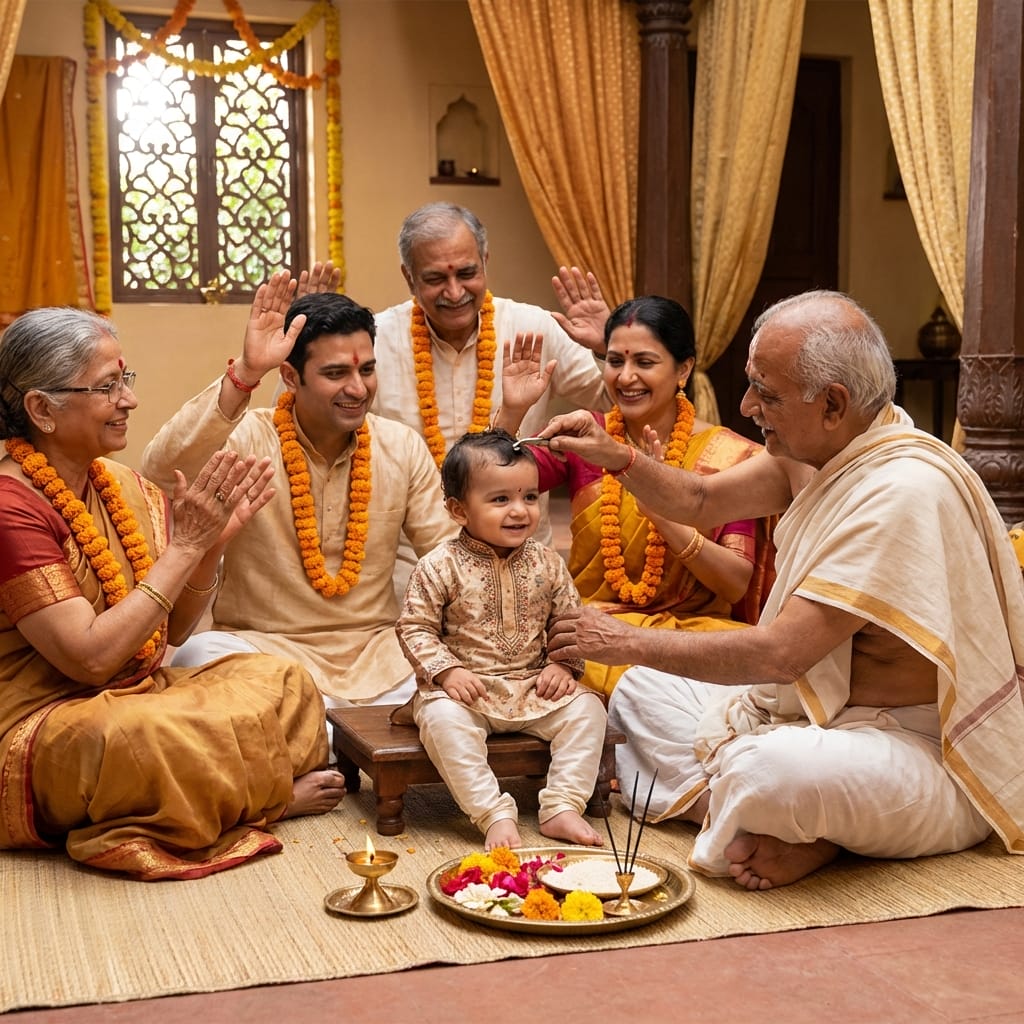
Barber or parent begins from the right side of head moving to left. Chant mantras during cutting. Use sacred blade or modern clippers. Some leave Shikha (topknot) at crown; others shave completely. Collect hair carefully for donation/disposal.
Post-Mundan Care & Celebration
उत्सव
Apply sandalwood paste or coconut oil to soothe scalp. Bathe child. Dress in new clothes. Elders bless the baby. Distribute sweets. Feast with family. Some offer hair to temple; others immerse in sacred river.
Chudakarana / Mundan Ritual Steps
मुंडन विधि चरण
Why It Matters
यह महत्वपूर्ण क्यों है
Spiritual Purification – Removes birth hair believed to carry womb imprints and negative energies, allowing fresh spiritual growth.
Hygienic Benefits – Eliminates weak birth hair, allowing stronger, healthier hair to grow from clean scalp.
Brain Stimulation – Scalp massage and shaving stimulate blood circulation to the brain, believed to enhance cognitive development.
Humility & Surrender – Offering hair to deity teaches detachment and surrendering ego from an early age.
Family Bonding – Temple visits and celebrations create lasting memories and strengthen family ties.
Cultural Continuity – Connects child to ancient traditions and sacred pilgrimage practices.
What's Inside
इसमें क्या है
- Complete Mundan Process – Step-by-step ceremony guide
- Temple Visit Guidelines – How to perform Mundan at Tirupati and other temples
- Mantras for Hair Cutting – Specific Vedic verses
- Post-Mundan Care – Scalp care and hygiene tips
- Shikha Tradition – Whether to keep topknot or shave completely
- Hair Donation Significance – Where and how to offer hair
- Modern Adaptations – Home Mundan vs temple visits
Frequently Asked Questions
अक्सर पूछे जाने वाले प्रश्न
When is the best age to perform Mundan/Chudakarana?
Traditionally at 1 year (mostcommon) or 3 years. Some families wait until 5 or 7 years based on regional customs. The timing should consider: child's temperament (some toddlers are more cooperative), weather (avoid extreme heat/cold), and family convenience. There's flexibility—choose what works best while aiming for odd-numbered age years for auspiciousness.
Is it necessary to go to Tirupati or can we do Mundan at home?
Both are valid! Tirupati, Palani, and other temples are traditional pilgrimage sites offering special spiritual significance, but home Mundan with proper prayers and family priest is equally acceptable. Temple visits add community blessing and sacred atmosphere, but if difficult to travel with a baby, home ceremonies are perfectly fine. The intention and prayers matter most.
Should we leave Shikha (topknot) or shave completely?
This varies by family tradition. Traditional Brahmin families leave a small Shikha at the crown (representing spiritual energy center), while many modern families opt for complete shaving for simplicity and hygiene. Both are acceptable. Discuss with family elders about your tradition. The Shikha is optional—the purification ritual's essence remains regardless.
What should we do with the shaved hair?
Traditional options: 1) Offer to temple deity (at Tirumala, hair is collected and sold, proceeds fund temple activities), 2) Immerse in holy river (Ganga, Godavari), 3) Bury in garden/clean earth, 4) Keep small portion as keepsake. Avoid throwing in regular trash—treat it respectfully as it was part of your child's body.
How to keep baby calm during Mundan?
Tips: 1) Choose baby's best time (well-rested, fed), 2) Have favorite toy/snack as distraction, 3) Parent holds child lovingly, 4) Use professional child-friendly barber, 5) Keep atmosphere joyful not tense, 6) Sing songs or play videos, 7) Work quickly but gent ly, 8) Some parents do it while baby sleeps! Every child is different—find what works.
Is Mundan safe and hygienic?
Yes, when done properly! Ensure: 1) Clean, sterilized equipment, 2) Experienced barber/stylist, 3) No cuts or nicks (use gentle electric clippers vs razors for safety), 4) Clean water and environment, 5) Post-Mundan scalp care with gentle oil/paste, 6) Protect shaved head from sun and cold initially. Most children have zero issues when hygiene is maintained.
Scientific References & Citations
- Cradle Cap (Seborrheic Dermatitis) in Infants — Mayo Clinic
- Vitamin D Synthesis and Sunlight — Harvard Health Publishing