About Karnavedha Sanskar - Hindu Ear Piercing Ceremony Complete Guide
Karnavedha Sanskar - Hindu Ear Piercing Ceremony Complete Guide के बारे में
Karnavedha Sanskar (कर्णवेध संस्कार), commonly known as Ear Piercing Ceremony, is the ninth of the 16 Shodasha Sanskars. It involves piercing the ear lobes of the child, a practice that combines spiritual, cultural, aesthetic, and health aspects.
The word "Karnavedha" comes from "Karna" (ear) and "Vedha" (piercing or penetrating). Traditionally performed between 6 months to 5 years (timing varies by region and family tradition), this ceremony is observed for both boys and girls, though in modern times it's more commonly continued for girls.
Beyond aesthetics, Karnavedha has Ayurvedic significance. Ancient texts describe specific marma points (vital energy points) in the ear lobes that, when pierced, regulate energy flow, enhance intelligence, improve eyesight, and promote reproductive health. The practice aligns with acupuncture principles, where ear piercing stimulates pressure points connected to various body organs.
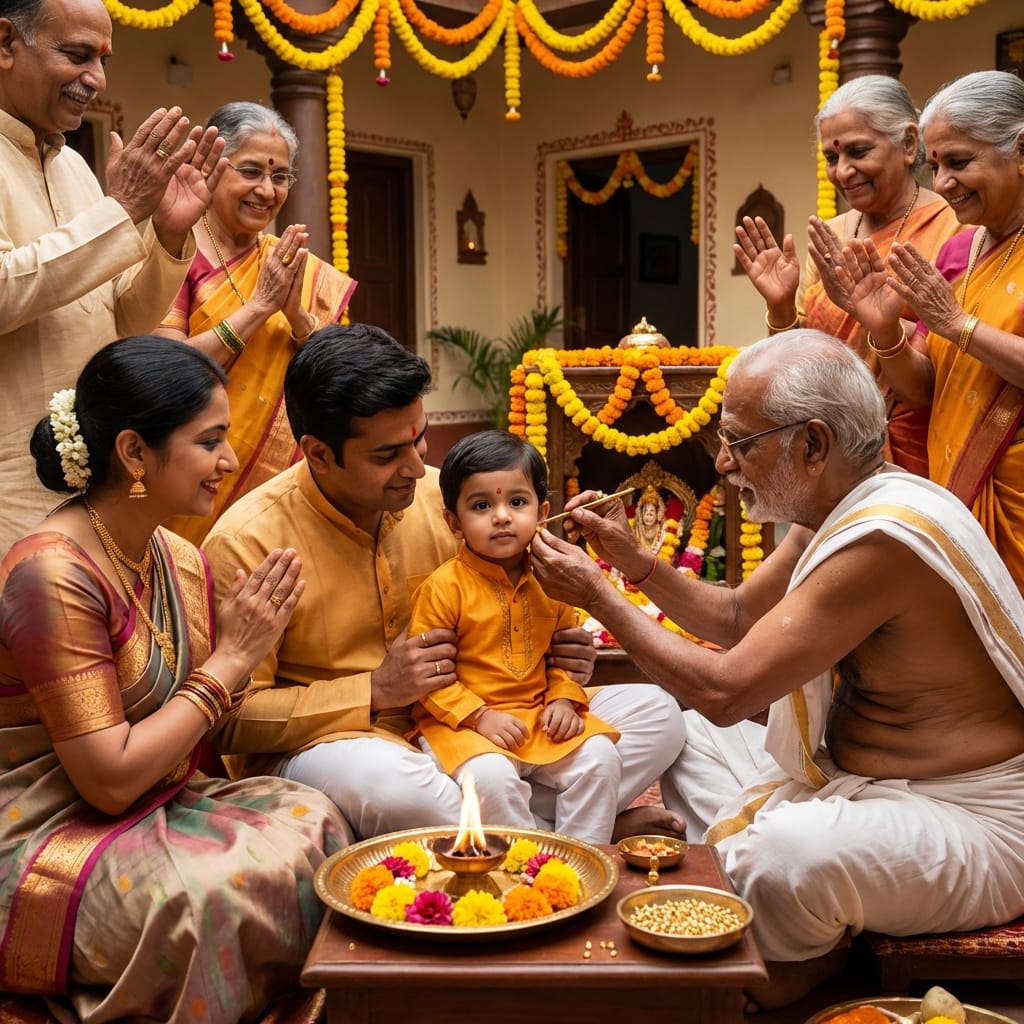
The ceremony involves a trained goldsmith or experienced piercer using a sterilized needle or modern piercing gun to create holes in the ear lobes. Gold earrings (studs) are traditionally inserted immediately, as gold is believed to have healing and purifying properties. The ritual is accompanied by prayers, mantras, and blessings from family elders, followed by celebration with sweets and gifts.
Science & Ayurveda Behind Karnavedha
वैज्ञानिक और आयुर्वेदिक आधार
Ear piercing is rooted in ancient acupuncture science:
Auricular Acupuncture: The ear lobe center corresponds to the 'eye' and 'brain' points in acupuncture microsystems. Stimulation here is believed to vitalize sensory organs.
Reproductive Health: Ayurvedic texts link the ear lobe meridian to the reproductive system. Piercing was believed to help regulate menstrual cycles in females and prevent hernias in males.
Immunity & Neural Pathways: The vagus nerve branch in the ear, when stimulated, can have a calming effect (parasympathetic activation), potentially aiding in immune regulation and digestion.
Gold's Properties: Ayurveda considers gold a "healing metal" that improves energy flow and prevents infection. Its inert nature makes it the safest material for fresh piercings.
Brain Hemisphere Balance: Piercing both ears simultaneously was believed to help balance the left and right hemispheres of the brain, promoting logical and creative equilibrium.
Ayurvedic Acupressure & Cultural Significance
आयुर्वेदिक एक्यूप्रेशर और सांस्कृतिक महत्व
Karnavedha is extensively described in Ayurvedic texts like Sushruta Samhita, which identifies specific points on the ear lobe for piercing to maximize health benefits. Sushruta, the ancient surgeon, documented that ear piercing at the center of the ear lobe stimulates the brain, improves hearing, prevents hernias, and regulates menstrual health in women.
The use of gold for first earrings is not merely traditional but based on Ayurvedic metallurgy (Rasa Shastra). Gold has natural anti-inflammatory and antimicrobial properties, reduces infection risk, and facilitates faster healing. It's also believed to balance body energies and enhance spiritual vibrations.
Historically, ear piercing was universal for all genders. It signified maturity, social status, and readiness for wearing ornaments. For boys, particularly in traditional Brahmin families, ear piercing was essential as they would later wear heavy ornaments during sacred thread ceremonies. Over time, the practice became more gender-specific in many communities, with girls continuing the tradition more widely.
Different regions in India have unique customs: South Indian practices often combine Karnavedha with Namakarana or Annaprashana, while North Indian families typically perform it separately. The number of piercings and their placement also vary—some pierce once, others multiple times.
Modern science validates Ayurvedic claims: auricular acupuncture (ear acupuncture) is a recognized therapeutic practice. Points in the ear are connected to major organs, and stimulation can affect digestion, immunity, and neurological functions.
How Karnavedha is Performed
कर्णवेध कैसे किया जाता है
Ideal Timing
उचित समय
Performed between 6 months to 5 years (varies by tradition). Some do it at 6-8 months, others wait until 3-5 years when child can cooperate. Choose cool weather season (avoid summer heat for faster healing). Select auspicious day and muhurat.
Preparation & Choosing Piercer
तैयारी
Select experienced goldsmith, professional piercer, or pediatric-approved clinic. Ensure sterilized needles/piercing gun. Prepare gold studs (small, lightweight for babies). Have antiseptic and cotton ready for post-piercing care.
Piercing Procedure
वेध प्रक्रिया
Perform Ganesh Puja before piercing. Child sits on parent's lap. Piercer marks exact point on lobe center (Ayurvedic marma point). Pierce quickly with one smooth motion. Insert gold studs immediately. Apply antiseptic. Chant protective mantras.
Post-Piercing Care
पश्च देखभाल
Clean pierced ears 2-3 times daily with antiseptic. Rotate studs gently to prevent sticking. Avoid touching with dirty hands. Watch for infection signs. Keep hair away from piercings. Follow up with professional if any issues arise.
Karnavedha Ceremony Steps
कर्णवेध समारोह चरण
Why It Matters
यह महत्वपूर्ण क्यों है
Ayurvedic Health Benefits – Stimulates ear lobe marma points connected to digestion, reproductive health, and brain function.
Improved Eyesight – Ancient belief (and some modern acupuncture claims) that ear piercing enhances vision by stimulating related pressure points.
Cultural Identity – Marks the child's connection to Hindu tradition and cultural heritage through visible ornaments.
Aesthetic Enhancement – Allows wearing beautiful earrings, enhancing personal beauty and self-expression.
Acupressure Therapy – Similar to ear acupuncture, may regulate body energy and support overall wellness.
Rite of Passage – Symbolizes growth, maturity, and readiness for adornment and social participation.
What's Inside
इसमें क्या है
- Complete Piercing Guide – Step-by-step Karnavedha ceremony
- Ayurvedic Marma Points – Where exactly to pierce for health benefits
- Safety & Hygiene – Medical best practices for child ear piercing
- Post-Piercing Care – Detailed aftercare instructions
- Gold vs Other Metals – Why gold is traditional and beneficial
- Age Considerations – Best timing for different age groups
- Modern Piercing Options – Traditional methods vs professional clinics
Frequently Asked Questions
अक्सर पूछे जाने वाले प्रश्न
At what age should Karnavedha be performed?
Traditional timing varies: 6-12 months (common), 3-5 years (when child can cooperate better), or combined with other ceremonies. Modern pediatricians often recommend waiting until at least 6 months when baby's immune system is stronger. Some families wait until 3-4 years when the child can participate voluntarily and care for piercings. Choose based on child's health, temperament, and family tradition.
Is ear piercing safe for babies and young children?
Yes, when done correctly with proper hygiene! Ensure: 1) Experienced piercer or pediatric-approved clinic, 2) Sterilized equipment (single-use needles or thoroughly sanitized gun), 3) High-quality metal (gold or surgical steel), 4) Appropri ate age (consult pediatrician), 5) Proper aftercare. Infection risk is minimal with good hygiene. Avoid if child has active infection, fever, or immune issues.
Why is gold recommended for first earrings?
Gold has multiple benefits: 1) Natural antimicrobial properties reduce infection risk, 2) Biocompatible—rarely causes allergic reactions, 3) Facilitates faster healing, 4) Ayurvedic belief that gold balances body energies and enhances prana, 5) Doesn't tarnish or corrode. If gold is expensive, high-quality surgical steel or titanium are modern alternatives, though less traditional.
Do boys still get ear piercing in modern times?
This varies by region and family. Traditionally, both boys and girls had ear piercings. In modern times, it's more commonly continued for girls. However, many traditional families still pierce boys' ears, especially in South India and orthodox communities. It's a personal choice based on family customs and individual preference. The Sanskar's spiritual benefits apply regardless of gender.
What is the Ayurvedic significance of ear piercing location?
According to Sushruta Samhita, the exact center of the ear lobe is a critical marma point. Piercing here stimulates: brain function and memory, digestive system regulation, reproductive health (especially for women), eye health and vision, immune system. This is why the piercer's expertise in marking the correct spot is crucial—improper placement may miss the therapeutic benefits.
How long does it take for ear piercings to heal?
Typical healing time: 4-6 weeks for children with gold studs and proper care. During healing: clean 2-3 times daily with antiseptic, rotate studs gently, avoid swimming/dirty water, watch for redness/swelling/discharge (infection signs), keep hair away from ears, don't remove studs. After full healing, can change to different earrings. Babies often heal faster than adults!
Scientific References & Citations
- Auricular Vagus Nerve Stimulation — Frontiers in Neuroscience
- Microsystems in Acupuncture — National Center for Biotechnology Information (NCBI)