About Antyeshti Sanskar - Hindu Last Rites Funeral Ceremony Guide
Antyeshti Sanskar - Hindu Last Rites Funeral Ceremony Guide के बारे में
Antyeshti Sanskar (अंत्येष्टि संस्कार), meaning "Last Sacrifice" or Final Rites, is the sixteenth and concluding Sanskar of the Shodasha Sanskaras. It marks the soul's final transition from the physical body, facilitating its journey toward liberation or rebirth.
The word "Antyeshti" comes from "Antya" (last/final) and "Ishti" (sacrifice/offering). Unlike other Sanskars celebrating life's beginnings and milestones, Antyeshti honors life's completion and assists the departed soul's onward journey with dignity, respect, and spiritual support.
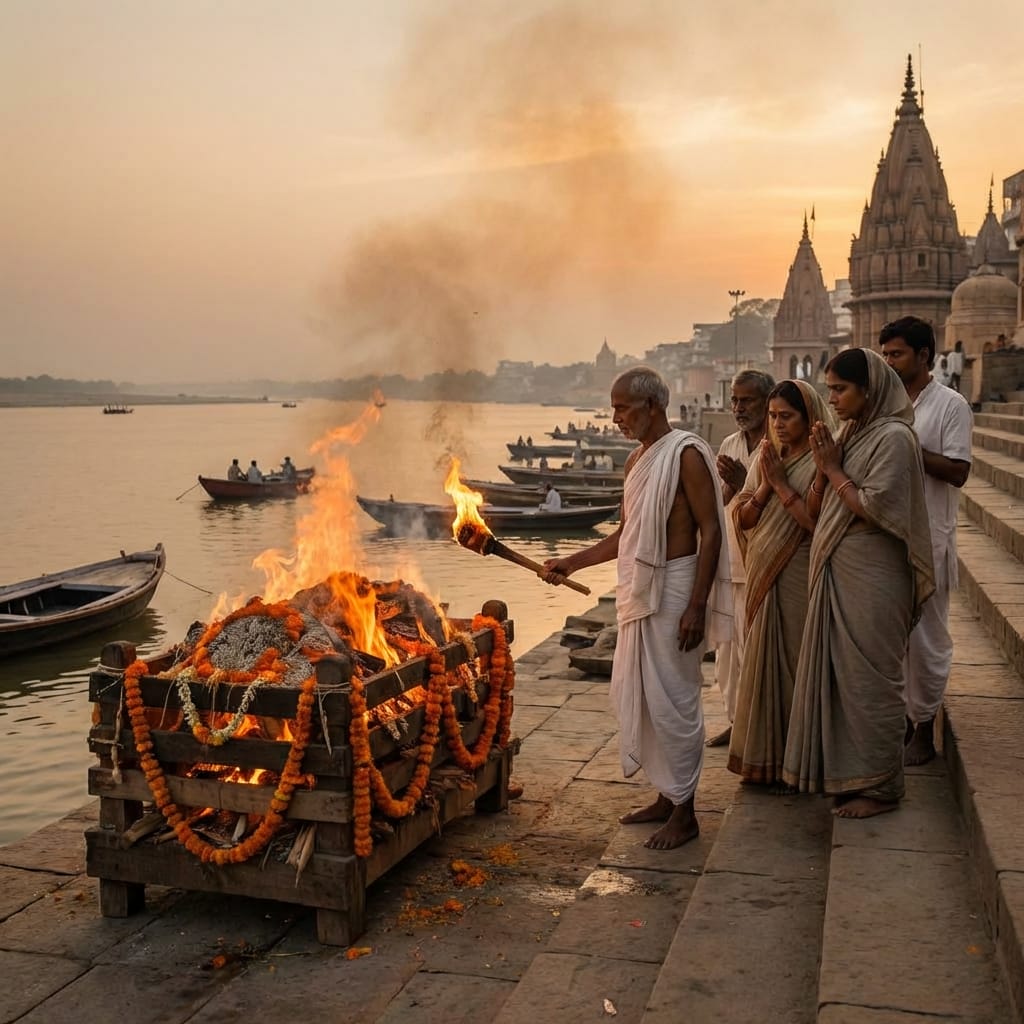
The primary practice is cremation (Dah Samskara) - burning the body to release the soul from material attachment. Fire (Agni) again serves as the sacred medium, purifying the elements and freeing the Atman (soul) from bodily identification. The ritual emphasizes that the body is temporary; the eternal soul continues its journey.
Key rituals include: preparing the body with sacred bath and cloth, carrying to cremation ground with chants, circumambulating the pyre, lighting the fire (usually by eldest son), collecting remains for immersion in holy river, followed by Shraddha ceremonies (13-day mourning and annual remembrance) to honor the deceased and help the soul's transition.
Antyeshti teaches profound truths: impermanence of physical existence, continuity of the soul, importance of living dharmically, and honoring ancestors. It provides closure for the living while facilitating the best possible next journey for the departed.
Science & Ayurveda Behind Antyeshti
वैज्ञानिक और आयुर्वेदिक आधार
The final rites address intense psychological and biological needs:
Grief Processing: The 13-day mourning period (Sutak) provides a structured framework for grief. Psychology confirms that rituals help process loss by providing 'something to do' when helpless, reducing PGD (Prolonged Grief Disorder).
Cremation & Hygiene: Rapid cremation prevents the spread of pathogens from the decaying body. Fire is the most effective purification method, ensuring no environmental contamination.
Closure Mechanics: The act of 'Kapal Kriya' or lighting the pyre gives a finality that helps the brain accept the reality of death (breaking denial), a crucial first step in the Kubler-Ross grief cycle.
Community Support Systems: The rituals mandate community gathering and feeding, ensuring the bereaved are not isolated. Social support is the #1 buffer against depression after loss.
Environmental Reintegration: Returning ash to water (Gangajal) completes the cycle of returning elements to nature (calcium/phosphorus recycling) in a non-toxic way compared to modern embalming chemicals.
Philosophy of Death & Rebirth
मृत्यु और पुनर्जन्म का दर्शन
Hindu philosophy views death not as an end but as a transition—Atman (soul) is eternal, only the body perishes. The Bhagavad Gita beautifully states: "Just as a person discards worn-out garments and wears new ones, the soul discards worn-out bodies and enters new ones." Antyeshti facilitates this transition respectfully.
Cremation over burial: Hinduism predominantly cremates because fire is considered the purest element, destroying all material attachments and impurities. The rapid transformation to ashes symbolizes the body's return to five elements (Pancha Bhuta) - earth, water, fire, air, ether. Burial is allowed for specific cases (children, sages, certain sects).
Role of the son: Traditionally, the eldest son lights the funeral pyre (Mukhagni), fulfilling a sacred duty believed to liberate the father's soul. This "debt to ancestors" (Pitri Rina) is profound—sons ensure proper rites for parents. In modern times, daughters or other relatives perform this if no sons, as the intent matters more.
Thirteen-day mourning (Shraddha): The first 13 days involve daily rituals helping the soul transition from Pret (disembodied spirit) to Pitri (honored ancestor). On the 13th day, a major ceremony integrates the soul with ancestors. Annual Shraddha during Pitru Paksha (ancestor fortnight) continues honoring departed souls.
Concepts of afterlife: Depending on karma, the soul may: attain Moksha (liberation from rebirth cycle), go to higher realms, or reincarnate. Proper Antyeshti and family prayers positively influence this journey by removing obstacles and accumulated karmic baggage.
Cremation grounds (Shamshana): Considered sacred transition spaces. Major cremation sites like Varanasi's Manikarnika Ghat are believed to grant instant liberation. Families travel great distances to cremate loved ones at such holy places and immerse remains in Ganga.
Antyeshti Ritual Process
अंत्येष्टि विधि प्रक्रिया
Body Preparation
शव तैयारी
Body is bathed, dressed in new cloth (white for men, colored for women/widows), adorned with sandalwood paste, flowers, sacred ash. Mantras are chanted. Body is placed on bamboo bier for transport. Continuous chanting of "Ram Naam Satya Hai" (Ram's name is truth).
Cremation (Dah Samskara)
दाह संस्कार
Body is placed on wood pyre at cremation ground. Family circumambulates clockwise while chanting. Son or chief mourner lights the pyre (Mukhagni), usually starting at the head. Fire releases soul from body. Remains collected after burning.
Asthi Visarjan (Remains Immersion)
अस्थि विसर्जन
Ashes and bone fragments (Asthi) collected 2-3 days later. Immersed in holy river—ideally Ganga, or local river. This completes the physical aspect, symbolizing return to nature. Many families travel to Haridwar or Varanasi for this.
Shraddha (13-day & Annual)
श्राद्ध
Daily rituals for 13 days help soul's transition. On 13th day, major ceremony integrates soul with ancestors (Sapindakarana). Annual Shraddha during Pitru Paksha with offerings (Pinda Daan) ensures ancestors' peace and blessings for descendants.
Antyeshti Ceremony Steps
अंत्येष्टि समारोह चरण
Why It Matters
यह महत्वपूर्ण क्यों है
Dignified Transition – Provides respectful, sacred farewell honoring the person's life and facilitating soul's onward journey.
Soul Liberation – Cremation and rituals help release soul from material attachments, enabling better rebirth or liberation (Moksha).
Closure for Living – Structured mourning period (13 days) helps family process grief and transition back to normal life gradually.
Ancestral Connection – Shraddha ceremonies maintain connection with ancestors, seeking their blessings and ensuring their peace.
Impermanence Lesson – Reminds all of mortality, encouraging dharmic living and detachment from material existence.
Pitri Rina (Ancestral Debt) – Sons/family fulfill sacred duty to parents, ensuring proper rites and honoring lineage.
What's Inside
इसमें क्या है
- Complete Ritual Guide – Step-by-step Antyeshti ceremony process
- Cremation vs Burial – Why Hinduism favors cremation and exceptions
- Shraddha Explained – 13-day and annual ancestor rituals detailed
- Soul Journey Beliefs – What happens after death according to Hindu philosophy
- Holy Rivers Significance – Why Ganga immersion is important
- Modern Adaptations – Electric crematoriums, environmental considerations
- Grief Support – How rituals aid in psychological healing
Frequently Asked Questions
अक्सर पूछे जाने वाले प्रश्न
Why is cremation preferred over burial in Hinduism?
Cremation is believed to: 1) Purify the soul by destroying material attachments through sacred fire (Agni), 2) Rapidly return the body to five elements (Pancha Bhuta), 3) Prevent the soul from lingering attached to the body, 4) Symbolize that the physical form is temporary while Atman is eternal. Burial makes decomposition slow and may delay soul's journey. Exceptions: infants, enlightened souls (sages), certain sects practice burial or immersion in holy rivers instead.
Can daughters perform last rites if there are no sons?
Absolutely yes! While traditionally sons performed Mukhagni (lighting pyre), modern understanding recognizes that daughters can and do perform all rites with equal spiritual validity. The intent, devotion, and proper ritual performance matter, not the gender. Many priests now support daughters performing last rites. Progressive Hindu families embrace this equality. If no children, other close relatives (brothers, nephews, grandsons) can perform the rites.
What is the significance of the 13-day mourning period?
The 13 days (Sut ak) help the soul transition from Pret (disembodied spirit) to Pitri (honored ancestor). Daily rituals (Shraddha) with offerings guide the soul, removing karmic obstacles. On the 13th day, Sapindakarana ceremony formally integrates the soul with ancestors. For the living, it's structured grieving time allowing gradual return to normal life. Family abstains from celebrations, wears simple clothes, eats simple food, showing respect during this sacred period.
Is it necessary to immerse ashes in the Ganga?
While highly auspicious and traditional, it's not absolutely mandatory. Ganga (or other holy rivers: Yamuna, Godavari, Narmada, Kaveri) is considered spiritually powerful for soul liberation. If traveling to Ganga isn't possible, immersion in local rivers, sea, or flowing water bodies is acceptable. The key is releasing the physical remains to nature. Many crematoriums have designated water bodies. The prayers and intent during immersion matter most.
How do electric crematoriums align with traditional beliefs?
Modern electric/gas crematoriums are increasingly accepted as they fulfill the essential purpose: reducing body to ashes through fire, enabling soul's release. While traditional wood pyres have ritual significance and direct family involvement, electric cremation is: environmentally friendlier (less wood, pollution), more controlled and dignified, practical in urban areas with space/wood constraints. Essential prayers and rituals can still be performed. The sacred fire element (Agni) remains present.
What should one do if death occurs far from home or abroad?
Options include: 1) Perform cremation locally with priest (most Hindu communities globally have temples/priests for this), 2) If legally possible, transport body to homeland for cremation (expensive, requires embalming), 3) Cremate locally, bring ashes home for final rites and Ganga immersion. Many consulates assist Hindu families. The family can perform Shraddha ceremonies at home regardless of where body was cremated. Intention and proper ritual matter more than location—the soul's journey continues wherever rites are performed with devotion.
Scientific References & Citations
- Stages of Grief (Kubler-Ross) — National Institutes of Health (NIH)
- Psychological Function of Funeral Rituals — Scientific American