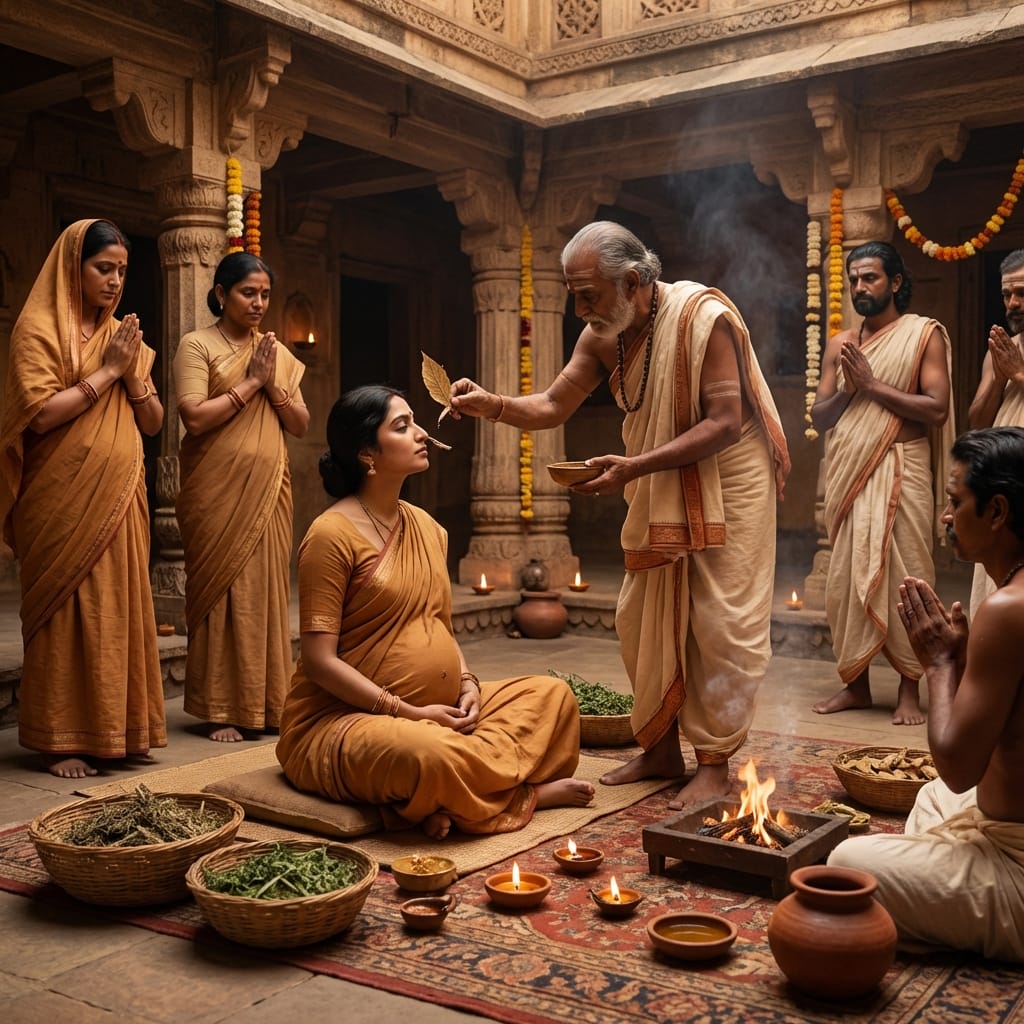
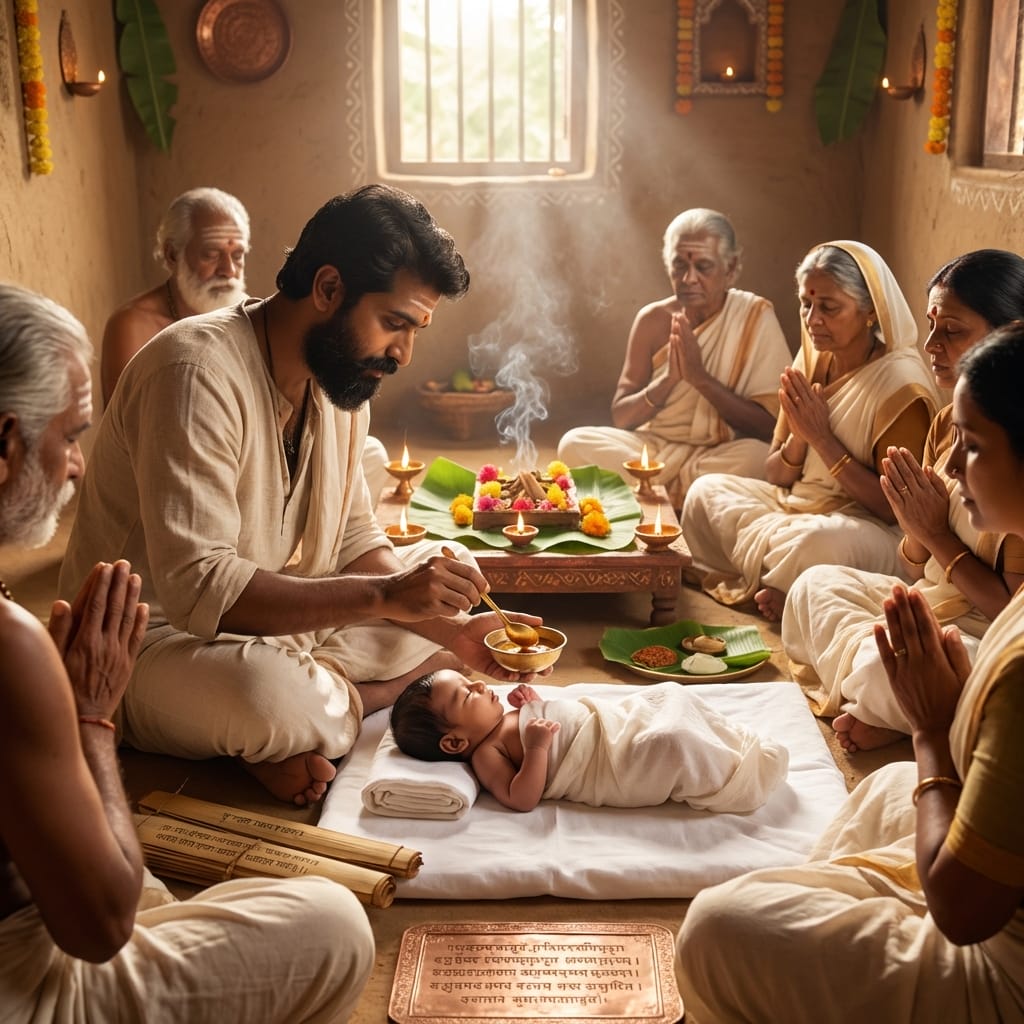
About Garbhadhana Sanskar - Hindu Conception Blessing Ceremony Guide
Garbhadhana Sanskar - Hindu Conception Blessing Ceremony Guide के बारे में
Garbhadhana Sanskar (गर्भाधान संस्कार), also known as Conception Blessing or Pregnancy Planning Ritual, is the very first Sanskar among the 16 Shodasha Sanskaras. It marks the sacred beginning of the journey of bringing a new soul into this world.
The word "Garbhadhana" comes from Sanskrit: "Garbha" meaning "womb" or "conception" and "Dhana" meaning "to give" or "to bestow." This Sanskar is performed by married couples who wish to conceive a child with divine blessings and auspicious intentions.
Unlike other Sanskars which are public celebrations, Garbhadhana is an intimate, private ritual performed by the couple. It emphasizes mental purity, physical health, astrological timing, and spiritual readiness before conception. The ritual is rooted in the belief that the state of mind, health, and spiritual consciousness of parents at the time of conception significantly influences the child's character, health, and destiny.
Ancient Vedic texts prescribe specific auspicious times, mantras, dietary guidelines, and mental preparations to ensure that the soul entering the womb is virtuous, healthy, and spiritually evolved. Modern couples are increasingly rediscovering this ancient wisdom as they plan for conscious conception.
Science & Ayurveda Behind Garbhadhana
वैज्ञानिक और आयुर्वेदिक आधार
Modern reproductive science has validated many Garbhadhana principles that were established thousands of years ago:
Epigenetics & Parental State: Research shows that parental health, stress levels, nutrition, and even mental state at conception can influence gene expression through epigenetic mechanisms. The ancient emphasis on mental purity and positive emotions aligns with studies showing stress hormones (cortisol) can affect fertility and early embryonic development.
Preconception Health (Ayurvedic Panchakarma): The Ayurvedic recommendation for detoxification before conception parallels modern preconception care guidelines. Studies confirm that reducing toxins, optimizing nutrition (folic acid, iron, omega-3s), and achieving healthy weight improve conception rates and fetal health.
Optimal Timing (Ritu Kala): Ayurveda's emphasis on specific cycle days (5th-16th day) matches the modern understanding of the fertile window. The ovulation period (days 10-16 of a 28-day cycle) is when conception is most likely. Ancient texts identified this without modern technology!
Circadian & Lunar Rhythms: While controversial, some research suggests lunar phases may influence menstrual cycles and hormonal patterns. Ancient preference for specific nakshatras (lunar mansions) may have empirical basis in chronobiology—the study of biological rhythms.
Conscious Conception: The principle that parental intention and consciousness matter is supported by psychology research. Couples who plan pregnancies mindfully tend to have better prenatal care, reduced anxiety, and healthier pregnancy outcomes.
Nutrition & Sattvic Diet: The recommended pure vegetarian diet rich in fresh foods, ghee, milk, and fruits provides optimal nutrients. Modern nutrition science confirms these foods supply essential fatty acids, proteins, vitamins crucial for early fetal development.
Mental Peace & Meditation: Stress reduction through meditation improves hormonal balance (increases progesterone, decreases cortisol), enhances fertility, and creates optimal conditions for conception. Ancient mantras served as focused meditation practices.
Ayurvedic Shukra Dhatu (Reproductive Essence): Ayurveda's concept of optimizing Shukra (reproductive tissue/essence) through herbs like Ashwagandha and Shatavari is validated by research showing these adaptogens improve sperm quality, hormonal balance, and reproductive health.
Vedic Wisdom & Scientific Correlation
वैदिक ज्ञान और वैज्ञानिक संबंध
Garbhadhana Sanskar is extensively described in ancient texts like the Rigveda, Atharvaveda, Grihya Sutras, and Ayurvedic scriptures (particularly Charaka Samhita and Sushruta Samhita).
The Manusmriti and Vishnu Smriti provide detailed guidelines about auspicious timing, the importance of mental state, dietary regulations, and spiritual preparations. These texts emphasize that conception should not be a random biological act but a sacred, conscious decision.
Ayurveda, the ancient Indian system of medicine, parallels many Garbhadhana guidelines with modern preconception care. It recommends detoxification (Panchakarma), nutritious diet, mental peace, and choosing the right time in the menstrual cycle - concepts now validated by modern reproductive science.
Historically, couples would consult learned sages and Ayurvedic physicians to determine the most auspicious nakshatra, tithi, and muhurat for conception. The ceremony involved prayers, mantras, offerings to deities, and seeking blessings from ancestors to invite a noble soul.
Key Aspects of Garbhadhana
गर्भाधान के मुख्य पहलू
Auspicious Timing (Ritu Snana)
शुभ समय
The ritual is performed after menstruation ends (Ritu Snana). Specific days of the menstrual cycle, nakshatras, and lunar phases are considered. Odd-numbered nights (5th, 7th, 9th, etc.) are generally preferred for conception.
Mental & Spiritual Preparation
मानसिक और आध्यात्मिक तैयारी
Both partners maintain purity of thought, practice meditation, recite specific mantras (like Santana Gopala mantra), and visualize inviting a divine soul. Positive visualization and sacred intentions are emphasized.
Physical Purification
शारीरिक शुद्धि
Ayurvedic detoxification, healthy diet, avoiding alcohol/tobacco, proper rest, and maintaining optimal health through herbs and nutrition. Couples may follow a sattvic diet (pure vegetarian food).
Vedic Mantras & Rituals
वैदिक मंत्र और विधियाँ
Specific mantras are chanted to invoke blessings. Offerings are made to the family deity and ancestors. The couple seeks divine guidance for a healthy, virtuous child with good samskaras.
Garbhadhana Ritual Steps
गर्भाधान विधि

Why It Matters
यह महत्वपूर्ण क्यों है
Conscious Conception – Emphasizes that conception should be a mindful, sacred act rather than impulsive, ensuring the child's future well-being.
Genetic & Karmic Influence – Ancient belief that parents' mental and spiritual state during conception influences the child's genes, temperament, and karmic tendencies.
Astrological Timing – Choosing auspicious nakshatras and planetary positions believed to attract noble souls and ensure favorable life path.
Ayurvedic Health – Preconception detoxification and health optimization increase chances of healthy conception and pregnancy.
Spiritual Foundation – Sets a spiritual tone for the entire journey of parenthood, beginning even before physical conception.
Family Continuity – Honors ancestors and invites their blessings, connecting the new soul to the family lineage.
What's Inside
इसमें क्या है
- Astrological Timing Guide – Best nakshatras and tithis for conception
- Vedic Mantras – Specific chants for Garbhadhana
- Ayurvedic Preparation – Diet, detox, and health guidelines
- Mental & Spiritual Practices – Meditation and visualization techniques
- Modern Relevance – How ancient wisdom aligns with modern preconception care
- Common Misconceptions – Clarifying myths about Garbhadhana
- Scientific Validation – How Vedic guidelines match modern reproductive science
Frequently Asked Questions
अक्सर पूछे जाने वाले प्रश्न
When should Garbhadhana Sanskar be performed?
Garbhadhana is performed after menstruation ends (typically from the 5th day onwards of the menstrual cycle). Specific odd-numbered nights (5th, 7th, 9th, 11th, etc.) are considered more auspicious. Astrologers may recommend specific nakshatras and lunar phases. Modern couples can consult a Vedic astrologer for personalized timing based on their birth charts.
Is Garbhadhana Sanskar still relevant in modern times?
Yes, absolutely. Modern reproductive science now validates many ancient Garbhadhana principles like preconception health, stress management, optimal timing, and parental well-being. Couples worldwide are adopting "conscious conception" practices, which align closely with Garbhadhana teachings. It combines spiritual intention with scientific health practices for optimal outcomes.
Can Garbhadhana be performed for IVF or assisted reproduction?
Yes, the spiritual and mental aspects of Garbhadhana can be adapted for assisted reproduction. Couples can perform prayers, mantras, and mental preparation before IVF procedures. The principle remains the same: approaching conception with purity, positive intention, and divine blessings, regardless of the method.
What mantras are chanted during Garbhadhana?
Common mantras include the Santana Gopala mantra for conceiving a divine child, specific Rigvedic and Atharvavedic hymns for fertility and auspicious conception, and prayers to family deities. A priest can guide the specific mantras based on family tradition. The key is sincere devotion and pure intention.
How does Ayurveda support Garbhadhana?
Ayurveda recommends preconception detoxification (Panchakarma), sattvic diet (pure vegetarian foods), specific herbs for fertility and vitality (like Shatavari, Ashwagandha), avoiding rajasic and tamasic foods, maintaining optimal weight, and balancing doshas. These practices improve fertility, prepare the body for pregnancy, and are believed to influence the child's constitution.
Do both partners need to participate in Garbhadhana equally?
Yes, Garbhadhana emphasizes equal participation from both partners. Both should maintain physical purity, mental peace, and spiritual readiness. The ancient texts state that the qualities, health, and mental state of both father and mother at conception influence the child. It's a joint sacred responsibility, not just the mother's.
Scientific References & Citations
- Epigenetics: How Environment Shapes Your Genes — National Institutes of Health (NIH)
- Preconception Health — Centers for Disease Control and Prevention (CDC)