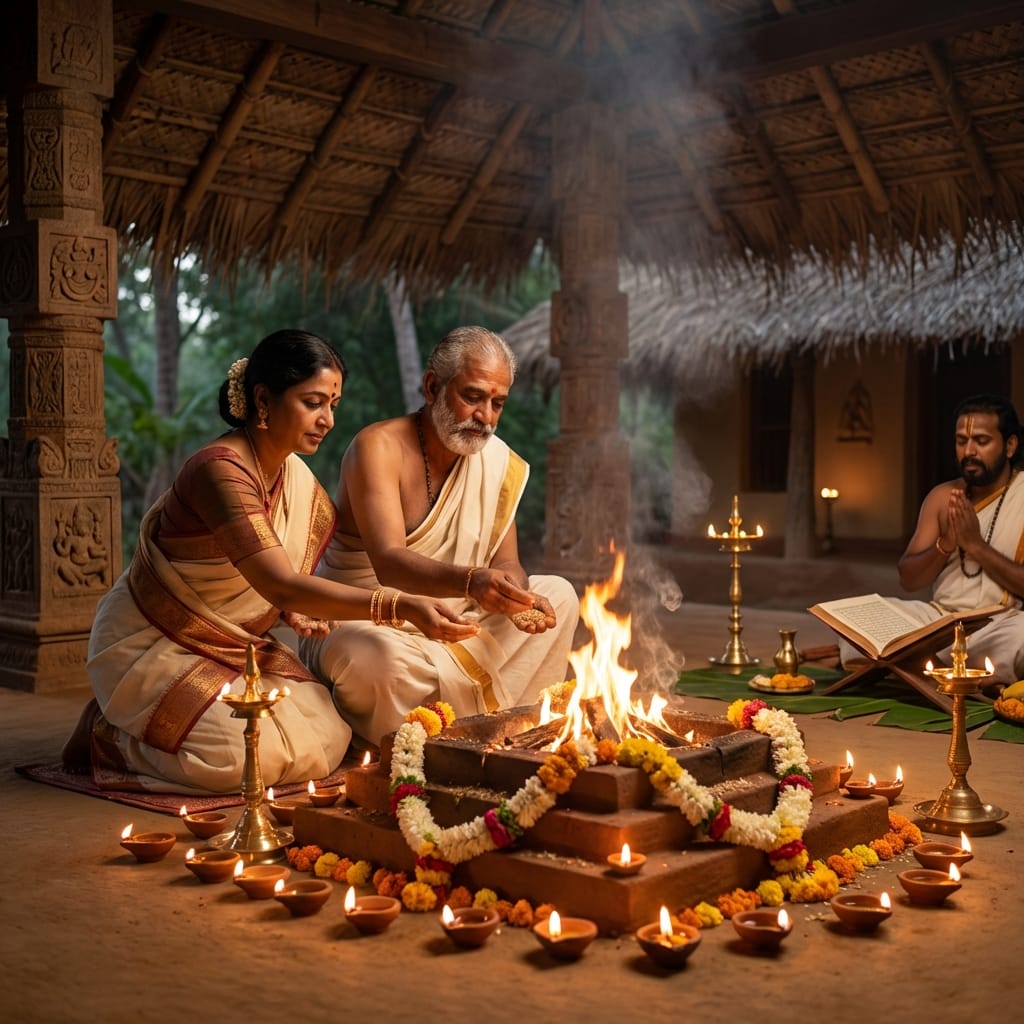
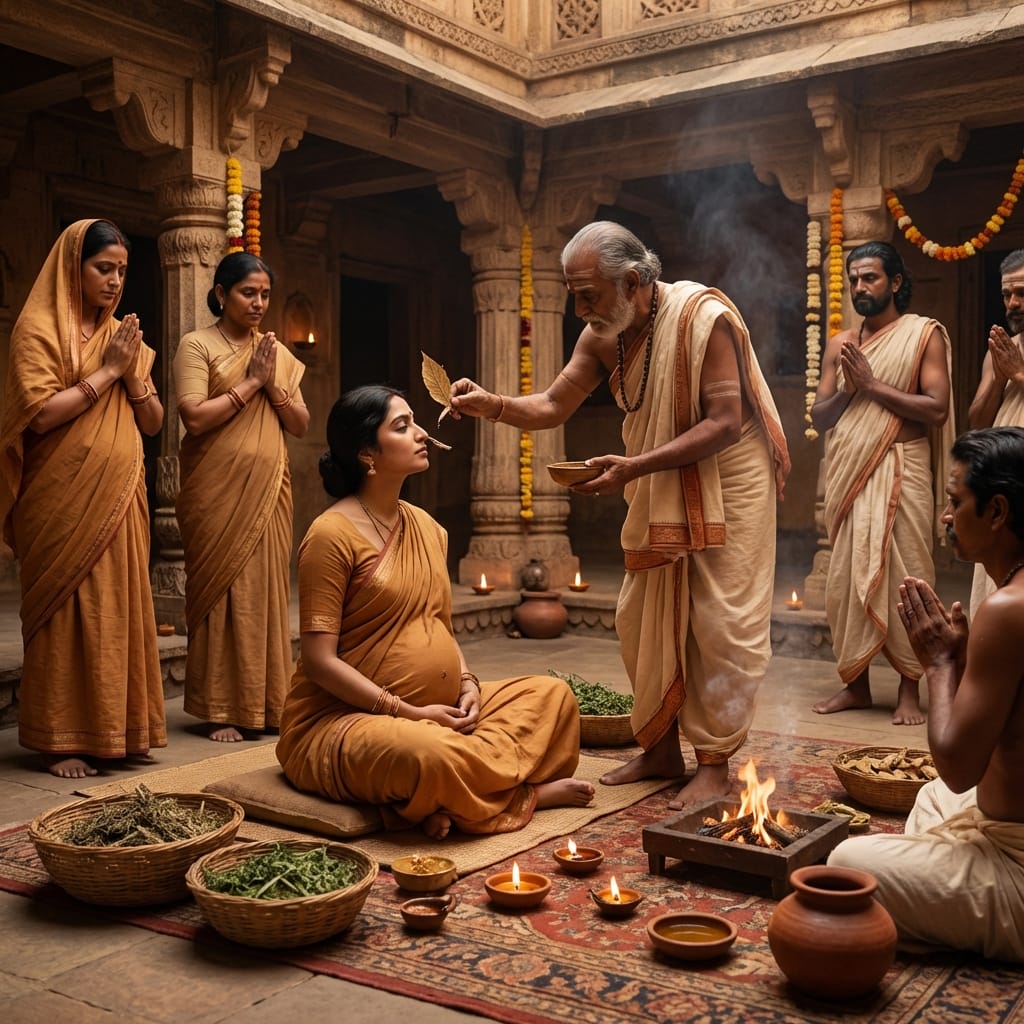
About Namakarana Sanskar - Hindu Baby Naming Ceremony Complete Guide
Namakarana Sanskar - Hindu Baby Naming Ceremony Complete Guide के बारे में
Namakarana Sanskar (नामकरण संस्कार), also popularly known as Baby Naming Ceremony, Naamkaran, or Barnamkaran, is one of the most joyous and significant Hindu rituals. It is the fifth Sanskar among the 16 Shodasha Sanskaras and marks the formal naming of a newborn child.
The word "Namakarana" comes from Sanskrit: "Nama" meaning "name" and "Karana" meaning "to make" or "to create." This sacred ceremony is not merely about giving a child a name, but about bestowing an identity, creating a spiritual vibration, and invoking divine blessings for the child's future.
In Hindu philosophy, a name is considered extremely powerful. It is believed that the vibrations created by a person's name influence their personality, destiny, and life path. The Namakarana Sanskar ensures that the child receives a name that is auspicious, meaningful, and aligned with their astrological chart (Kundali).
This ceremony is typically performed on the 10th, 11th, 12th, or 101st day after birth, though regional variations exist. The timing is chosen based on astrological calculations and family traditions to ensure maximum auspiciousness for the child's future.
Science & Ayurveda Behind Namakarana
वैज्ञानिक और आयुर्वेदिक आधार
Naming a child has profound psychological power:
Identity Formation: Exploring the "Sanskrit Effect" and sound vibrations – specific syllables (like those in Vedic names) create distinct resonance in the brain. Giving a child a meaningful name provides a core piece of identity self-concept.
The Power of Sound (Shabda Brahma): Ancient Rishis believed sounds attract specific energies. Modern phonetics suggests that the sounds we hear most often (our names) shape our neural pathways. Soft sounds soothe; strong sounds empower.
Parental Bonding: The ritual of whispering the name involves intimate proximity and claiming the child, reinforcing the parent-child attachment bond.
Social Existentialism: Being named formally integrates the child into the social fabric. It is the first "social birth" of the individual, granting them personhood in the eyes of the community.
Historical & Scriptural Significance
ऐतिहासिक और ध्यापवत्र महत्व
The Namakarana Sanskar finds extensive mention in ancient Vedic texts and Hindu scriptures. The Grihya Sutras, particularly the Paraskara Grihya Sutra and Ashvalayana Grihya Sutra, provide detailed instructions for performing this sacred ceremony.
According to the Manusmriti, the name given to a child should be meaningful, easy to pronounce, auspicious, and should not invoke fear. Ancient texts emphasize that a person's name significantly influences their character and social interactions.
Historically, the Namakarana ceremony was performed with great care and consultation with learned Brahmins and astrologers. The name was chosen based on the child's Nakshatra (birth star), Rashi (zodiac sign), and the initial syllable recommended by Vedic astrology.
The practice of naming continues to be followed across all Hindu communities worldwide, though modern adaptations have emerged to suit contemporary lifestyles while maintaining the spiritual essence of the ritual.
When & How Namakarana is Performed
नामकरण कब और कैसे किया जाता है
Auspicious Timing
शुभ समय
Traditionally performed on the 10th, 11th, 12th, or 101st day after birth. Some families wait until the first month, sixth month, or even one year. The exact timing is determined based on astrological charts and family customs.
Name Selection Process
नाम चयन प्रक्रिया
The baby's name is chosen based on the Nakshatra (birth star) and Rashi (zodiac sign). Astrologers provide auspicious starting syllables. Names often honor deities, ancestors, or embody virtuous qualities.
Ritual Procedure
विधि प्रक्रिया
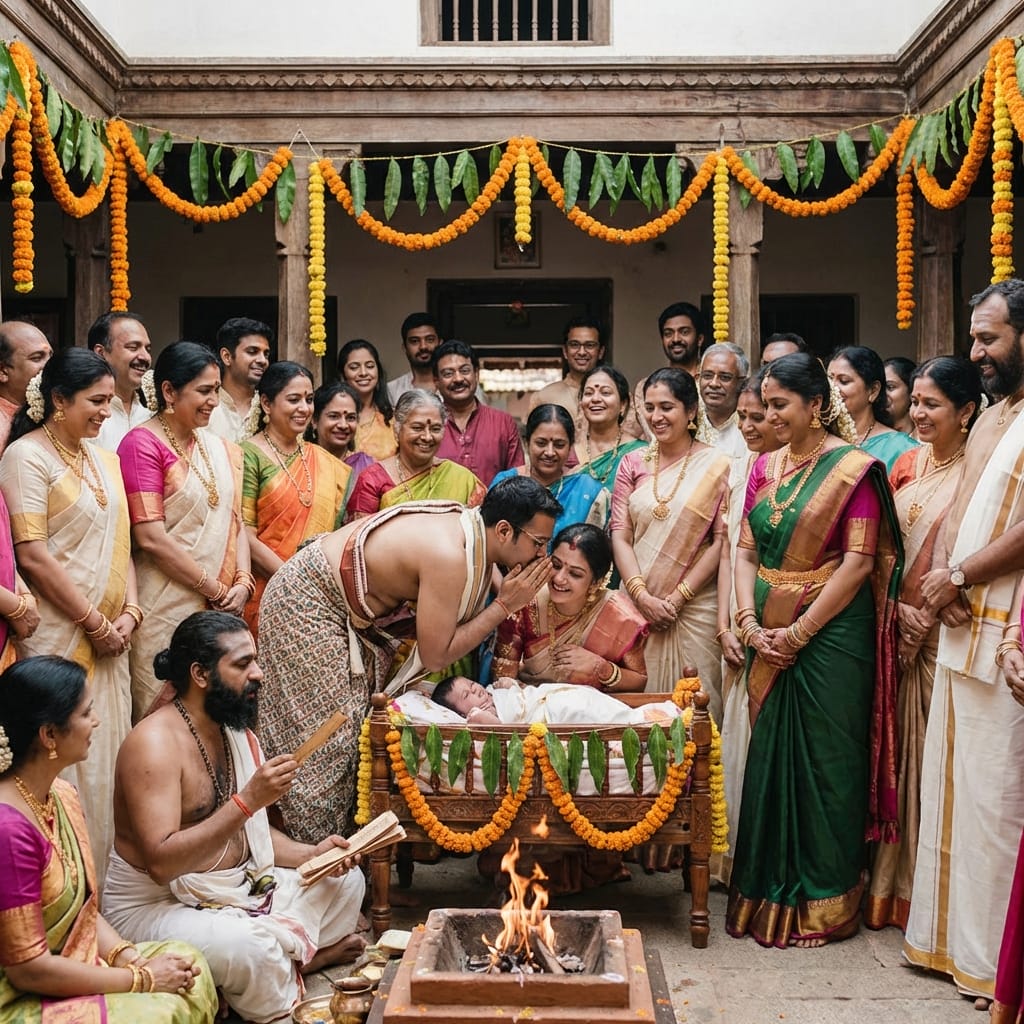
The ceremony includes Ganesh Puja, recitation of mantras, the father whispering the name in the baby's ear, formal announcement to gathered family, and celebration with sweets and blessings.
Modern Adaptations
आधुनिक रूपांतरण
Contemporary families often combine traditional rituals with modern celebrations, invite both family and friends, and may include naming cards, photo sessions, and social media announcements while maintaining spiritual authenticity.
Step-by-Step Namakarana Ritual
नामकरण विधि चरण-दर-चरण
Why It Matters
यह महत्वपूर्ण क्यों है
Identity Formation – The name chosen becomes integral to the child's identity, shaping how they see themselves and how society perceives them.
Astrological Alignment – Names based on Nakshatra and Rashi are believed to harmonize with cosmic energies, bringing positive influences throughout life.
Spiritual Vibrations – Sanskrit names, particularly those of deities, create specific vibrations when chanted, believed to invoke divine protection.
Cultural Continuity – The ceremony connects the child to their heritage, family lineage, and the ancient tradition of Vedic culture.
Social Recognition – The formal naming ceremony officially introduces the child to the community and extended family.
Parental Responsibility – The ritual emphasizes the sacred duty of parents to choose a meaningful name and guide the child's development.
What's Inside
इसमें क्या है
- Detailed Ritual Process – Step-by-step guide from preparation to celebration
- Astrological Naming Rules – How Nakshatra and Rashi influence name selection
- Regional Variations – Different practices across North India, South India, Bengal, Gujarat, and Maharashtra
- Modern vs Traditional – Balancing ancient customs with contemporary celebrations
- Common Mistakes – What to avoid during the ceremony
- Name Categories – Deity names, virtue names, nature-inspired names, ancestral names
- Preparation Checklist – Everything needed for a proper Namakarana ceremony
Frequently Asked Questions
अक्सर पूछे जाने वाले प्रश्न
When should Namakarana Sanskar be performed?
Traditionally, Namakarana is performed on the 10th, 11th, 12th, or 101st day after birth. Some families choose the 6th month or 1st birthday. The exact timing depends on astrological calculations, family customs, and regional traditions. Consult with an astrologer to determine the most auspicious day and time (muhurat) for your child.
How is the baby's name chosen according to Hindu tradition?
The name is chosen based on the baby's Nakshatra (birth star) and Rashi (zodiac sign). Astrologers recommend specific starting syllables that are considered auspicious. Parents may choose from deity names (like Krishna, Lakshmi), virtue names (like Satya, Priya), nature names (like Surya, Chandra), or names honoring ancestors. The name should be meaningful, easy to pronounce, and have positive connotations.
Can Namakarana be done without a priest?
Yes, while traditionally a priest (pandit) conducts the ceremony and recites Vedic mantras, families can perform a simplified version at home. The essential elements are: gathering family, preparing the puja area, performing basic prayers (Ganesh Puja), announcing the name, and seeking blessings from elders. However, for traditional authenticity, consulting a priest is recommended.
What is the significance of whispering the name in the baby's ear?
The father traditionally whispers the chosen name four times in the baby's right ear. This intimate act symbolizes the transfer of identity from parent to child. It is believed that the right ear is more receptive to positive vibrations and the repetition (usually 3 or 4 times) helps imprint the name's spiritual energy on the child's consciousness.
Can the name be changed after Namakarana?
While the formal name given during Namakarana is considered spiritually significant, nicknames (pet names or "daknaam") are common in Hindu culture. If there's a compelling reason, the official name can be changed with another ceremony, though it's generally discouraged as the original name carries the blessings from the muhurat and mantras performed during the ceremony.
What are common regional variations in Namakarana ceremonies?
North India: Naamkaran Puja with priest reciting Vedic mantras, gold pen custom. South India: Often combined with Chor oonu (first rice feeding), simpler home ceremony. Bengal: Jaatkarma and Naamkaran merge, emphasis on Rashie naam (zodiac name). Maharashtra: Barsa or naming on 12th day exactly. Despite variations, core elements (auspicious date, mantras, naming ceremony) remain universal across regions.
Scientific References & Citations
- The Psychology of Names — Psychology Today
- Sound Symbolism and Bouba/Kiki Effect — Cambridge University Press