About Upanayana Sanskar - Sacred Thread Ceremony Janeu Complete Guide
Upanayana Sanskar - Sacred Thread Ceremony Janeu Complete Guide के बारे में
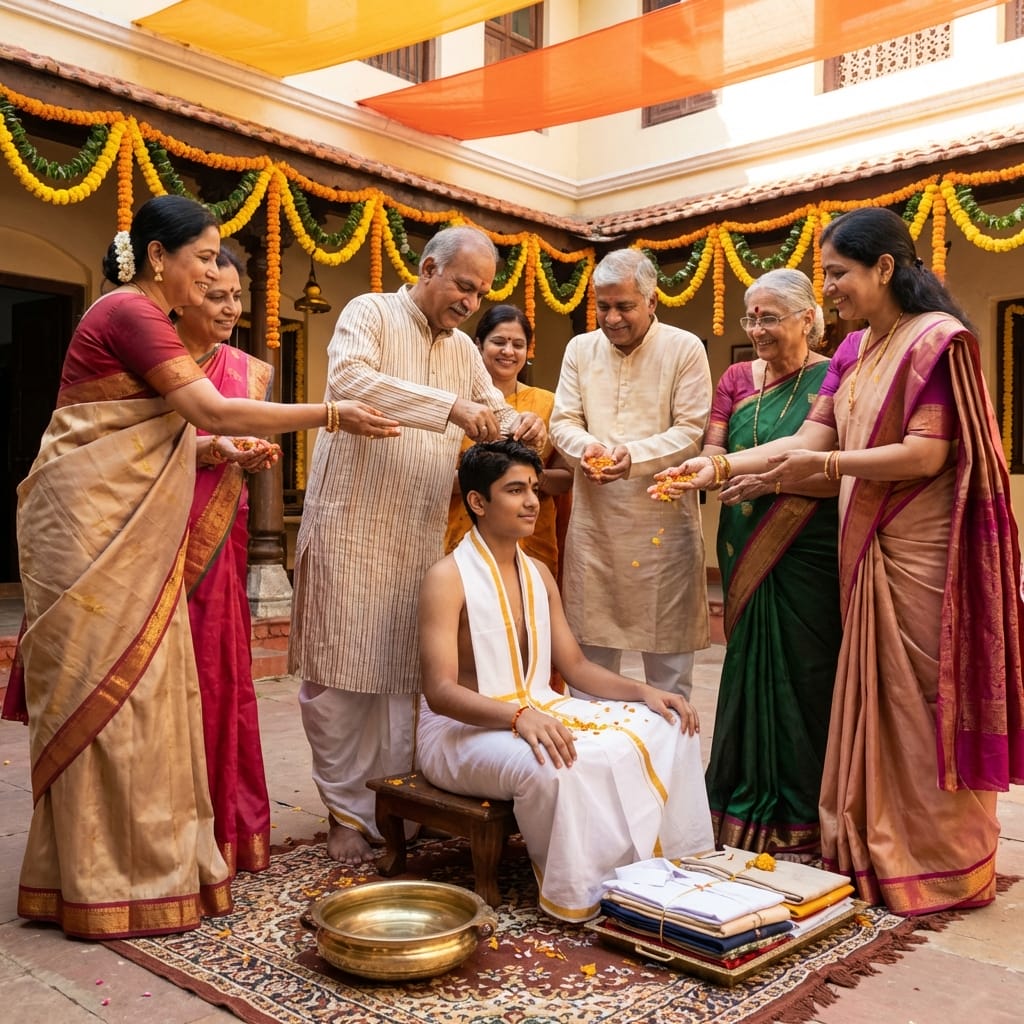
Upanayana Sanskar (उपनयन संस्कार), also known as Sacred Thread Ceremony, Janeu, or Yajnopavita, is arguably the most significant of the 16 Shodasha Sanskars. It marks the spiritual birth of a child (traditionally boys) and their formal initiation into Vedic studies and spiritual practices.
The word "Upanayana" comes from "Upa" (near) and "Nayana" (leading/bringing), meaning "bringing near" - bringing the child near knowledge, guru, and the divine. Traditionally performed for boys aged 8-12 years (varying by caste and tradition), this ceremony transforms a child into a Dvija (twice-born) - once from the mother's womb, second from the guru's spiritual guidance.
The central element is the sacred thread (Yajnopavita) - three intertwined cotton strands worn over the left shoulder and across the chest. This thread symbolizes the three debts (to gods, sages, and ancestors), three gunas (sattva, rajas, tamas), and the commitment to learning and dharma.
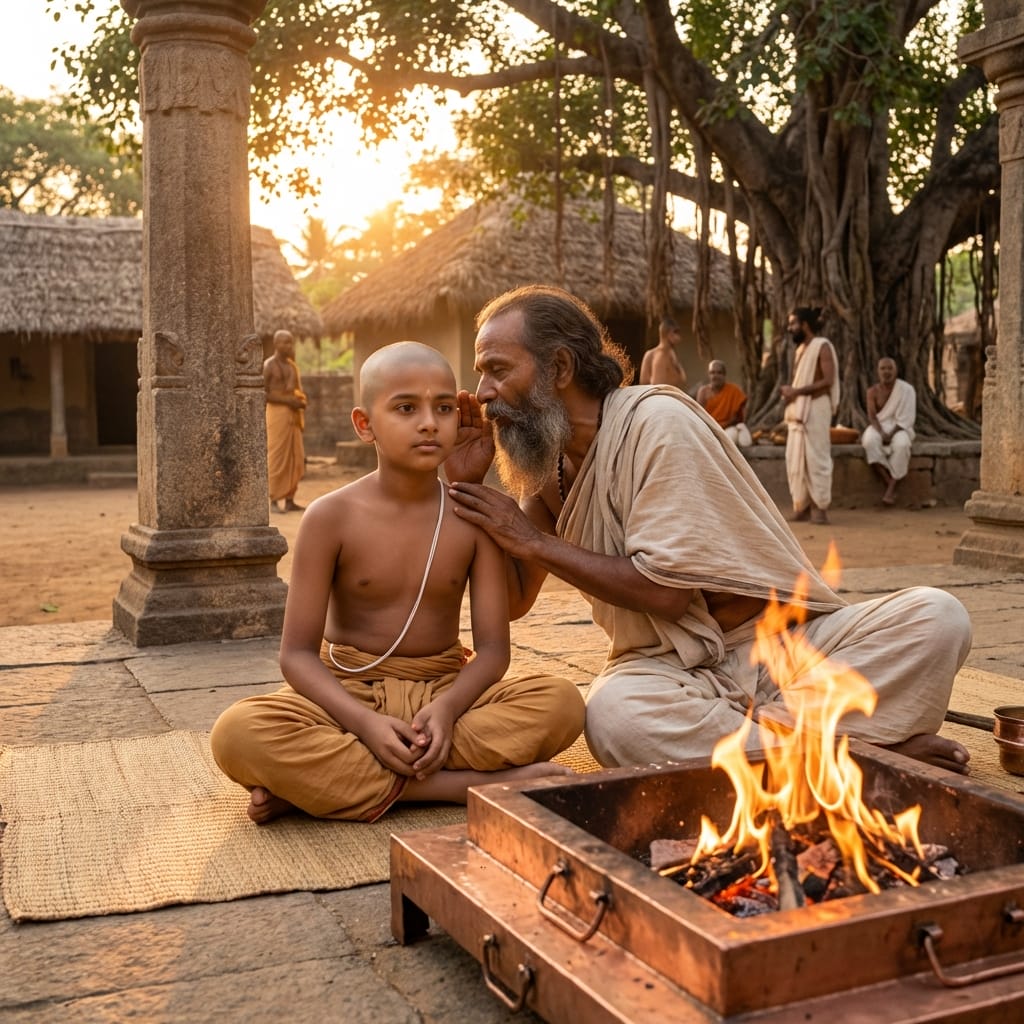
The most sacred moment of Upanayana is the Gayatri Mantra initiation - the guru whispers this powerful Vedic verse into the child's ear, marking their entry into the world of spiritual knowledge. Following this, the child begins formal Vedic education, learns rituals like Sandhyavandana (daily prayers), and takes on the responsibilities of a brahm achari (student of sacred knowledge).
In modern times, while the ceremony retains its traditional grandeur, families adapt certain elements. Some perform Upanayana for girls as well, recognizing that spiritual knowledge is universal. The ceremony remains a major family celebration marking the child's maturity and responsibility.
Science & Ayurveda Behind Upanayana
वैज्ञानिक और आयुर्वेदिक आधार
The 8-year timing and sacred thread ceremony have deep developmental significance:
Adolescent Brain Development: Ages 8-12 mark the beginning of pre-adolescent cognitive changes. The prefrontal cortex continues developing, enabling abstract thinking, moral reasoning, and long-term planning—perfect for introducing complex spiritual and ethical concepts.
Responsibility & Brain Maturation: Neuroscience shows that taking on meaningful responsibilities during this age strengthens executive function networks. Upanayana's emphasis on duty (dharma) and spiritual practice provides structured responsibility.
Rite of Passage Psychology: Anthropological research confirms that rites of passage help children transition to new life stages. The ceremonial nature of Upanayana marks a clear boundary between childhood and studenthood, providing psychological structure.
Sacred Thread as Reminder: The physical thread serves as a constant tactile and visual reminder of commitments and identity. Modern psychology recognizes the power of physical symbols in reinforcing behavior and values.
Gayatri Mantra & Cognitive Benefits: Chanting mantras involves breath control, rhythm, and memorization—all shown to reduce stress (lower cortisol), improve focus, and enhance memory. The daily repetition creates beneficial routines.
Guru-Shishya Relationship: The initiation into formal learning under a guru establishes a mentorship model. Research shows mentorship significantly impacts academic achievement and character development.
Morning Rituals & Circadian Rhythm: Daily morning mantras and sandhyavandana align with circadian biology. Morning sunlight exposure and structured routines support healthy sleep-wake cycles and hormonal balance.
Vegetarianism & Health: Traditional post-Upanayana vegetarian diet aligns with research showing plant-based diets can provide complete nutrition when properly planned, while promoting environmental consciousness.
The Twice-Born & Gurukul Tradition
द्विज और गुरुकुल परंपरा
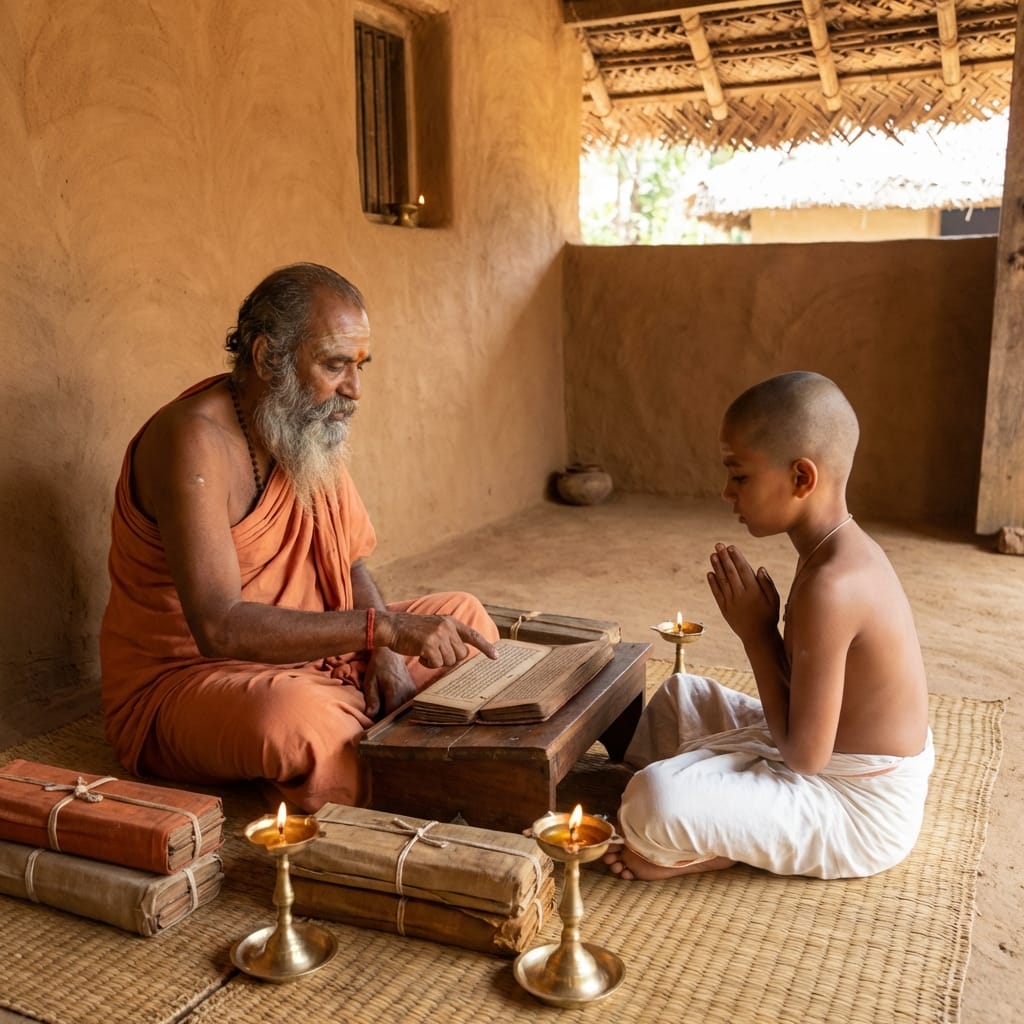
Upanayana has been central to Hindu tradition for over 3000 years, marking the formal entry into the Brahmacharya (student) ashram - the first of the four life stages. Historically, after Upanayana, boys would leave home to live in the guru's Gurukul (residential school) for 12+ years, learning Vedas, philosophy, mathematics, astronomy, and life skills.
The term Dvija (twice-born) is profound - the first birth is physical, the second is intellectual and spiritual through education. This concept emphasized that mere biological birth doesn't make one complete; knowledge and character development are essential for true human fulfillment.
The sacred thread (Yajnopavita) has deep symbolism. Made of three strands with nine threads (3x3), it represents: the three Hindu gods (Brahma, Vishnu, Shiva), three debts (Deva-rina to gods, Rishi-rina to sages, Pitri-rina to ancestors), three qualities (sattva, rajas, tamas), and the vow to pursue threefold goals (thought, word, deed purity).
The Gayatri Mantra initiation is the ceremony's spiritual pinnacle. This 24-syllable Rigvedic verse is considered the most sacred in Hinduism, invoking the divine light to illuminate the intellect. Traditionally, it was kept secret and only transmitted orally from guru to worthy disciples.
Different communities had varying Upanayana ages: Brahmins at 8, Kshatriyas at 11, Vaishyas at 12 - though modern practice is more flexible. Girls historically underwent a form called Ritu Kala Samskara at puberty, though many progressive families now perform full Upanayana for daughters.
The ceremony's rituals (head shaving, wearing simple cloth, begging for alms) taught humility, detachment, and the value of knowledge over material wealth - lessons crucial for the spiritual student.
How Upanayana is Performed
उपनयन कैसे किया जाता है
Pre-Ceremony Rituals
पूर्व विधियाँ
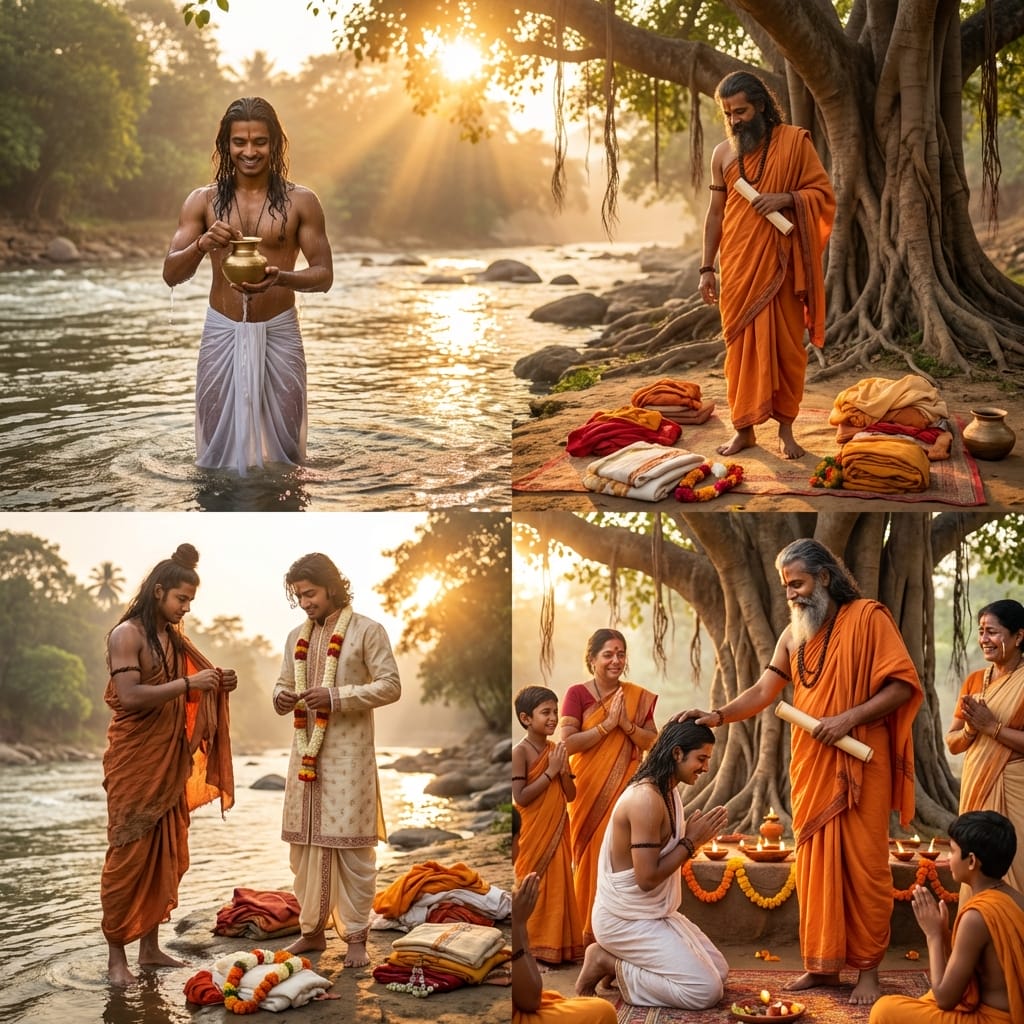
Involves head shaving (Mundan if not done earlier), sacred bath, wearing simple unstitched cloth (dhoti), Ganesh Puja, and Homa (fire ritual). The child is prepared mentally and physically for the sacred transition.
Sacred Thread Investiture
यज्ञोपवीत धारण
Father or guru drapes the sacred thread over the child's left shoulder, letting it hang across the chest to the right hip. Mantras are chanted explaining the thread's significance and the child's new responsibilities.
Gayatri Mantra Initiation
गायत्री मंत्र दीक्षा
The guru whispers the Gayatri Mantra into the child's right ear. This is the most sacred moment - the transmission of divine knowledge. The child repeats it, marking their spiritual awakening and connection to Vedic wisdom.
First Alms (Bhiksha)
प्रथम भिक्षा
The child, now a brahmachari (student), seeks alms (food) from mother and elders saying "Bhavati Bhiksham Dehi" (Mother, please give alms). This teaches humility and dependence on community for sustenance while pursuing knowledge.
Upanayana Ceremony Steps
उपनयन समारोह चरण
Why It Matters
यह महत्वपूर्ण क्यों है
Spiritual Birth – Marks the second birth through knowledge, transforming a child into Dvija (twice-born), equal in significance to physical birth.
Gayatri Mantra Power – Initiation into this sacred mantra provides lifelong spiritual protection, wisdom, and connection to divine light.
Dharmic Responsibility – The sacred thread reminds the wearer daily of their duties, debts, and commitment to righteous living.
Educational Foundation – Formally begins Vedic education, teaching that knowledge is sacred and must be pursued with reverence.
Cultural Identity – One of the most visible markers of Hindu tradition, connecting the child to thousands of years of spiritual heritage.
Maturity Recognition – Society recognizes the child as mature enough to understand and shoulder spiritual responsibilities.
What's Inside
इसमें क्या है
- Complete Ceremony Guide – Detailed step-by-step Upanayana process
- Sacred Thread Significance – Deep meaning of the three strands and proper wearing
- Gayatri Mantra Explained – Translation, meaning, and how to recite
- Sandhyavandana Basics – Daily prayer ritual after Upanayana
- Brahmacharya Vows – Student life discipline and conduct
- Thread Maintenance – When to change, dos and don'ts
- Modern Adaptations – Upanayana for girls, shortened ceremonies
Frequently Asked Questions
अक्सर पूछे जाने वाले प्रश्न
At what age should Upanayana be performed?
Traditionally: 8 years for Brahmins, 11 for Kshatriyas, 12 for Vaishyas. Modern practice is more flexible - commonly performed between 7-13 years when the child can understand the ceremony's significance and handle daily prayers (Sandhyavandana). Some families perform it before marriage if not done in childhood. The child should be mentally ready to learn and practice Vedic rituals.
Can Upanayana be performed for girls?
This is evolving. Historically, girls had a different ceremony at puberty. However, ancient texts mention girls undergoing Upanayana in Vedic times. Many progressive families now perform full Upanayana for daughters, believing spiritual knowledge is universal. Some orthodox communities maintain traditional gender distinctions. It's ultimately a family decision based on beliefs. The spiritual benefits of Gayatri Mantra and Vedic knowledge apply equally to all.
What is the significance of the Gayatri Mantra?
The Gayatri Mantra is considered the supreme Vedic hymn, invoking divine light to illuminate the intellect. Meaning: "We meditate on the glorious light of the Creator. May it illuminate our minds." Reciting it brings: spiritual protection, mental clarity, wisdom, purification of thoughts, and divine blessings. After Upanayana, it should be chanted daily during Sandhyavandana (morning, noon, evening prayers).
Does the sacred thread need to be worn all the time?
Yes, traditionally it should never be removed and worn 24/7, even while sleeping and bathing. During bodily functions, it's looped over the right ear for cleanliness (called "Karna Hasta"). The thread is changed periodically (during Shravana Purnima/Raksha Bandhan or when soiled). Some modern individuals remove it for professional/practical reasons, though traditional practice mandates continuous wearing as a reminder of spiritual duties.
What daily rituals must be performed after Upanayana?
The primary obligation is **Sandhyavandana** - a prayer ritual performed three times daily (sunrise, noon, sunset) involving: water offerings, Gayatri Mantra recitation (108 times ideally), prayers to sun and deities, and pranayama (breath control). Additionally: daily study of Vedas or scriptures, maintaining purity of thought/word/deed, and honoring the three debts symbolized by the thread. Modern students often do shortened versions before school/work.
What if the sacred thread breaks or gets lost?
If the thread breaks or is lost, a new one should be worn as soon as possible with proper mantras (can be done at home if needed). It's not a sin if it breaks accidentally—just replace it reverently. The thread is changed annually during Shravani Upakarma/Raksha Bandhan in a ritual called Upak arma. Many buy multiple threads to have replacements ready. The commitment to dharma matters more than the physical thread, though the thread serves as a constant reminder.
Scientific References & Citations
- The Teen Brain: 7 Things to Know — National Institute of Mental Health (NIMH)
- Rites of Passage Psychology — American Psychological Association (APA)