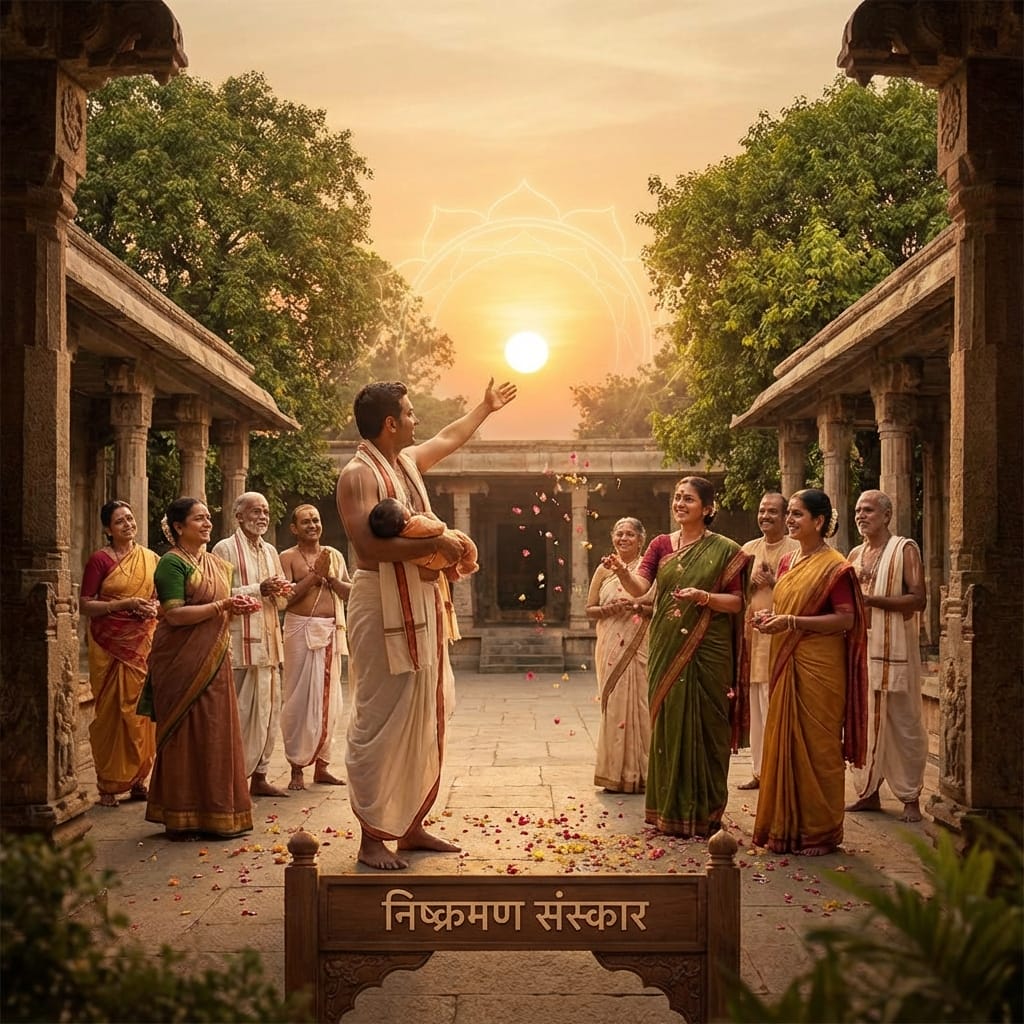
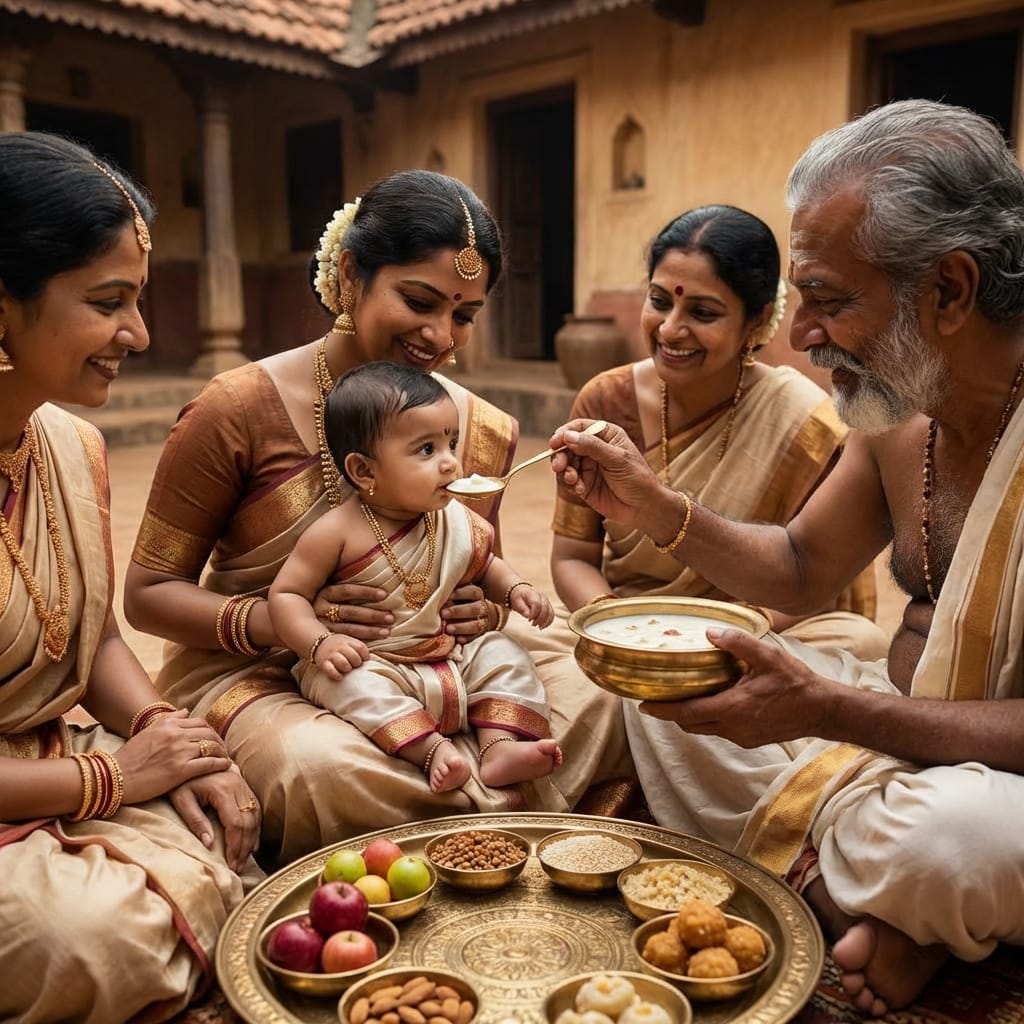
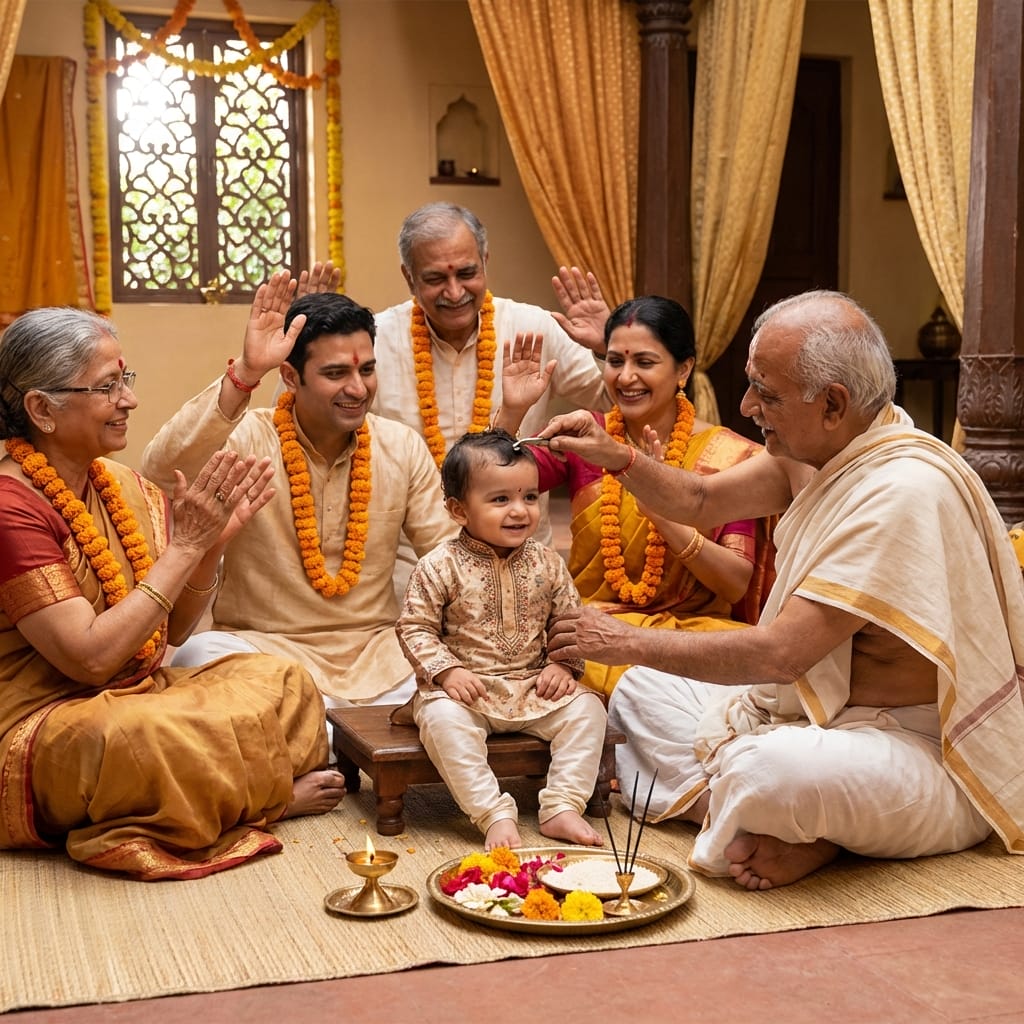
About Jatakarma Sanskar - Hindu Birth Ceremony & Newborn Blessing Ritual
Jatakarma Sanskar - Hindu Birth Ceremony & Newborn Blessing Ritual के बारे में
Jatakarma Sanskar (जातकर्म संस्कार), also known as Birth Ceremony or Newborn Blessing, is the fourth Sanskar among the 16 Shodasha Sanskaras. It is performed immediately after the child is born, ideally before the umbilical cord is cut or within the first few hours of birth.
The word "Jatakarma" comes from "Jata" (born) and "Karma" (action or rite). This sacred ceremony marks the baby's first interaction with the world outside the womb and is designed to welcome the newborn with divine blessings, purify the environment, and set positive vibrations for the child's life journey.
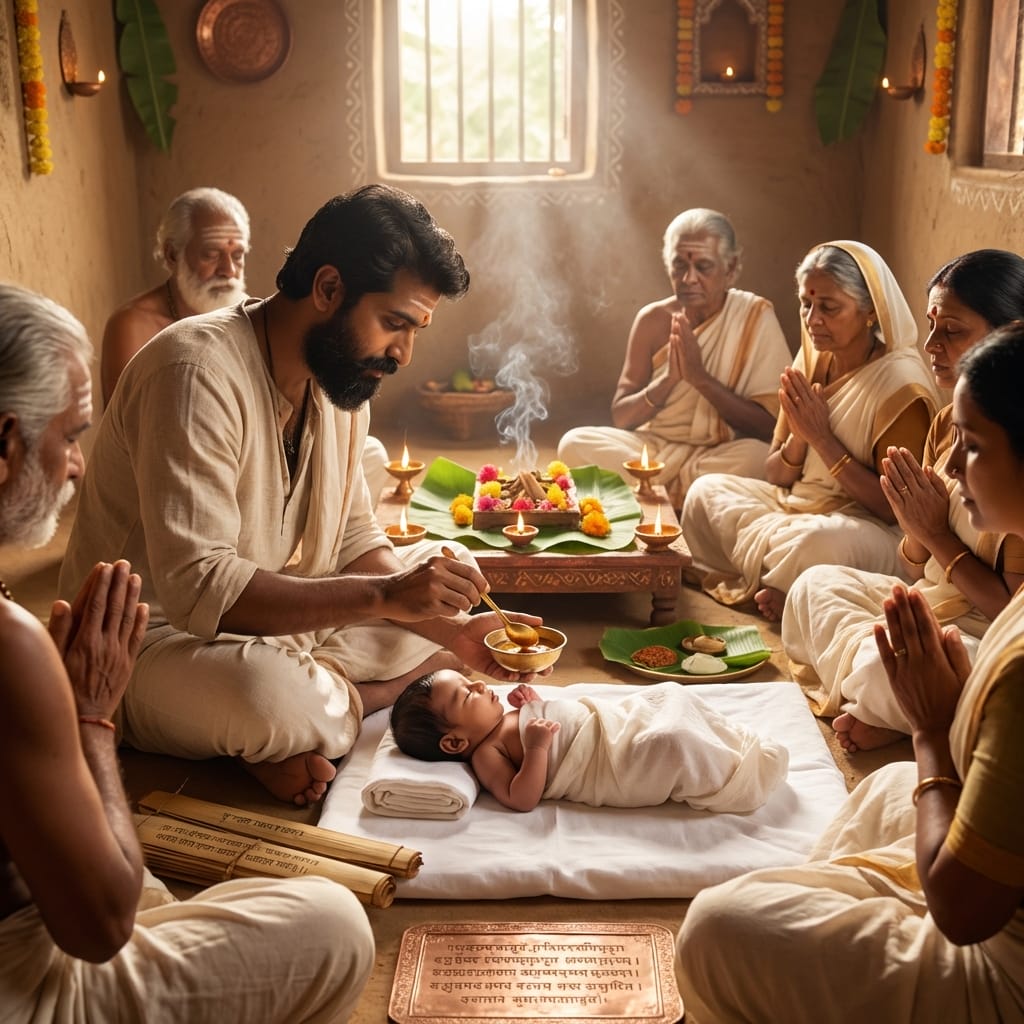
The central ritual of Jatakarma involves the father feeding the newborn a paste of honey and ghee (clarified butter) mixed with gold dust, while reciting Vedic mantras. This is believed to stimulate the baby's intellect (Medha), grant strength (Bala), and protect from evil influences. The mantras whispered in the baby's ear are the child's first sounds, creating the initial spiritual imprint.
Along with the honey-ghee ceremony, traditional Jatakarma includes the first cry (celebrated as a sign of life), cutting the umbilical cord with sacred mantras, the first bath, and prayers for longevity, health, and virtue. In modern times, while hospital births may not allow all traditional rituals immediately, families often perform a modified version within hours or days of birth, adapting ancient wisdom to contemporary circumstances.
Science & Ayurveda Behind Jatakarma
वैज्ञानिक और आयुर्वेदिक आधार
The birth rituals have surprising correlations with modern neonatal care:
Honey & Ghee (Madhu-Ghrita): Ancient wisdom used honey (instant glucose energy) and ghee (healthy fat/insulation) for the newborn. Gold dust was believed to boost immunity (Swarna Prashana).
*Important Note*: Modern pediatrics generally advises against honey for infants under 1 year due to botulism risk. This ritual is now often done symbolically or with just a drop, respecting both tradition and modern safety.
Cord Cutting Timing: Vedic timing for cutting the cord often allowed for cessation of pulsation, aligning with modern "delayed cord clamping" benefits (more blood volume/iron for baby).
The Golden Hour: The immediate father-child interaction and mantra chanting facilitates bonding. Newborns recognize parents' voices heard in the womb; speaking to them immediately reinforces this neural connection and sense of safety.
Sensory Awakening: The first taste, first touch, and first sounds activate the newborn's senses, kickstarting neural processing in the brain's sensory cortex.
Ayurvedic Protection: Medicated baths with Neem/Turmeric provided essential antimicrobial protection for the newborn's delicate skin before modern antiseptics.
Ancient Wisdom in Neonatal Care
नवजात देखभाल में प्राचीन ज्ञान
Jatakarma Sanskar is extensively described in the Grihya Sutras (particularly Ashvalayana and Paraskara), Charaka Samhita, and Sushruta Samhita (ancient Ayurvedic texts). These scriptures provide detailed guidelines for immediate post-birth care that remarkably align with modern neonatal best practices.
The honey-ghee (Madhu-Ghrita) mixture is not merely symbolic but has scientific basis. Honey provides instant energy and natural antibodies, while ghee supports brain development and digestive system. Gold (Swarna Bhasma) in minute quantities is believed in Ayurveda to boost immunity and intelligence. Modern research acknowledges the antimicrobial properties of honey and the benefits of good fats for newborn brain development.
Historically, cutting the umbilical cord was done with specific timing and mantras to ensure proper separation and prevent infection. The Ayurvedic texts recommend cleaning the cord with turmeric and applying herbal pastes—practices that modern medicine validates for their antimicrobial properties.
The first bath (Snana) was given with medicated water containing herbs like neem, turmeric, and sandalwood to cleanse, protect the delicate skin, and prevent infections. Chanting of mantras during these procedures was believed to create positive vibrations affecting the baby's consciousness and nervous system development.
Ancient texts also emphasize the importance of the mother's first breastfeeding (colostrum), perfectly aligning with modern pediatric recommendations. This shows how Vedic wisdom integrated spiritual, psychological, and medical aspects of childbirth care thousands of years ago.
Essential Components of Jatakarma
जातकर्म के आवश्यक घटक
Madhu-Ghrita Prashana (Honey-Ghee Feeding)
मधु-घृत प्राशन
The father feeds the newborn a tiny amount of honey mixed with ghee and gold dust (or gold ornament dipped) using his ring finger (or gold ring). This is the baby's first food, believed to grant intelligence, strength, and longevity. Specific mantras are recited during this.
Mantra Whispering
मंत्र श्रवण
The father gently whispers Vedic mantras in the baby's right ear. These include prayers for long life (Ayushya Mantra), intelligence (Medha Sukta), and protection (Raksha Mantra). This creates the first spiritual sound imprint on the newborn's consciousness.
Umbilical Cord Cutting
नाभि छेदन
Traditionally performed by experienced elders with mantras for purity and health. The cord is treated with turmeric or herbal paste. In modern hospitals, this medical procedure is done by professionals, and families recite mantras separately.
First Bath & Protection Rituals
प्रथम स्नान और रक्षा विधि
The baby is bathed in medicated herbal water. Protective amulets (Raksha Sutra) may be tied. Prayers are offered for health and divine protection from negative influences.
Jatakarma Ceremony Steps
जातकर्म समारोह चरण
Why It Matters
यह महत्वपूर्ण क्यों है
Immediate Neonatal Care – Combines spiritual blessings with practical health measures aligned with modern pediatric care.
Intellectual Stimulation – The honey-ghee mixture and mantras are believed to activate the baby's brain and set positive neural patterns.
Immune Boost – Honey provides natural antibodies and antimicrobial protection; ghee supports gut health and brain development.
Spiritual Imprinting – First mantras create initial spiritual consciousness, believed to influence the child's temperament and life path.
Family Bonding – The ceremony creates the first sacred family moment, establishing the father-child spiritual connection.
Protection Rituals – Prayers and protective amulets invoke divine safeguarding during the vulnerable newborn period.
What's Inside
इसमें क्या है
- Detailed Ritual Process – Step-by-step guide for Jatakarma ceremony
- Honey-Ghee Benefits – Scientific and Ayurvedic explanation
- Vedic Mantras – Specific chants used during birth
- Hospital Adaptations – How to perform Jatakarma in modern birth settings
- Safety Considerations – What to avoid and when to prioritize medical care
- Regional Variations – Different practices across India
- Modern vs Traditional – Balancing ancient wisdom with contemporary medicine
Frequently Asked Questions
अक्सर पूछे जाने वाले प्रश्न
Can Jatakarma be performed in a hospital setting?
Yes! While traditional home births allowed immediate rituals, modern hospital births require adaptation. The honey-ghee ceremony and mantra whispering can be done after medical checks are complete, usually within the first 2-3 hours. Some hospitals accommodate religious rituals if informed in advance. The key elements—feeding honey-ghee and reciting mantras—can be performed at the bedside once mother and baby are stable.
Is feeding honey to a newborn safe?
This is an important medical consideration. Modern pediatricians generally recommend avoiding honey for babies under 1 year due to botulism risk. For Jatakarma, families can: 1) Use only a ceremonial touch (not actual feeding), 2) Use only medically processed/purified honey approved by pediatrician, or 3) Substitute with just ghee and gold, which carries the same symbolic significance. Always prioritize your baby's medical safety and consult your pediatrician.
What if the father is not present at birth?
Traditionally, the paternal grandfather, family priest, or any respected male elder can perform the ceremony. In modern contexts, the mother herself can recite the mantras and blessings. The spiritual intent and love matter more than rigid adherence to roles. Some families delay Jatakarma by a few hours or days until the father arrives, though immediate blessing is traditional.
What mantras are chanted during Jatakarma?
Common mantras include: "Ayushmaanbhava" (may you live long), "Medhaavee Bhava" (may you be intelligent), Gayatri Mantra (for enlightenment), and protection mantras like "Om Bhur Bhuvah Svah." The father may also recite family-specific mantras or prayers to the family deity (Kuldevata). A priest can guide the exact verses based on tradition.
How is Jatakarma different from Namakarana?
Jatakarma is performed immediately after birth (within hours) and focuses on welcoming the newborn with blessings, honey-ghee feeding, and initial protection rituals. Namakarana (naming ceremony) is performed later, typically on the 10th-11th day, and focuses on formally naming the child based on astrological calculations. Both are distinct childhood Sanskars with different purposes and timing.
Can Jatakarma be performed for C-section or premature births?
Absolutely! The mode of delivery doesn't affect the spiritual significance. For C-sections, wait until mother and baby are stable and in recovery. For premature babies in NICU, parents can recite mantras near the incubator and perform a simplified ceremony. The full traditional Jatakarma can be completed once baby comes home and is healthy. Divine blessings adapt to modern medical realities.
Scientific References & Citations
- Guideline: Delayed Umbilical Cord Clamping — World Health Organization (WHO)
- Infant Botulism Prevention (Honey Safety) — Centers for Disease Control and Prevention (CDC)