About Simantonnayana Sanskar - Indian Baby Shower Ceremony Complete Guide
Simantonnayana Sanskar - Indian Baby Shower Ceremony Complete Guide के बारे में
Simantonnayana Sanskar (सीमन्तोन्नयन संस्कार), also popularly known as Baby Shower, Godh Bharai, or Pregnancy Blessing Ceremony, is the third and perhaps most joyous of the pre-natal Sanskars. It is performed during the 5th, 6th, or 7th month of pregnancy—a time when the baby is growing rapidly and the mother enters the final trimester.
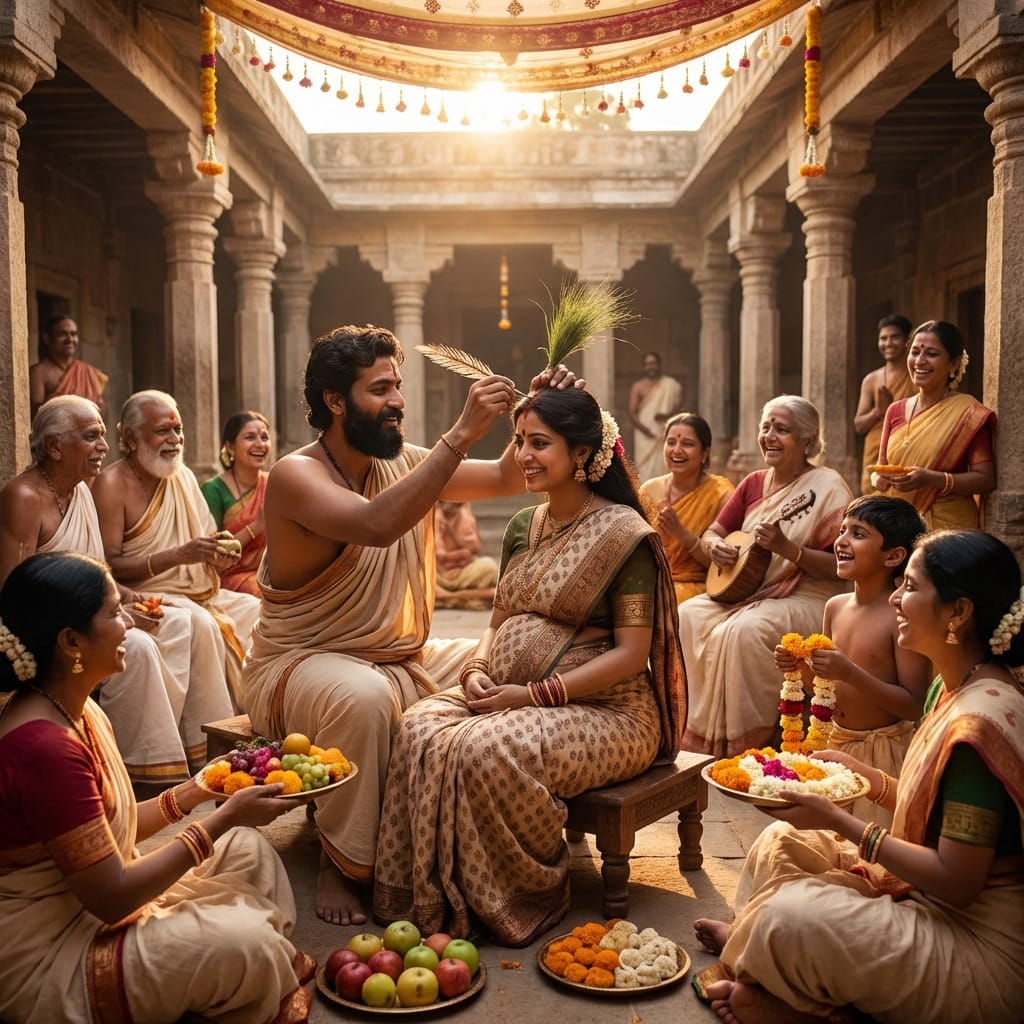
The word "Simantonnayana" comes from "Simanta" (parting of hair) and "Unnayana" (raising up or elevating). The central ritual involves parting the pregnant woman's hair upward, symbolizing the upward movement of positive energy and the stimulation of the baby's intellect while still in the womb.
This Sanskar serves multiple purposes: celebrating the expecting mother, ensuring her mental and emotional well-being, protecting her from stress and anxiety, and invoking divine blessings for an easy delivery and healthy baby. The ceremony is filled with joy, music, singing of auspicious songs, showering of gifts, and blessings from family elders.
In modern times, Simantonnayana has beautifully merged with contemporary baby shower celebrations, creating a unique blend of tradition and modernity. It's a time when the expecting mother is pampered, celebrated, and surrounded by love—which has profound positive effects on both maternal mental health and fetal development.
Science & Ayurveda Behind Simantonnayana
वैज्ञानिक और आयुर्वेदिक आधार
Modern neuroscience and psychology validate the profound benefits of Simantonnayana:
Maternal Mental Health & Fetal Brain: Research shows maternal emotions directly affect fetal development. Happy, relaxed mothers release endorphins and oxytocin, which cross the placenta. These "happiness hormones" promote healthy fetal brain development, particularly in emotional regulation centers (limbic system).
Third Trimester Brain Development: At 25-28 weeks (7th month), the fetal brain undergoes rapid synapse formation—neural connections forming at 250,000 per minute! The joyful, musical atmosphere of Simantonnayana provides positive auditory stimulation. Babies can hear music, songs, and voices at this stage.
Music & Fetal Learning: Studies confirm fetuses respond to music and familiar voices. The traditional singing of gheun geet (pregnancy songs) creates familiar sound patterns the baby recognizes, promoting early language development and maternal-infant bonding even before birth.
Hair Parting & Scalp Stimulation: While folkloric, the gentle scalp massage during hair parting may stimulate maternal parasympathetic nervous system (relaxation response), lowering blood pressure and reducing stress. Scalp contains numerous nerve endings; gentle touch triggers oxytocin release.
Social Support & Pregnancy Outcomes: Robust research shows pregnant women with strong social support networks have: lower rates of preterm birth, reduced prenatal depression and anxiety, healthier birth weights, easier labors. Simantonnayana creates exactly this support system.
Psychological Preparation for Motherhood: The ceremony helps the expecting mother psychologically transition to her new role. Hearing birth stories, receiving advice, being celebrated—all reduce fear and build confidence for labor and parenting.
Ayurvedic Third Trimester Care: The 7th month timing aligns with Ayurveda's emphasis on stabilizing Vata dosha (air element) which increases in late pregnancy. Celebrations, warmth, community, and joy all pacify Vata, preventing anxiety and premature contractions.
Gift-Giving & Abundance Mindset: Filling the mother's lap with fruits and gifts creates a psychological sense of abundance and security, reducing anxiety about providing for the coming baby—a stress reduction that benefits both mother and fetus.
Cultural Significance & Regional Names
सांस्कृतिक महत् और क्षेत्रीय नाम
Simantonnayana is mentioned in ancient Vedic texts like the Grihya Sutras and has been celebrated across India for millennia. Different regions have their own beautiful names and unique customs for this ceremony.
North India: Called "Godh Bharai" (filling the lap), where the mother's lap is filled with fruits, sweets, and gifts symbolizing abundance.
South India: Known as "Seemantham" or "Valaikappu" (bangle ceremony), where colorful glass bangles are gifted to ward off evil and celebrate feminine energy.
Bengal: Called "Saadh" or "Aathoi," where the expectant mother's cravings are fulfilled, and special dishes are prepared.
Maharashtra: Known as "Dohale Jevan," featuring a grand feast honoring the mother-to-be.
Historically, this ceremony served as a crucial emotional and psychological support system for pregnant women. In joint family setups, elder women would share experiences, offer advice, and reassure the first-time mother, reducing anxiety about childbirth.
The hair-parting ritual with a porcupine quill or special comb was believed to stimulate the brain and nervous system, promoting the baby's intellectual development. While this may sound folkloric, modern neuroscience recognizes that reducing maternal stress and creating positive emotions does benefit fetal development.
Elements of Simantonnayana
सीमन्तोन्नयन के तत्व
Timing & Preparation
समय और तैयारी
Performed in 5th, 6th, or 7th month when pregnancy is visible and stable. The mother is dressed in beautiful traditional attire (usually yellow, pink, or red saree). The venue is decorated with flowers, mango leaves, and colorful decorations.
Hair Parting Ritual (Simanta)
बाल विभाजन विधि
The central ritual where the husband or mother-in-law gently parts the expectant mother's hair upward 3 or 7 times using a porcupine quill, darbha grass, or a special comb. This symbolizes positive energy flow and mental stimulation for the baby.
Godh Bharai (Lap Filling)
गोद भराई
The mother's lap is filled with fruits (especially coconuts, bananas), sweets, dry fruits, baby clothes, and gifts. This symbolizes prosperity, abundance, and blessings for the coming child.
Music, Songs & Celebration
संगीत और उत्सव
Women sing traditional pregnancy songs (gheun geet, bhojpuri geet, folk songs). Games are played, mehendi is applied, and the mother is pampered with love. Joy and positive vibrations are considered essential for fetal development.
Simantonnayana Ceremony Steps
सीमन्तोन्नयन समारोह चरण
Why It Matters
यह महत्वपूर्ण क्यों है
Mental & Emotional Well-being – The ceremony provides psychological support, reduces pregnancy anxiety, and promotes positive emotions which benefit fetal development.
Community Support – Creates a support network of women who share experiences, advice, and reassurance, especially valuable for first-time mothers.
Honoring Motherhood – Celebrates the sacred role of the mother and validates the physical and emotional changes she's experiencing.
Cultural Continuity – Passes down traditions, songs, and wisdom from elder women to the expecting mother.
Fetal Development – Positive emotions, music, and stress reduction are scientifically proven to benefit fetal brain development.
Strengthening Family Bonds – Brings together family members in celebration, strengthening relationships before the baby arrives.
What's Inside
इसमें क्या है
- Complete Ritual Guide – Step-by-step process from decoration to celebration
- Traditional Songs – Common gheun geet and folk songs sung during the ceremony
- Regional Variations – How different Indian states celebrate this Sanskar
- Modern Baby Shower Ideas – Blending tradition with contemporary celebrations
- Gift Suggestions – Traditional and modern gift ideas for the mother-to-be
- Do's and Don'ts – Guidelines for organizing a comfortable, stress-free event
- Games & Activities – Traditional and fun activities for guests
Frequently Asked Questions
अक्सर पूछे जाने वाले प्रश्न
When is the ideal time to perform Simantonnayana?
Simantonnayana is traditionally performed in the 5th, 6th, or 7th month of pregnancy—most commonly in the 7th month. This timing ensures pregnancy is stable, the baby is developing well, and the mother is still comfortable enough to enjoy the celebration before the final challenging weeks. Choose a weekend or auspicious day when family can gather.
Can Simantonnayana be combined with a modern baby shower?
Absolutely! Many families beautifully blend traditional Simantonnayana rituals with modern baby shower elements. Start with the traditional hair-parting ceremony, Godh Bharai, and prayers, then transition to modern activities like games, gift opening, themed decorations, and photo sessions. This fusion honors heritage while enjoying contemporary celebrations.
Who should perform the hair-parting ritual?
Traditionally, the husband performs the Simanta ritual, or the mother-in-law/mother of the pregnant woman. In modern practice, any close family member whom the expectant mother desires can perform it. Some families invite multiple elders to each make one parting while offering individual blessings.
What gifts are appropriate for Godh Bharai?
Traditional gifts include: coconuts, fruits (bananas, pomegranates), dry fruits, sweets, sarees or traditional clothes for mother, baby clothes, bangles, jewelry, and cash/gold. Modern additions: maternity care items, baby essentials, prenatal vitamins, pregnancy pillows, books about motherhood, or personalized keepsakes. The lap should look abundant and colorful!
Can the ceremony be held for second or third pregnancies?
Yes, though traditions vary. Some families celebrate every pregnancy, others only the first. In modern times, many believe every child deserves celebration regardless of birth order. The ceremony might be simpler for subsequent pregnancies but still provides valuable emotional support and family bonding. Many moms appreciate it even more with experience!
What if the mother cannot attend due to bed rest or complications?
If medical conditions prevent the mother from sitting through a full ceremony, adaptations can be made. Perform a simplified version at home with immediate family. The key elements (prayers, hair parting by husband, blessings) can be done bedside. Family can still bring gifts, sing softly, and share love. Health always comes first; the spiritual essence can be honored simply.
Scientific References & Citations
- Music Therapy during Pregnancy — National Center for Biotechnology Information (NCBI)
- Auditory Stimulation of the Fetus — Nature Reviews Neuroscience