About Nishkramana Sanskar - Baby First Outing Ceremony Complete Guide
Nishkramana Sanskar - Baby First Outing Ceremony Complete Guide के बारे में
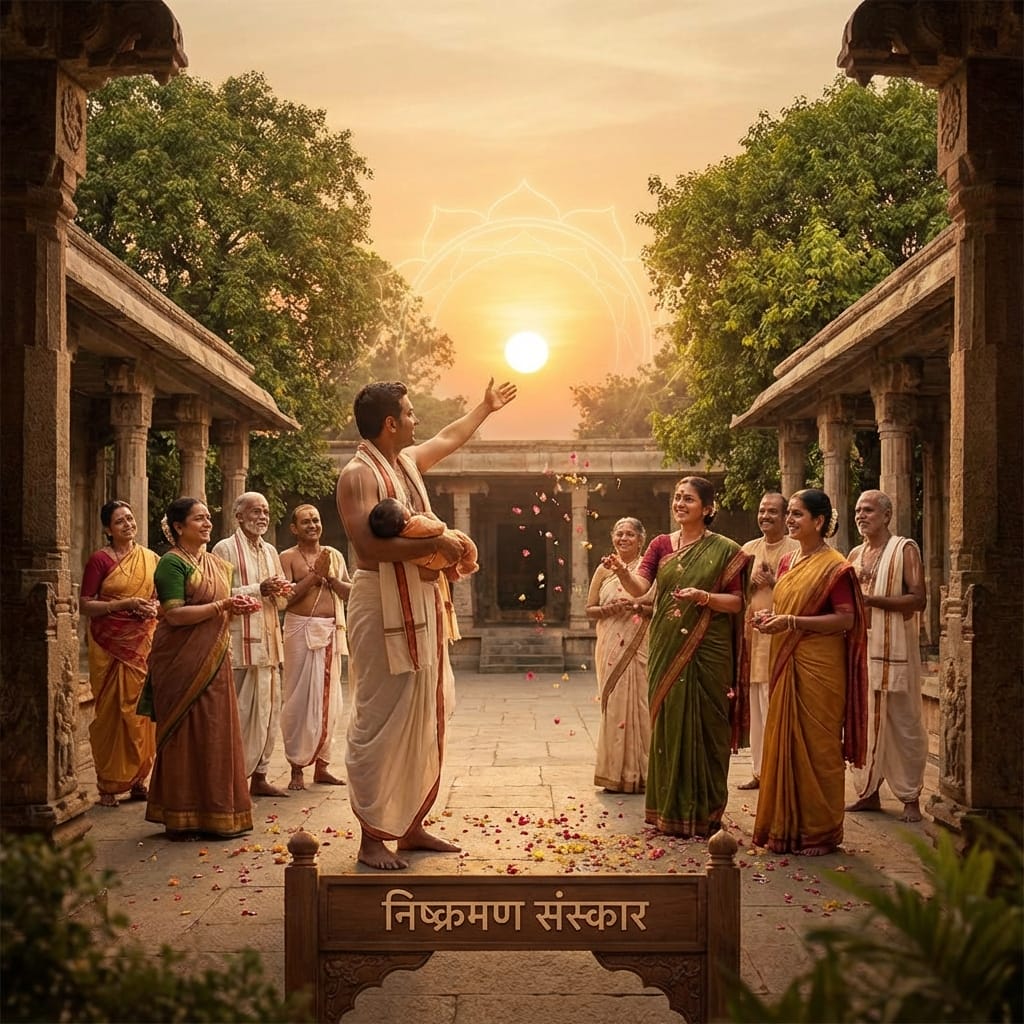
Nishkramana Sanskar (निष्क्रमण संस्कार), also known as First Outing Ceremony or Baby First Outdoor Visit, is the sixth of the 16 Shodasha Sanskars. It marks the baby's first formal introduction to the outside world, specifically to the sun and moon, which represent cosmic energy and divine light.
The word "Nishkramana" comes from "Nish" (out) and "Kramana" (to step or walk). This beautiful ceremony celebrates the baby's transition from the protected indoor environment to experiencing nature's elements and celestial energies for the first time.
Traditionally performed in the 4th month after birth (though some traditions observe it in the 3rd or 6th month), this Sanskar involves taking the baby outside during the day to see the sun (Surya), and optionally in the evening to see the moon (Chandra). Parents pray to these celestial deities to bless the child with health, vitality (from sun), and peace, calmness (from moon).
The ceremony is both spiritual and practical. Spiritually, it connects the child with cosmic forces. Practically, it marks the baby's gradual adaptation to the external environment, fresh air, and natural light—important for physical and sensory development. Modern pediatricians recognize the benefits of outdoor exposure for vitamin D production, circadian rhythm development, and immune health, beautifully aligning with this ancient practice.
Science & Ayurveda Behind Nishkramana
वैज्ञानिक और आयुर्वेदिक आधार
The 4th-month timing for first outing is scientifically sound:
Immune System Development: By 3-4 months, the infant's immune system has matured enough to handle limited environmental exposure. Gradual exposure helps train the immune system (Hygiene Hypothesis).
Vitamin D Synthesis: Exposure to early morning sunlight (recommended in the ritual) triggers Vitamin D synthesis, crucial for bone development and immunity. Sun gazing (Surya Darshan) was a specific part of the ritual.
Sensory Integration: Stepping out introduces the baby to a wider array of visual and auditory stimuli (nature, sky, crowds). This sensory enrichment stimulates rapid dendritic growth in the brain.
Circadian Rhythm: Direct exposure to natural daylight helps regulate the infant's circadian clock, improving sleep-wake cycles (which usually stabilize around 4 months).
Visual Acuity: By 4 months, a baby's distance vision improves significantly. They can now appreciate the "vastness" of the sky and environment, making the ritual visually meaningful.
Celestial Worship & Ayurvedic Wisdom
खगोल पूजा और आयुर्वेदिक ज्ञान
Nishkramana Sanskar is mentioned in Grihya Sutras and Ayurvedic texts that emphasize the importance of gradual acclimatization to the external environment. Ancient sages understood that abrupt exposure could be overwhelming, so the timing (around 4 months when baby's immune system is developing) is scientifically sound.
The sun worship (Surya Namaskar) aspect reflects Vedic reverence for the sun as the source of life, energy, and vitality. The sun's light is believed to strengthen the baby's eyesight, bones (vitamin D), and life force (Prana). Ancient texts prescribe specific times—early morning or late afternoon—when sun rays are gentler, avoiding harsh midday heat.
Moon worship (Chandra Darshan) is performed because the moon represents calmness, cool energy, and mental peace. Exposing the baby to moonlight is believed to soothe the nervous system and promote peaceful sleep. Some traditions believe the moon's light enhances beauty and mental clarity.
Historically, this ceremony was a community event where family and neighbors would gather to bless the baby during the first outing. It marked the baby's social introduction beyond immediate family, similar to a "coming out" celebration. The practice varied regionally—some cultures took babies to temples first, others to rivers or gardens.
Modern science validates the benefits: outdoor exposure helps babies develop circadian rhythms, vitamin D synthesis begins, and sensory stimulation (sights, sounds, fresh air) aids neurological development.
How Nishkramana is Performed
निष्क्रमण कैसे किया जाता है
Ideal Timing
आदर्श समय
Performed in the 4th month (some traditions: 3rd or 6th month). Choose an auspicious day and time (muhurat). Early morning (sunrise) or late afternoon (sunset) are ideal for gentle sunlight. Evening for moon darshan.
Sun Worship (Surya Darshan)
सूर्य दर्शन
Take the baby outside to see the sun. Face the baby toward the sun (protecting eyes, not directely staring). Recite Surya mantras. Pray for health, strength, and vitality. The sun's gentle rays bless the child with life energy.
Moon Worship (Chandra Darshan)
चंद्र दर्शन
In the evening, show the baby the moon. Recite Chandra mantras. Pray for peace, beauty, and mental clarity. The cool moonlight is believed to calm the baby and promote good sleep patterns.
Temple or Sacred Place Visit
मंदिर यात्रा
Many families take the baby to a temple, church, or sacred place for divine blessings. Offer prayers to the family deity. Seek protection and guidance for the child's future. Distribute prasad to attendees.
Nishkramana Ritual Steps
निष्क्रमण विधि चरण
Why It Matters
यह महत्वपूर्ण क्यों है
Cosmic Connection – Introduces the baby to universal energies (sun and moon), creating spiritual connection with nature.
Vitamin D Synthesis – Sunlight exposure triggers vitamin D production, crucial for bone development and immune function.
Circadian Rhythm Development – Exposure to natural day-night cycle helps establish healthy sleep-wake patterns.
Sensory Stimulation – First exposure to outdoor sights, sounds, and fresh air stimulates neurological development.
Social Introduction – Marks the baby's formal introduction to the extended community and social world.
Environmental Adaptation – Gradual acclimatization to outside environment strengthens immunity and resilience.
What's Inside
इसमें क्या है
- Complete Ritual Guide – Step-by-step Nishkramana ceremony process
- Sun & Moon Mantras – Specific vedic verses for celestial worship
- Timing Guidelines – Best months, days, and times for the ceremony
- Safety Precautions – Protecting baby during outdoor exposure
- Temple Visit Etiquette – What to do when visiting sacred places
- Regional Variations – Different practices across cultures
- Modern Adaptations – Combining tradition with contemporary lifestyles
Frequently Asked Questions
अक्सर पूछे जाने वाले प्रश्न
When is the best time to perform Nishkramana Sanskar?
Traditionally performed in the 4th month after birth, though some families observe it in the 3rd or 6th month based on regional customs. Choose a day with pleasant weather, not extreme heat or cold. Best times: early morning (6-8 AM) for sun darshan when rays are gentle, or late afternoon (4-5 PM) during sunset. For moon darshan, any clear evening when the moon is visible.
Is direct sun exposure safe for babies?
Direct harsh sunlight is NOT recommended for young babies' delicate skin and eyes. For Nishkramana: 1) Choose early morning or late afternoon when rays are gentle, 2) Never let baby stare directly at the sun, 3) Limit exposure to 5-10 minutes, 4) Keep baby's head covered with a light cap, 5) Use baby-safe sunscreen if recommended by pediatrician. The ritual is about gentle introduction, not prolonged exposure.
What if weather is bad on the planned day?
If weather is unfavorable (very hot, cold, rainy, or polluted), postpone the ceremony to a better day. Baby's health and comfort are paramount. Some flexibility is acceptable—choose another auspicious day within the same month. You can perform prayers at home and do the actual outdoor outing when weather improves. The spiritual intention matters most.
Can we perform Nishkramana at home if baby was born prematurely?
Absolutely! For premature babies or those with health concerns, modified Nishkramana can be done at home. Open windows to let sunlight enter, perform sun/moon mantras indoors, and delay the temple/outdoor visit until baby is medically cleared and stronger. Consult your pediatrician about when outdoor outings are safe.
Is temple visit mandatory for Nishkramana?
No, temple visit is traditional but not mandatory. The essential elements are showing baby the sun and moon with prayers. You can perform these at home, in your garden, or any peaceful outdoor space. Temple visits add a community blessing aspect but aren't required for the Sanskar's spiritual completion. Choose what feels right for your family.
What mantras should we recite during sun and moon darshan?
For Sun (Surya): "Om Suryaya Namaha" or "Om Ghrani Suryaya Adityaya Namaha" (salutations to the sun god). For Moon (Chandra): "Om Chandraya Namaha" or "Om Som Somaya Namaha." You can also recite general prayers like "Om bhur bhuva svah" or simply speak loving intentions in your own words: "May the Sun bless you with health and strength, may the Moon grant you peace and wisdom."
Scientific References & Citations
- Vitamin D and Health — National Institutes of Health (NIH)
- The Hygiene Hypothesis — U.S. Food and Drug Administration (FDA)