About Keshanta Sanskar - Hindu Coming of Age Ceremony Guide
Keshanta Sanskar - Hindu Coming of Age Ceremony Guide के बारे में
Keshanta Sanskar (केशान्त संस्कार), also called Godaan in some traditions, is the thirteenth Sanskar marking the young person's coming of age—the transition from adolescence to early adulthood. Performed around age 16, this ceremony acknowledges the student's maturity and nearing completion of Brahmacharya (student life).
The word "Keshanta" comes from "Kesha" (hair) and "Anta" (end), referring to the ceremonial shaving or trimming of facial hair appearing during puberty. This physical change symbolizes leaving childhood behind and entering youth with its new responsibilities and awareness.
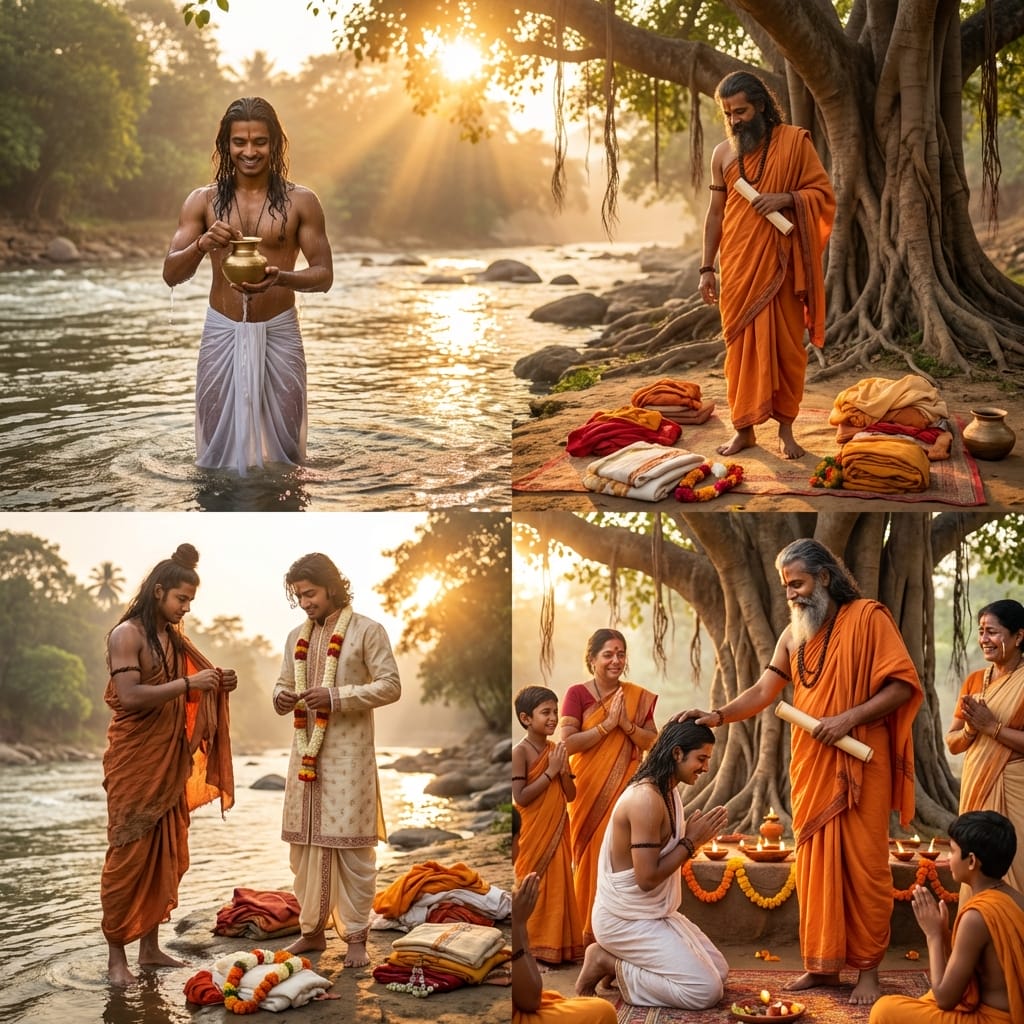
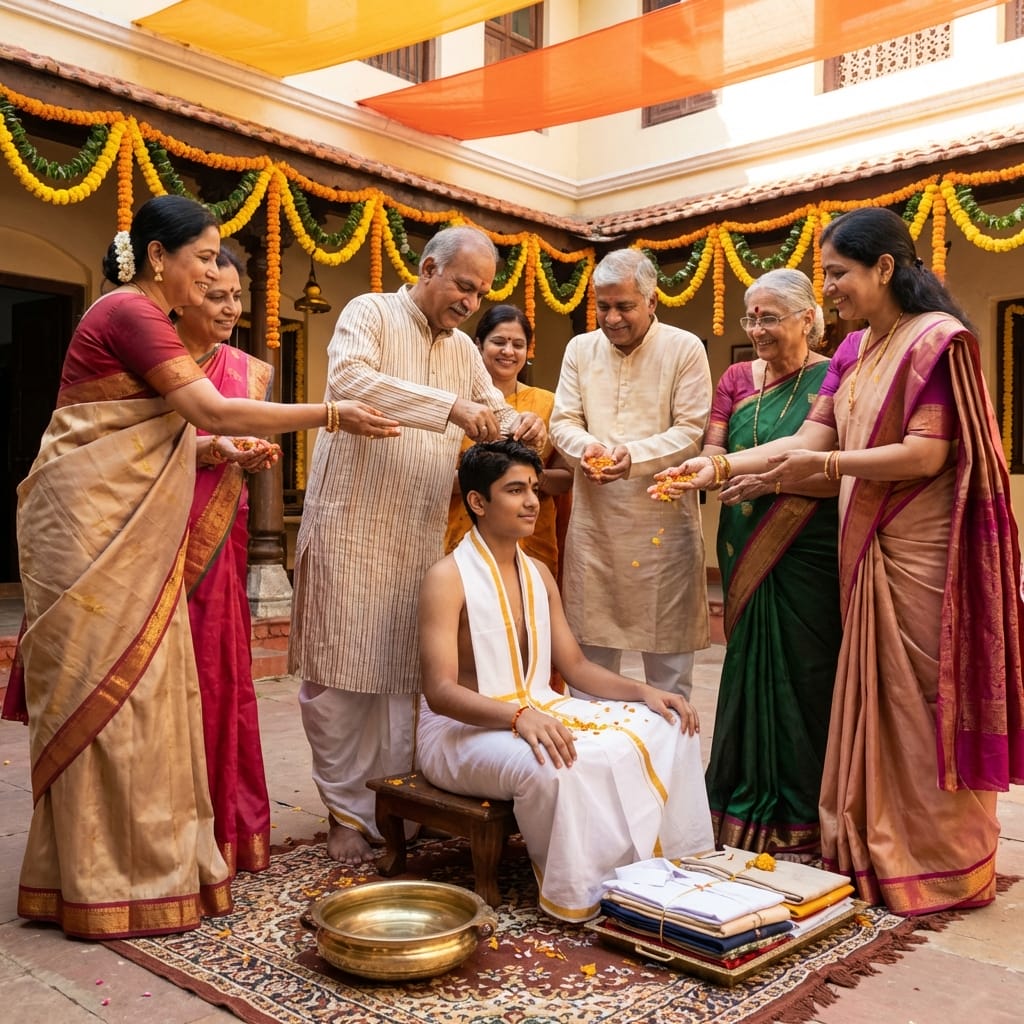
The ceremony involves ritual shaving/grooming, bathing, wearing fresh clothes, and receiving elders' blessings. It marks not just physical maturity but intellectual and emotional development—the student is now capable of deeper philosophical understanding and preparing for future roles in society.
In modern context, Keshanta aligns with sweet sixteen celebrations, graduation to senior high school, or pre-college transitions. It acknowledges the young person's growing independence while reminding them of continuing responsibilities toward family, learning, and dharma.
Science & Ayurveda Behind Keshanta
वैज्ञानिक और आयुर्वेदिक आधार
The 16-year timing aligns with adolescent development:
Puberty & Hormonal Changes: Age 16 typically marks mid-to-late puberty. Testosterone and estrogen levels stabilize, secondary sexual characteristics develop. Keshanta's ritual shaving symbolically acknowledges physical maturation.
Identity Formation (Erikson's Stage): Psychologist Erik Erikson identified ages 13-19 as the "identity vs. role confusion" stage. Rites of passage like Keshanta help adolescents consolidate identity and understand their evolving roles.
Brain Development: The adolescent brain, particularly the prefrontal cortex, undergoes significant pruning and myelination. This improves impulse control, decision-making, and future planning—justifying increased responsibilities.
Social Recognition: Anthropological research shows that social recognition of maturity through ceremonies helps adolescents transition smoothly into adult roles, reducing confusion and improving self-esteem.
Ritual Grooming & Self-Concept: The ceremonial first shave/grooming marks the transition to adult appearance maintenance. Modern psychology recognizes that appearance rituals are tied to self-concept development.
Receiving Guidance: The ceremony involves elders offering life advice. Research shows that intergenerational wisdom transfer during adolescence provides valuable perspective and reduces risky behavior.
Ayurvedic Perspective: Ayurveda views ages 16-30 as the "youth" phase (Youvan Avastha) marked by peak physical vitality and reproductive capacity. Keshanta marks entry into this phase.
Transition to Youth & Responsibility
युवावस्था में संक्रमण
Historically, Keshanta marked a significant milestone—the student had completed basic Vedic education and was approaching the final phase (Samavartana) before graduating from student life. At this age, decisions about future paths (continued advanced study vs. preparation for householder life) were contemplated.
The ceremonial grooming ritual acknowledged physical maturity respectfully. Ancient cultures recognized that adolescence brought bodily changes requiring acknowledgment and guidance, not shame or secrecy.
In some communities, especially for boys, this was when they began learning the family profession or trade more seriously, alongside continued studies. The ceremony marked readiness for practical adult responsibilities while still under parental/guru guidance.
Modern parallels include confirmation ceremonies in other religions, Bar/Bat Mitzvah in Judaism, or cultural coming-of-age celebrations—all acknowledging a young person's transition to greater responsibility and community participation.
Keshanta Ceremony Elements
केशान्त के तत्व
Ritual Grooming
केश संस्कार
Ceremonial trimming or shaving of facial hair if any has appeared. Includes haircut/styling. Symbolizes shedding childhood and embracing youth with grooming awareness.
Sacred Bath & New Clothes
स्नान और नव वस्त्र
Purifying bath with sacred herbs. Wearing new traditional attire. Represents fresh beginning as a young adult approaching life's next phase.
Elder Blessings
वृद्ध आशीर्वाद
Parents, gurus, and family elders bless the youth, offering guidance for navigating upcoming challenges, relationships, and decisions. Wisdom transmission from experienced to emerging adults.
Responsibility Acknowledgment
उत्तरदायित्व स्वीकार
The young person acknowledges growing responsibilities toward family, society, and self. Commitment to continue learning while developing maturity and character.
Keshanta Ritual Steps
केशान्त विधि चरण
Why It Matters
यह महत्वपूर्ण क्यों है
Maturity Recognition – Formally acknowledges the young person's physical, intellectual, and emotional development into youth.
Responsibility Awareness – Reminds the emerging adult of growing duties while still providing family/guru support and guidance.
Smooth Transition – Helps navigate the sometimes difficult adolescent-to-adult transition with cultural and spiritual scaffolding.
Self-Identity Building – Marks the beginning of forming independent identity while staying rooted in values and traditions.
Family Bonding – Creates meaningful moment for families to connect with their teenagers and offer guidance.
Preparation for Next Phase – Readies the student for Samavartana (graduation) and eventual entry into household/professional life.
What's Inside
इसमें क्या है
- Complete Ceremony Guide – How Keshanta is performed
- Modern Relevance – How to adapt for contemporary teenagers
- Adolescence in Hindu Philosophy – Cultural understanding of this life phase
- Guidance and Counseling – What wisdom elders traditionally share
- Gender Adaptations – Keshanta for both boys and girls
- Regional Variations – Different community practices
- Integration with Modern Milestones – Combining with birthdays, pre-college events
Frequently Asked Questions
अक्सर पूछे जाने वाले प्रश्न
Is Keshanta still observed in modern times?
Less commonly than other Sanskars, but some traditional families maintain it, often simplified. Modern parents increasingly value marking adolescent transitions meaningfully, so Keshanta is being revived/adapted. It can be combined with 16th birthday celebrations, pre-college ceremonies, or performed symbolically. The core idea—acknowledging youth's coming of age with blessings and guidance—remains valuable regardless of full traditional ritual performance.
Is Keshanta performed for girls too?
Traditionally, Keshanta was primarily for boys (facial hair reference). Girls had other coming-of-age ceremonies often related to first menstruation (Ritu Kala). However, modern progressive families perform adapted Keshanta for daughters too, focusing on the maturity-acknowledgment aspect rather than literal hair grooming. The symbolic meaning—transition to youth, responsibility, preparation for adult roles—applies equally to all genders.
How is Keshanta different from Upanayana?
Upanayana (age ~8-12): Spiritual birth, sacred thread ceremony, beginning of Brahmacharya/student life, Gayatri mantra initiation. Keshanta (age ~16): Coming of age within student life, marking near-completion of education, acknowledging physical maturity. Think: Upanayana = starting high school spiritually, Keshanta = senior year, preparing for graduation. They bookend the student phase at different maturity levels.
What kind of guidance do elders traditionally offer during Keshanta?
Traditional wisdom shared includes: navigating romantic feelings/relationships appropriately, managing increasing independence responsibly, balancing studies with emerging adult interests, understanding dharmic conduct in social situations, career/life path contemplation, maintaining character amid peer pressure, hon oring commitments while exploring identity. Essentially, practical life advice for the specific challenges teenagers face, grounded in values.
Can Keshanta be combined with modern celebrations?
Absolutely! Many families blend Keshanta with: 16th birthday parties, high school graduation ceremonies, college send-off gatherings, or pre-driver's-license milestones. Perform the brief religious ceremony (puja, grooming, blessings) first, then transition to modern celebration (cake, gifts, parties). This fusion honors tradition while being relevant to contemporary teen culture. The key is the meaningful acknowledgment of maturity.
Is the hair grooming ritual mandatory?
Not mandatory in the sense that its omission inv alidates the Sanskar. The hair reference is symbolic—shedding childhood. If facial hair hasn't appeared at 16 or if doing for daughters, adapt to: special haircut/styling, thorough grooming session, or purely symbolic gesture. The essence is the acknowledgment of maturity, blessings transmission, and responsibility acceptance. Flexibility in modern observance is acceptable while preserving core meaning.
Scientific References & Citations
- Adolescence and Identity Formation — Psychology Today
- Social Transitions in Youth — Journal of Youth Studies